
Why school chat groups need privacy and easy tools
School chat groups work better when they are private, simple to join, and easy to organize for parents, teachers, and students.
School communication works best when it is easy to join, easy to follow, and hard to misuse. That is why school chat groups need more than a stream of messages. They need privacy, structure, and low-friction access for busy parents, teachers, staff, and students.
When a group chat becomes the default place for everything, it quickly turns messy. Important notices get buried, the wrong people see the wrong information, and parents who only check messages on a laptop or in a browser are left behind. In practice, good school communication depends on tools that support private chat, chat folders, image sharing, and browser chat without adding friction.
This is not about making communication complicated. It is about making it safe and manageable. A school needs a system that respects privacy, keeps conversations in order, and lets people access the right information quickly, whether they are in the office, at home, or on the move.
Why school chat groups need privacy first
Schools handle a lot of sensitive information. Timetables, behaviour notes, medical reminders, safeguarding concerns, trip permissions, and contact details all travel through everyday communication. If a group is not set up carefully, private details can end up in the wrong hands or in the wrong thread.
That is why privacy should not be treated as a bonus feature. In school chat groups, privacy is part of the structure. It helps separate staff discussions from parent updates, keeps class-level information from leaking wider than intended, and reduces the risk of accidental oversharing.
Good privacy also encourages better communication. Teachers and administrators are more likely to share useful details when they know the space is appropriately controlled. Parents are more likely to trust the channel when they understand who can see what. A private chat setup does not remove the need for judgement, but it makes sensible communication much easier to maintain.
Structure matters as much as messaging
Many schools start with one general chat group, then add more groups as needs grow. Without structure, that approach becomes hard to manage very quickly. A well-organised system gives each audience a clear purpose, such as one group for a year team, another for the parent association, and another for urgent announcements only.
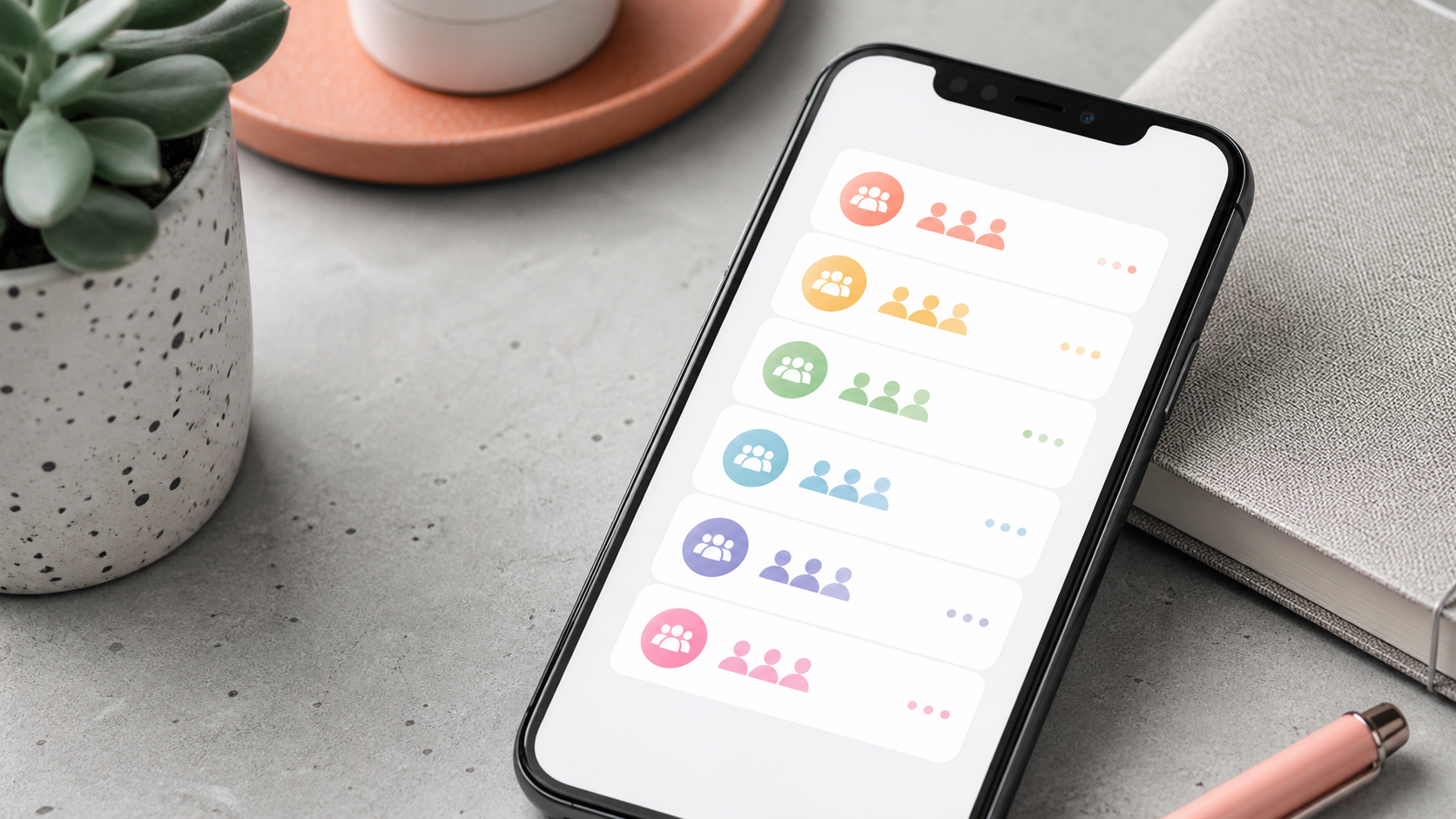
Chat folders can make this much easier. Instead of forcing staff or parents to sift through a long list of active groups, folders help separate topics by role or urgency. A teacher can keep class chats apart from admin updates. A parent can keep school notices apart from after-school club messages. That kind of separation saves time and reduces missed information.
Structure also helps when a school is trying to avoid too much noise. Not every message needs to be a reply-all conversation. Sometimes the right approach is a broadcast, sometimes a thread, and sometimes a short, pinned update. The more the system supports these distinctions, the more useful it becomes.
Low-friction access helps everyone stay involved
Even a very secure system fails if it is awkward to use. Schools need tools that work for different levels of digital confidence. Some staff are comfortable with complex apps, but many parents simply want to check a message quickly and carry on with their day. That is where low-friction access makes a real difference.
Browser chat is often the most practical answer. If people can open a secure chat from a web browser without having to install, update, or configure anything, participation usually improves. This is especially helpful for families using shared devices, school computers, or older phones with limited storage.
Low-friction access also matters for continuity. A school does not want parents missing an urgent update because an app was removed, a login was forgotten, or notifications were switched off. Simpler access reduces these small failures and makes the whole communication system more dependable.
Image sharing needs rules, not just convenience
Schools share images for many good reasons: field trips, class activities, event reminders, lost property, and celebration posts. But image sharing can create privacy risks if it is not handled carefully. A photo can reveal more than intended, especially when it includes faces, name labels, location details, or documents in the background.
That is why schools should define clear norms for what can be shared, where it can be shared, and who is allowed to post. In some cases, images should be restricted to staff-only spaces. In others, they may be suitable for a parent group only if consent has been handled properly and the content is clearly appropriate.
The best tools make this easier by keeping shared media inside the right conversation and making it simple to control access. A school should be able to support useful image sharing without turning every chat into a risk. PigeonChat is one example of the kind of tool that can support this balance by combining private access with practical organisation.
What a good school chat setup should include
When choosing a communication system, it helps to think in terms of everyday use rather than features in isolation. A school chat solution should make the right thing easy to do and the wrong thing harder to do. It should also fit into real routines, not create another platform everyone has to remember.
- Private chat options for staff, class groups, and restricted conversations
- Chat folders for separating classes, year groups, clubs, and admin updates
- Browser chat for simple access on almost any device
- Clear controls for who can post, reply, and share media
- Reliable image sharing with sensible access boundaries
- Simple message history so people can catch up without asking for repeats
It is also worth considering the human side of the setup. A platform can be secure and still fail if nobody understands how to use it. Schools benefit from short, clear rules and a consistent way of naming groups, managing folders, and handling announcements. The less people have to guess, the better the system works.
How schools can keep communication calm and usable
Good communication does not mean more messages. It means fewer misunderstandings. Schools can improve chat habits by setting expectations early, for example by deciding which matters belong in chat, which need email, and which should be handled face to face. That helps chat remain a useful tool rather than an all-purpose dumping ground.
It also helps to keep messages brief and specific. A clear subject line, a single topic per post, and the right chat folder all make it easier for people to act on what they read. If a parent can find the right group in seconds, or a teacher can check a browser chat without navigating a maze, the tool is doing its job.
For schools that want something practical rather than overcomplicated, this combination of privacy, structure, and easy access is the real standard. A platform like PigeonChat fits naturally into that approach because it focuses on usable group communication instead of noise.
Frequently asked questions
Why are private chat spaces important for school communication?
Private chat spaces help keep sensitive information within the right group. Schools often discuss pupils, schedules, events, and support needs, so access control matters. A private setup reduces accidental oversharing and makes it easier to separate staff-only, parent-only, and class-level conversations.
How do chat folders help in a school setting?
Chat folders make communication easier to scan. They let users separate urgent notices, class groups, clubs, staff discussions, and admin threads. That means fewer missed messages and less time spent searching for the right conversation.
Why is browser chat useful for schools?
Browser chat is useful because it lowers the barrier to entry. People can log in from a laptop, shared computer, or tablet without installing another app. For schools, that can improve participation among parents and staff who want quick access with minimal setup.
Ultimately, school chat groups should support real life, not compete with it. The best systems protect privacy, keep information organised, and make access simple enough that people actually use them. When those pieces come together, communication feels calmer, safer, and far more effective.
Ready to try PigeonChat?

Writer & Editor at PigeonChat
Related Articles

How chat groups help schools and universities stay organized

How chat groups support schools and universities

Why chat folders help busy groups stay organized

How chat groups support schools and universities
Why chat folders matter for busy group conversations