
Why chat folders matter for busy group conversations
Chat folders help people separate family, work and community threads. This guide explains when folders actually make messaging easier.
Busy group conversations have a habit of becoming useful and chaotic at the same time. One minute you are following a plan for the weekend, a work update, or a family decision. The next, the thread has drifted into links, jokes, side questions, and reminders that are hard to find later.
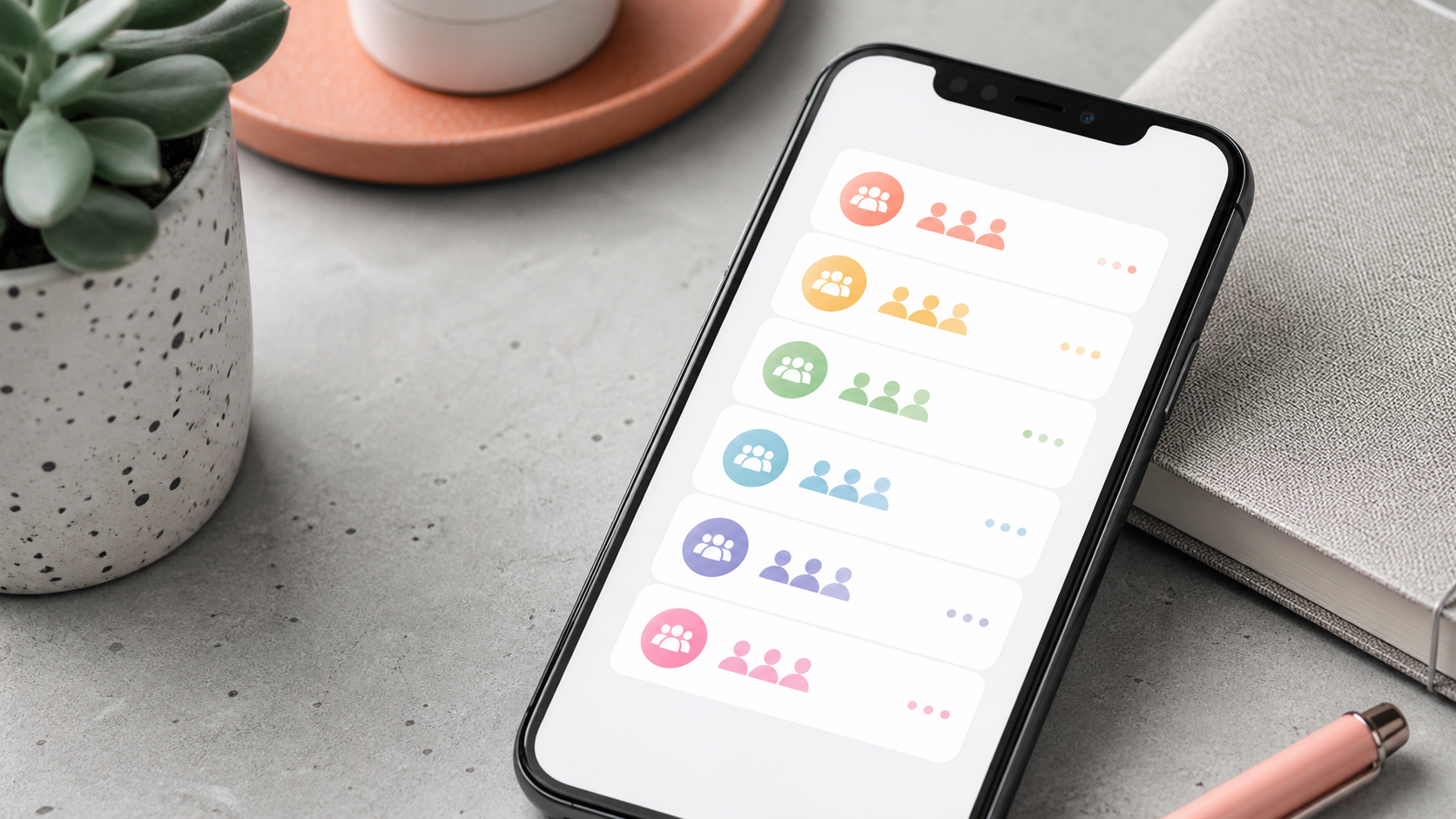
That is where chat folders start to matter. They give you a simple way to separate noisy chat groups from the conversations you actually need to check often. In a messaging app with the right chat features, folders act like a quiet bit of structure in the background, helping important messages stay visible without forcing you to mute everything else.
If you have ever opened an app and thought, “Where did that conversation go?”, you already understand the problem. Folders are not about making chat feel more formal. They are about reducing clutter, lowering the mental effort of checking in, and making it easier to come back to the right place when life gets busy.
Why chat folders help when conversations multiply
Most people do not struggle because they have too few conversations. They struggle because they have too many active ones. Work threads, hobby groups, school chats, community updates, and family discussions all compete for attention in the same list.
Without chat folders, everything looks equally urgent. That makes it harder to know where to start, especially when a thread has been active all day and buried beneath newer messages. A foldered layout gives your brain a faster route: check the groups that matter now, and leave the rest until later.
It is a small design change, but it makes the experience feel calmer. Instead of scrolling through a long stream of mixed chat groups, you can create a clearer pattern that matches how you actually use messaging. That can be especially helpful in tools like PigeonChat, where the aim is often to keep conversations organised without making the app feel heavy.
How folders reduce clutter in busy messaging apps
Clutter is not only visual. It also affects attention. When every conversation sits in one long list, each new message competes for the same space. The result is a kind of background noise, even before you read a single line.
Folders reduce that noise by giving messages a home. A project group can sit with other work-related chats. Family conversations can stay together. Temporary or low-priority groups can be tucked away where they are still accessible, but not constantly in view.
That matters because visibility shapes behaviour. If something is always on screen, you check it more often. If it is hidden in a folder, you can choose when to look. That can help you stay focused during the day without missing anything important.
- Put active work chats in one folder so deadlines are easier to track
- Keep social and community groups separate from practical conversations
- Move archived or low-priority chats out of the main view
- Use folders to highlight messages you need to return to regularly
- Group similar threads together so scanning takes less effort
Making important conversations easier to find
The real value of folders shows up when you need something quickly. You might remember the conversation, but not the exact date or group name. In a cluttered app, that can mean searching through multiple threads or trying to recall which chat had the link you need.
With well-planned chat folders, the most relevant conversations are easier to reach. If you know a thread belongs in your “Work” or “Projects” folder, you do not have to sift through casual chat to get there. That is especially useful in busy chat groups where decisions, documents, and reminders are spread over many messages.
Folders also reduce the chance of missing something important simply because it was pushed down the list. A conversation does not have to be the newest to stay easy to find. It just has to be in the right place.
Useful chat features to look for in foldered apps
Not every messaging app handles folders in the same way. Some only let you create simple categories, while others offer more flexible ways to manage threads. If you are choosing a tool, it helps to look beyond the headline feature and think about daily use.
The best chat features usually support quick sorting, clear labels, and easy switching between views. You do not want a system that takes longer to manage than the conversations themselves. The point is to save time, not create another admin task.
When comparing options, it helps to ask a few practical questions:
- Can you move a chat into a folder in one or two taps?
- Can the same chat appear in more than one category if needed?
- Can you mute or prioritise chats inside a folder?
- Can you see unread conversations without losing your place?
- Can folders be renamed as your needs change?
If you are exploring a product such as PigeonChat, those are the kinds of details that make the experience feel genuinely useful rather than merely tidy. Good organisation should work quietly in the background.
Simple ways to organise chat groups without overdoing it
It is tempting to create too many folders at first. In practice, the best setup is usually the simplest one that matches your life. Too many categories can become as confusing as no categories at all.
A good rule is to start with broad groups. For example, you might use folders for work, family, social, and reference chats. Once that is working, you can split things further if there is a clear reason. The goal is to make the next decision easier, not to build a filing system for its own sake.
Here are a few practical approaches that tend to work well:
- By purpose - work, personal, community, planning
- By urgency - active, waiting, archive
- By frequency - daily checks, weekly checks, occasional
- By project - one folder per major task or event
Once your folders are set up, review them occasionally. A chat that was important last month may no longer need front-line status. Moving it out of sight is not ignoring it. It is simply keeping your main view clean.
Frequently asked questions
Are chat folders only useful for large chat groups?
No. They help with large chat groups, but they are also useful if you only have a few active conversations that matter in different ways. The benefit comes from separating priorities, not from having a huge number of messages.
Do chat folders replace muting or archiving?
Not really. They work alongside those tools. Muting reduces interruptions, archiving clears old conversations, and folders help you organise what remains. Together, they make a messaging app much easier to manage.
What is the simplest folder setup to start with?
Start with three or four broad folders, such as work, family, social, and archived or low-priority chats. That is usually enough to cut clutter without making the system hard to maintain. You can always refine it later if your habits change.
In the end, chat folders are less about organisation as a feature and more about making communication feel manageable. They help busy people focus on the right conversation at the right time, and they turn a noisy list into something that is much easier to live with. If your messaging app has strong chat folders, it becomes simpler to keep up, reply with confidence, and find what matters without digging through clutter.
Ready to try PigeonChat?

Writer & Editor at PigeonChat
Related Articles
Why chat folders matter for busy group conversations

How image sharing works in private chat apps

What chat features users expect in modern private apps
Why chat folders help busy groups stay organized

What end to end encryption chat really protects