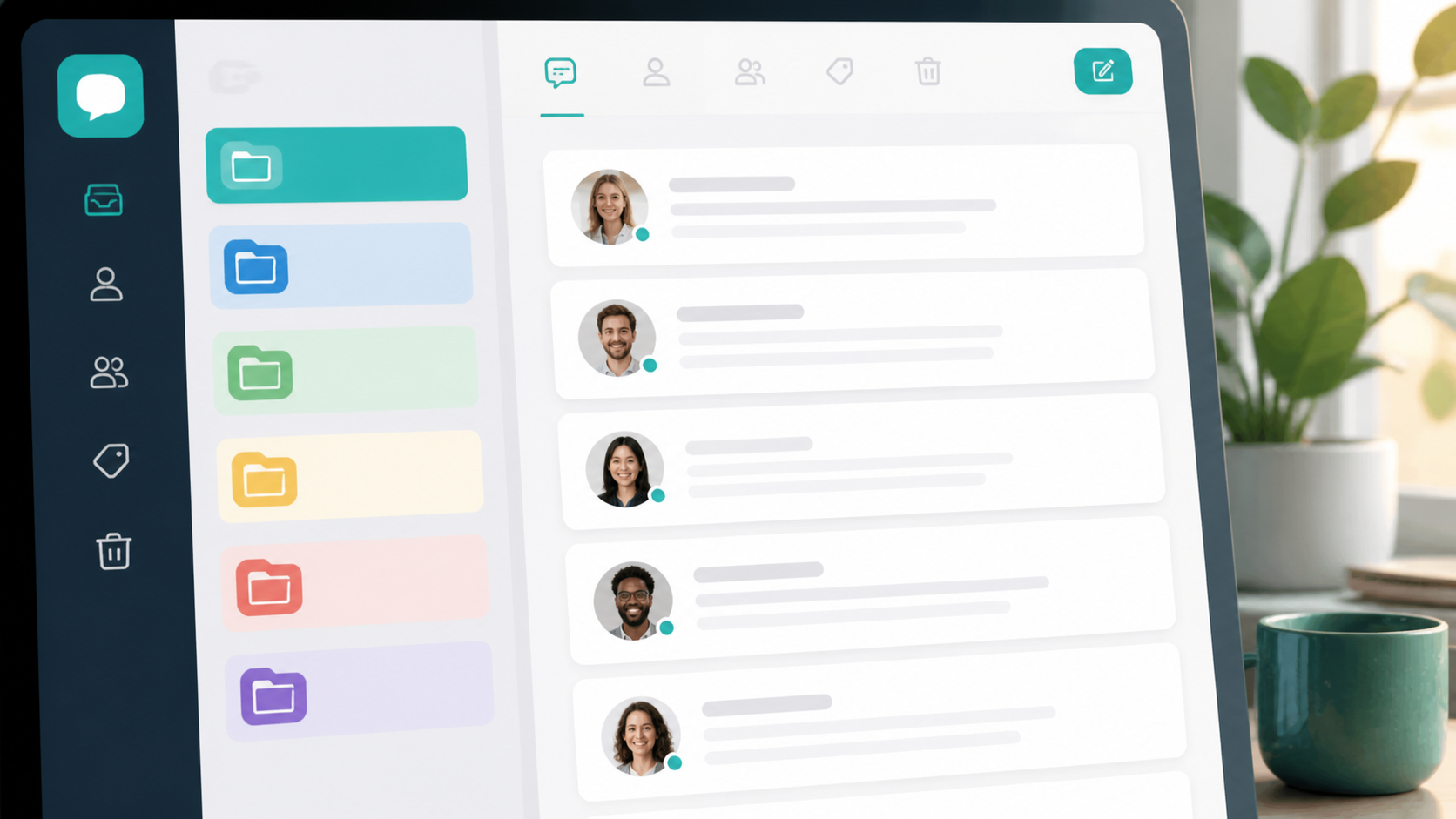
What end to end encryption chat really protects
Understand what end to end encryption can and cannot protect, including message content, metadata limits, and why that matters in chat apps.
End to end encryption chat is one of the most useful ideas in modern messaging, but it is also one of the easiest to misunderstand. The promise is simple: only the people in the conversation can read the message content. Not the app provider, not the network operator, and not an attacker who intercepts traffic in transit.
That promise matters, but it is not the same as complete security. Encryption protects message content while it is moving between devices and, in many cases, while it is stored in the service. It does not magically make a chat app safe from phishing, device compromise, screenshots, social engineering, or a careless backup setting.
If you use an end to end encryption chat every day, or you are choosing a secure messaging tool for work, it helps to separate what the cryptography actually does from the wider security picture. That is the real value of encryption, and it is also where products such as PigeonChat and Signal are often discussed.
What end to end encryption chat actually does
In an end to end encryption chat, messages are encrypted on the sender’s device and decrypted only on the recipient’s device. In plain terms, the service may carry the message, but it should not be able to read the content in the middle. That is a significant improvement over ordinary messaging systems where the provider can often access message text.
This means the main protection is against interception and service-side access to the readable content. If a network is monitored, or if a provider’s servers are compromised, the message contents should remain unreadable to anyone who does not hold the correct keys. For people who need confidentiality, that is the core benefit.
However, encryption does not hide everything. Metadata such as who contacted whom, when, and how often may still be visible depending on the service design. Encryption is powerful, but it is one part of a broader privacy model, not the whole model.
What encryption does not protect
The biggest mistake is to treat encrypted chat as a shield against every threat. If one person’s phone is unlocked by an attacker, or if malware runs on the device, that attacker may see messages after decryption. The same is true if a user shares the content themselves, forwards it, or copies it into another app.
End to end encryption chat also cannot prevent screenshots, camera photos of the screen, or manual note-taking. Once a human can read a message, they can usually reproduce it elsewhere. Encryption protects the channel, not the recipient from making a mistake.
- It does not stop a compromised phone or computer from exposing messages after they are decrypted.
- It does not prevent someone in the chat from copying, forwarding, or screenshotting content.
- It does not guarantee anonymity, because metadata may still exist.
- It does not fix weak passwords, poor device hygiene, or unsafe backup practices.
- It does not protect you from phishing links or social engineering.
Why metadata still matters
People often focus on the message body and forget the surrounding information. Even when content is encrypted, a service may still know or infer who is talking, at what times, and from what device. That information can be surprisingly revealing, especially in professional, political, or personal contexts.
This is why a privacy review should look beyond the phrase “encrypted chat”. Ask what the service stores, how long it stores it, whether contact lists are uploaded, and whether it links your identity to your conversations. Strong encryption is valuable, but less visible design choices can still affect your exposure.
Some services minimise metadata more aggressively than others. Others focus on usability and interoperability first. Neither approach is automatically wrong, but it helps to know which trade-offs you are accepting rather than assuming all secure messengers are the same.
Choosing a secure messenger with realistic expectations
If you are comparing an e2e chat app pigeonchat.site style product with something like Signal, look at the whole package. Encryption protocol, code transparency, backup handling, device support, account recovery, and usability all affect real-world safety. A technically strong system can still become unsafe if people cannot use it properly.
Signal is often mentioned because it has a strong reputation for secure messaging and has helped set expectations for what modern encrypted chat should look like. But even with a respected app, the same basic rule applies: security only works when the device, the user, and the service design all support it.
If you are evaluating a tool for yourself or a team, ask practical questions. Can messages be backed up safely? Can old devices be removed cleanly? Are notifications privacy-friendly? Is verification straightforward enough that people will actually check it? These details matter more than slogans.
How to get more value from encrypted chat
Even if you never switch apps, you can make any end to end encryption chat safer by improving your own habits. Most failures happen at the edges, not inside the cryptography. Good device security, careful sharing, and sensible backup choices usually make the biggest difference.
A few habits are especially useful:
- Keep your phone and computer updated.
- Use a strong device passcode or password.
- Enable app locks where available.
- Verify contact details before discussing sensitive information.
- Think before sending anything you would not want forwarded.
- Review cloud backups, because backups can weaken privacy if they are not encrypted end to end.
It is also worth using separate channels for different levels of sensitivity. Not every message needs the same protection, but your most private conversations should not share habits or devices with the least private ones. Good messaging hygiene is often about reducing exposure, not chasing perfect secrecy.
Frequently asked questions
Does end to end encryption mean the app provider cannot read my messages?
In a properly designed end to end encryption chat, the provider should not be able to read the message content in transit or on its servers. That said, the provider may still learn some metadata, and any insecure backups, linked devices, or compromised endpoints can still expose content elsewhere.
Is an encrypted chat app automatically private?
No. Encryption is only one layer of privacy. Your device security, account recovery, notification settings, contact discovery, and backup behaviour all affect how private the conversation really is. An app can be encrypted and still collect more data than you expect.
Should I use Signal or another end to end encryption chat app?
Signal is a well-known option and a sensible reference point if you want a secure messaging experience. But the best choice depends on your needs, such as who you need to message, what devices you use, and how much metadata you are comfortable sharing. The important thing is to understand the trade-offs rather than assuming any app solves every problem.
The practical lesson is simple: end to end encryption chat protects message content in transit and on the service, but it does not replace thoughtful security habits. If you keep that distinction clear, you will make better choices about the tools you use, whether that is PigeonChat, Signal, or something else entirely.
Ready to try PigeonChat?

Writer & Editor at PigeonChat
Related Articles
What end to end encryption protects in chat apps
What a fully compliant EU chat app should include

What a fully compliant EU chat app should include
What a privacy first EU chat app should offer
What chat features users expect in modern private apps