What end to end encryption protects in chat apps
Learn what end to end encryption really protects in chat apps, what it does not cover, and why it matters for private conversations.
End to end encryption is one of the most talked-about privacy features in chat apps, but it is also one of the most misunderstood. It sounds absolute, as if nothing at all can go wrong once a message is encrypted. In practice, it protects some things very well and leaves other things untouched.
If you are trying to judge an end to end encryption chat service, the useful question is not whether it uses encryption, but what exactly that encryption covers. That is the difference between marketing language and a real privacy model. It also helps explain why two apps can both say they are private and still offer very different levels of protection.
This guide looks at the exact limits and strengths of end to end encryption, using plain language. Whether you use Signal, a privacy first chat app, or an e2e chat app pigeonchat.site, the same basic principles apply.
What end to end encryption actually protects
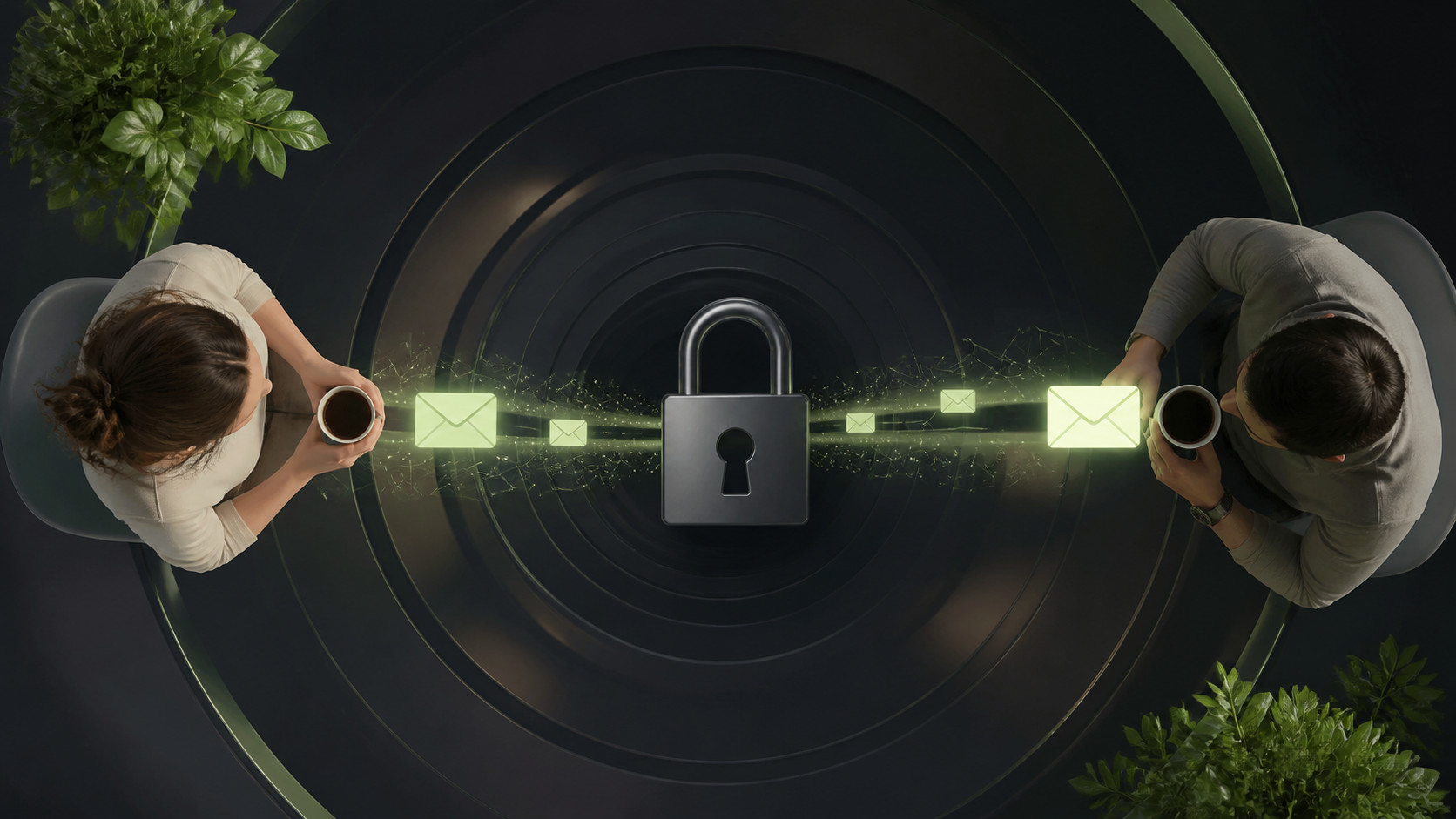
End to end encryption means that a message is encrypted on the sender’s device and only decrypted on the recipient’s device. In the middle, the service that moves the message around should not be able to read the content. That is the core promise.
In a well-designed system, this protects message text, photos, voice notes, files, and sometimes calls while they are in transit and stored on the provider’s servers. If someone intercepts the traffic or breaches the server, they should still see encrypted data rather than the actual conversation.
That is the main value of end to end encryption chat apps. It reduces trust in the company running the service, because the provider is no longer supposed to have direct access to the contents of your messages.
What end to end encryption does not protect
Encryption does not make you invisible. A chat app can still know a great deal about your account and activity even if it cannot read the messages themselves. That may include your phone number, profile details, contacts, IP address, device information, timestamps, and who you message.
It also does not protect content once it leaves the encrypted channel. If the other person takes a screenshot, forwards the message, copies it elsewhere, or reads it on an unlocked device, encryption cannot undo that. The weakest point is often the endpoint, not the network.
Another limit is metadata. Even when message bodies are protected, patterns can still reveal a lot. Who talked to whom, when, how often, and from where may be visible to the service or to other parts of the system. That is one reason privacy claims should always be read carefully.
How to judge a privacy first chat app
A privacy first chat app should explain more than just “we use end to end encryption”. Look for clarity on which message types are encrypted, whether encryption is on by default, and whether the app collects metadata. Good privacy design is specific, not vague.
It also helps to check how the app handles backups, multi-device sync, and account recovery. These features are useful, but they can create gaps if they are not designed carefully. A service may protect live chats well while leaving backups or recovery data less protected.
When comparing Signal, PigeonChat, or any similar service, ask practical questions rather than relying on the label. For example, can the provider read your messages, can it see your social graph, and what happens if your phone is lost or seized?
- Is end to end encryption enabled for all chats, or only some?
- Are backups encrypted before they leave your device?
- Does the app minimise metadata, or simply hide message content?
- Is the security model explained in plain language?
- Are key features open to independent review?
Where end to end encryption is strongest
The strongest protection is against third parties in the middle. That includes internet service providers, Wi-Fi snoops, malicious network operators, and the company hosting the service, assuming the system is designed correctly. They should not be able to read the contents of the conversation.
It is also strong against server breaches. If attackers obtain a copy of encrypted message data from the provider, they should not be able to make sense of it without the keys held on users’ devices. This is one of the reasons secure messaging is so widely recommended for sensitive discussions.
For many people, that is already a substantial improvement over ordinary messaging systems. It means the service itself is not a built-in reader of your private conversations, which is a meaningful shift in trust.
Where the real privacy risks remain
The biggest risks usually come from the endpoints. If a device is compromised, if someone can unlock your phone, or if malware has access to notifications and stored chats, encryption offers little help. The content is protected in transit, not magically across the whole device.
Another risk is human behaviour. Even a very secure app cannot stop someone from sharing a message, taking a photo of the screen, or retyping a conversation into another system. Privacy depends on the whole communication chain, not just the transport layer.
It is also worth remembering that legal compulsion, account compromise, and weak device security can all expose information that encryption alone would otherwise shield. End to end encryption is powerful, but it is not a complete safety net.
Practical ways to read privacy claims more accurately
When a service says it offers end to end encryption, treat that as the starting point, not the conclusion. Ask what is encrypted, when it is encrypted, where the keys live, and what other data the company can see. Those details tell you more than the headline feature.
If a product is genuinely focused on privacy, it should be willing to explain the trade-offs. A good e2e chat app pigeonchat.site, for example, should make it clear where its protections begin and end. That honesty matters more than lofty language.
A useful rule is this: the more specific the privacy explanation, the more trust it deserves. Security claims that stay broad and unqualified are harder to evaluate and easier to overread.
Frequently asked questions
Does end to end encryption mean nobody can ever read my messages?
No. It means the service provider and intermediaries should not be able to read them in transit or on the server if the system is built correctly. But the recipient can read them, and so can anyone with access to either endpoint, such as an unlocked phone or compromised device.
Is Signal better than other apps because it uses end to end encryption?
Signal is widely respected because of how it applies encryption and because of its overall privacy approach, not just because it uses the term. But “better” depends on what you need. Any app should be judged on encryption, metadata handling, backups, device support, and how clearly it explains its design.
What should I look for in a privacy first chat app?
Look for clear documentation, encryption by default, limited metadata collection, secure backup handling, and sensible account recovery. If an app cannot explain these points simply, its privacy claims may be weaker than they sound. The best services make their limits as clear as their strengths.
End to end encryption is a strong privacy tool, but it is only one part of a broader security picture. If you understand what it protects and what it does not, you can read privacy claims with much more confidence and choose a chat app that fits your actual risk, not just your hopes.
Ready to try PigeonChat?

Writer & Editor at PigeonChat
Related Articles
What a fully compliant EU chat app should include

What end to end encryption chat really protects

What a fully compliant EU chat app should include
What a privacy first EU chat app should offer
What people mean by a Signal alternative chat app