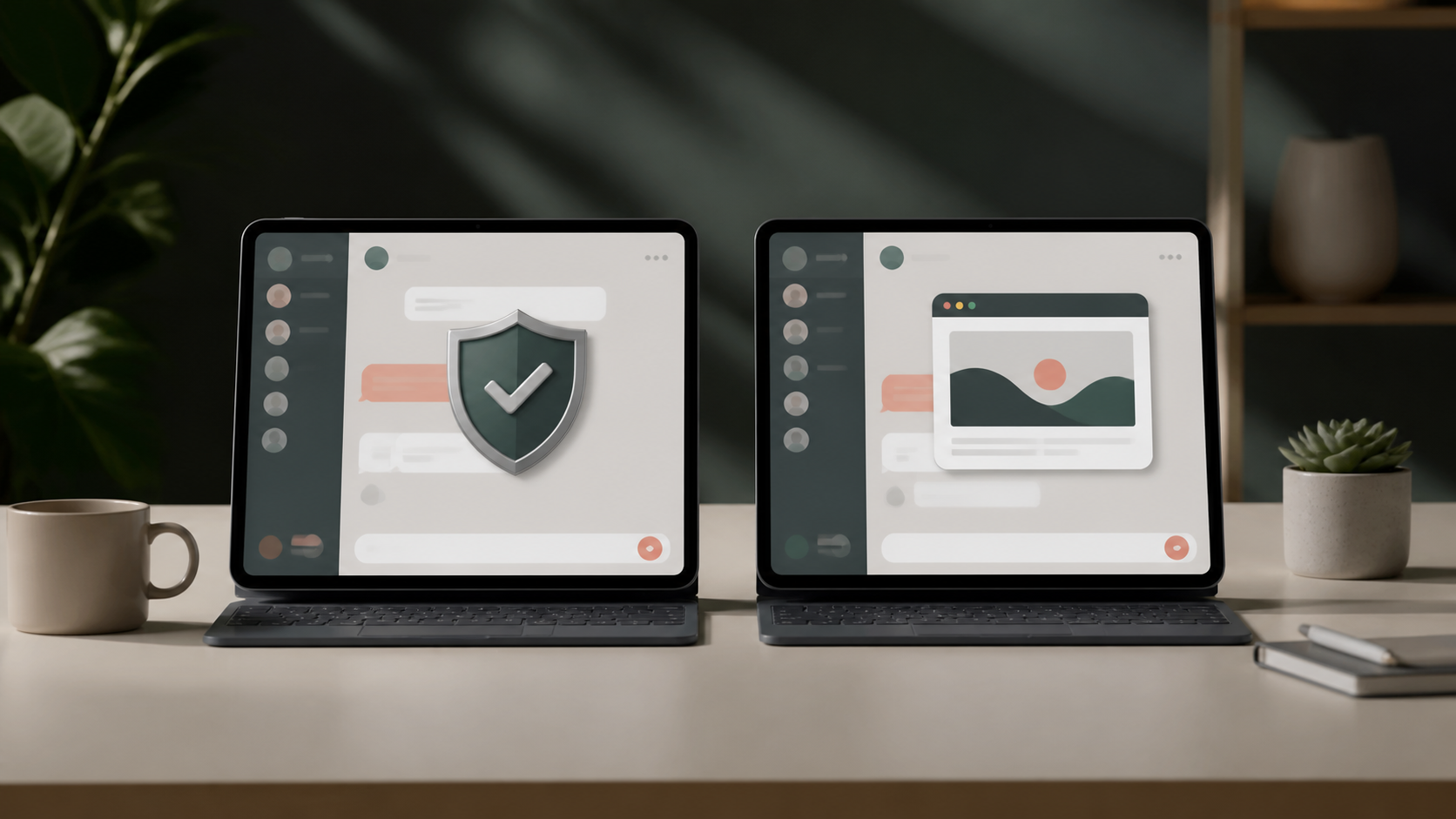
What a fully compliant EU chat app should include
A plain-English guide to the privacy, data handling and governance signals people expect from a fully compliant EU chat app today.
Choosing a Europe-based chat service is no longer just about features. If you are comparing a fully compliant eu chat app, you need to look for clear signals that the service is built to handle privacy, governance and platform accountability in a serious way. The best products do not rely on vague promises. They show you, in plain language, how they protect data and what obligations they take on.
That matters whether you are buying for a company, a community, or just for yourself. A privacy first chat app should make it easy to understand what is collected, where it is stored, who can access it, and what happens if something goes wrong. It should also be clear about whether the service is simply based in Europe, or whether it is actually aligned with European legal expectations.
Below is a practical checklist for evaluating an eu chat or european chat app. You do not need to be a lawyer to use it. You just need to know which compliance signals are meaningful and which ones are just marketing.
Start with legal transparency, not branding
A compliant service should tell you who operates it, where the company is registered, and which legal entity is responsible for the product. This sounds basic, but many services bury the details behind generic terms pages. If you cannot tell who you are contracting with, that is a warning sign.
Look for a clear privacy notice, terms of service, data processing information and contact details for privacy queries. If the app serves business users, it should also explain its role under GDPR, for example whether it acts as a controller or processor in different situations. A serious european chat app will not force you to guess.
It is also worth checking whether the service explains any cross-border data transfers. Europe-based hosting is helpful, but it is not the same as full legal compliance. Ask where logs, backups and support tools are stored, and whether any third-party providers can see message metadata.
Check how the app handles data protection by design
Privacy by design is more than a slogan. A good privacy first chat app should minimise the personal data it needs to run. That means collecting only what is necessary for account creation, delivery of messages, support and security. If an app asks for a lot of extra information, there should be a clear reason.
Retention policies matter as well. The service should explain how long it keeps messages, logs, attachments and inactive accounts. It should also give users a way to delete data, export data, and understand what deletion actually means in practice. If a provider cannot explain these things plainly, it is not behaving like a mature EU-facing service.
Encryption is another important signal. End-to-end encryption is helpful for message content, but it is not the whole story. You still want to know how metadata is treated, how keys are managed, and whether the provider publishes technical documentation that security teams can review.
- Clear privacy notice and terms, written in understandable language
- Data minimisation and a reason for every data field collected
- Retention rules for messages, logs, backups and accounts
- Export and deletion options for users and administrators
- Published security information, including encryption details
Look for accountability, not just secure messaging
A trustworthy fully compliant eu chat app should make it obvious how it responds to incidents, user complaints and legal requests. Security is not only about stopping attackers. It is also about having processes when something goes wrong. That includes breach notification procedures, internal access controls and support for lawful user rights requests.
For business buyers, this is where evidence matters. Is there a documented security policy? Does the vendor describe incident response? Are there independent audits, penetration tests or certifications that fit the product’s size and risk profile? You do not need a certification badge to trust a service, but you do need something more concrete than a promise.
A well-run service will also explain administrative controls. If teams use the platform, administrators should be able to manage accounts, configure retention and enforce access rules without giving the provider unnecessary visibility. This is especially important if the app positions itself as a chat app regulated under ai act because it uses automated features, moderation tools or AI-assisted workflows.
Understand what the AI Act angle actually means
Not every chat app is directly affected in the same way, and the phrase chat app regulated under ai act can be used loosely in marketing. The useful question is not whether the app mentions AI, but what the AI does. If it summarises conversations, suggests replies, classifies support tickets or automates moderation, the provider should explain the system clearly.
Look for plain statements about whether AI features are optional, how user data is used in prompts or model training, and whether humans can review automated decisions. A responsible vendor should also describe safeguards for accuracy, bias, and user consent where relevant. If the AI layer is opaque, that is a compliance risk, even if the chat function itself is secure.
This is also where procurement teams should ask for documentation. A serious vendor will usually have an AI policy, data handling notes and guidance for admins. If you are comparing products, this can be one of the clearest differences between a polished consumer tool and a business-ready platform.
Evaluate the practical evidence behind the claims
When you assess an eu chat, try to separate evidence from presentation. A glossy website can still hide weak controls. A modest service with clear documentation may be easier to trust. The point is to verify that the product behaves like a compliant platform, not merely that it sounds compliant.
Before you commit, ask for the following:
- Data Processing Agreement, if you are using the service for work
- Security overview or trust page with real operational details
- Information on sub-processors and hosting locations
- Incident and breach notification process
- Support for account deletion and data export
- Details on whether AI features process message content or metadata
If the provider is reluctant to share these basics, that is useful information in itself. By contrast, a vendor that answers clearly, in writing, usually has more mature internal controls. That is the kind of confidence signal you want from a European chat app.
What good looks like in daily use
In day-to-day use, a compliant app should feel boring in the best possible way. Permissions should be understandable. Settings should be accessible. Privacy choices should not be hidden behind confusing menus. Admins should not need to guess how data flows through the system.
Users should also be able to tell when features are on and off. If the app includes AI assistance, that should be visible. If message history is synced across devices, that should be explained. If there are retention settings, they should actually control retention. This is the difference between a privacy first chat app and one that merely borrows the language of privacy.
For teams that want a reference point, PigeonChat is an example of the kind of product documentation and clarity worth looking for, even if you end up choosing something else. The broader lesson is simple: compliance is easier to trust when the product is transparent enough to inspect.
Frequently asked questions
Is being hosted in Europe enough to make a chat app compliant?
No. European hosting can help, but compliance depends on governance, contracts, data handling, retention, security and user rights. A service can host in Europe and still have weak privacy practices. Always check the documentation, not just the server location.
What is the most important sign of a privacy first chat app?
Clear, specific privacy information is one of the strongest signs. If the provider can explain what it collects, why it collects it, how long it keeps it and who can access it, that is a good start. Technical security matters too, but transparency is usually the easiest place to see whether a vendor is serious.
Should I worry if a chat app uses AI features?
Not automatically, but you should understand how the AI works. Ask whether it processes message content, whether data is used to train models, whether features are optional and whether humans can review automated outputs. A compliant service should be able to explain those points without evasiveness.
In practice, the best approach is simple. Choose the service that explains itself well, limits data use, and gives you meaningful control. If an app cannot show those basics, it is probably not the right choice for anyone who wants a properly run European chat app.
Ready to try PigeonChat?

Writer & Editor at PigeonChat
Related Articles
What a privacy first EU chat app should offer

What end to end encryption protects in chat apps

Why no phone number chat apps are in demand

What makes an end to end encryption chat app secure

WhatsApp, Telegram, Viber and Messenger compared for privacy