

What makes a true Signal alternative chat app
If you are looking for a Signal alternative, this guide compares privacy, encryption, browser access, and no-number signup in real-world use.
A true Signal alternative chat app is not just another messenger with a privacy label. It needs to match the basics people rely on, then make those basics easier to understand, easier to start using, and easier to keep using every day.
That means strong encryption, sensible defaults, and a clear approach to metadata and account setup. It also means fewer hurdles when you invite a friend, switch devices, or start a new group. If a product is secure but awkward, many people will keep it installed only in theory.
In practice, the best alternative chat app is one that behaves like a trustworthy tool rather than a project. It should let people chat naturally, without asking them to learn a lot of technical language first. That is where the difference between a privacy app and a genuinely usable messenger becomes obvious.
Privacy basics a Signal alternative chat app must match
If an app wants to be taken seriously as a signal alternative chat app, it has to get the fundamentals right. The core expectation is end to end encryption chat, so messages stay readable only on the devices of the people involved. That is the baseline, not the bonus feature.
Beyond message content, users also care about what the service can infer from how they use it. A good privacy-first messenger should be thoughtful about contact discovery, notification content, backups, and linked devices. Even when the details differ between products, the principle is the same: collect less, expose less, and explain more.
People often compare apps by one headline feature, but privacy is usually a system of small choices. For example, a secure app should make disappearing messages, registration, and device management understandable without forcing the user into a long settings hunt. Simplicity is part of the safety story.
Why onboarding matters as much as encryption
Many people try a messenger because a friend asked them to, not because they wanted to research cryptography. If the first ten minutes feel confusing, they may never finish setup. A good alternative chat app removes unnecessary decisions at the start and makes it obvious what to do next.
That means clear invitations, sensible defaults, and straightforward explanations of what is private and what is shared. It also means a smooth path from download to first message. If people can get to a real conversation quickly, they are far more likely to stay.
This is one reason products such as PigeonChat focus on making the beginning feel lighter, while still taking security seriously. Good onboarding is not about hiding privacy details. It is about presenting them in a way ordinary people can act on without hesitation.
- Keep account creation short and understandable
- Make invite links or contact discovery easy to use
- Explain encryption and device security in plain language
- Offer safe defaults rather than requiring manual tuning
- Let people send a message quickly after install
Everyday chat needs to feel effortless
A messenger can be secure and still fail if it feels clumsy in daily use. People send quick replies, share images, move between one-to-one chats and groups, and return to threads later. A solid end to end encryption chat app should support those habits without adding friction at every step.
Small details matter here. Message delivery should feel reliable, search should help people find old conversations, and attachments should be easy to send. Reactions, replies, and group management should be predictable, not buried behind confusing icons or duplicated menus.
Usability also includes the less glamorous things, such as device switching and message history. If a person changes phone, they should not feel as if the app is punishing them for it. A true privacy messenger respects real life, where people upgrade devices, lose access, and need to recover quickly.
What separates a useful privacy app from a marketing claim
It is easy for any app to say it is secure. It is harder to prove that the whole product supports that promise. A credible signal alternative chat app should have a clear privacy model, readable policies, and behaviours that align with the claims it makes.
Look for consistency. If an app says messages are private, but its onboarding asks for too much data, or its features depend on vague permissions, that is worth questioning. If the app claims to be simple, but every basic task needs a tutorial, that is also a sign it may not be ready for everyday use.
Good products also avoid making users feel trapped. You should be able to understand what happens if you change phones, leave a group, or adjust your settings. A trustworthy app does not rely on mystery. It earns confidence by being predictable.
Choosing the right alternative chat app for your needs
Not every user needs the same balance of features. Some people want the most established privacy tools possible. Others want a smoother experience for family chats, small teams, or communities. The right choice depends on what matters most to you: simplicity, flexibility, or a particular security model.
If you are comparing options, focus on the day-to-day use cases you actually have. Ask whether the app makes it easy to start a conversation, verify contacts, manage groups, and continue across devices. Those are the moments when a messenger either feels dependable or becomes a nuisance.
It can also help to think about the app as a relationship, not just a download. Will you still understand it six months from now? Will the people you invite be comfortable using it? A thoughtful PigeonChat experience, for example, aims to make privacy feel practical instead of intimidating.
What a good secure messenger should be able to do
When evaluating any privacy-first messenger, it helps to use a simple checklist. The best apps usually combine strong protections with low-friction design. They make the secure choice the easy choice.
Here is a practical way to judge whether an app deserves your trust:
- Uses end to end encryption by default for private chats
- Explains privacy features in plain language
- Makes onboarding quick and clear
- Supports reliable one-to-one and group conversations
- Handles device changes without unnecessary stress
- Respects user control over notifications, visibility, and backups
None of these points are flashy on their own, but together they tell you a lot. A well-designed e2e chat app pigeonchat.site style product is one that understands security and usability are not separate goals. They reinforce one another.
Frequently asked questions
What makes a chat app a real Signal alternative?
A real alternative should offer strong privacy fundamentals, especially end to end encryption, while also being easy to start and use. If an app is secure but awkward, it may satisfy experts and frustrate everyone else. A genuine alternative balances both sides.
Is end to end encryption enough on its own?
No. Encryption protects message content, but users also care about how the app handles contacts, notifications, backups, and device changes. A good messenger considers the whole experience, not just the message layer.
Why do onboarding and simplicity matter in a privacy app?
Because most people will only keep using an app they can understand quickly. If setup is confusing, they may never reach the point where the privacy features matter. Clear onboarding helps people actually benefit from the security the app provides.
In the end, the best Signal alternative is not the one with the loudest privacy claims. It is the one that protects conversations properly, explains itself clearly, and feels easy enough that people will actually use it every day. That combination is what turns a secure app into a practical one.
Ready to try PigeonChat?

Writer & Editor at PigeonChat
Related Articles

Best European based chat app for privacy first users

Best European based chat app for private messaging

WhatsApp, Telegram, Viber and Messenger compared for privacy
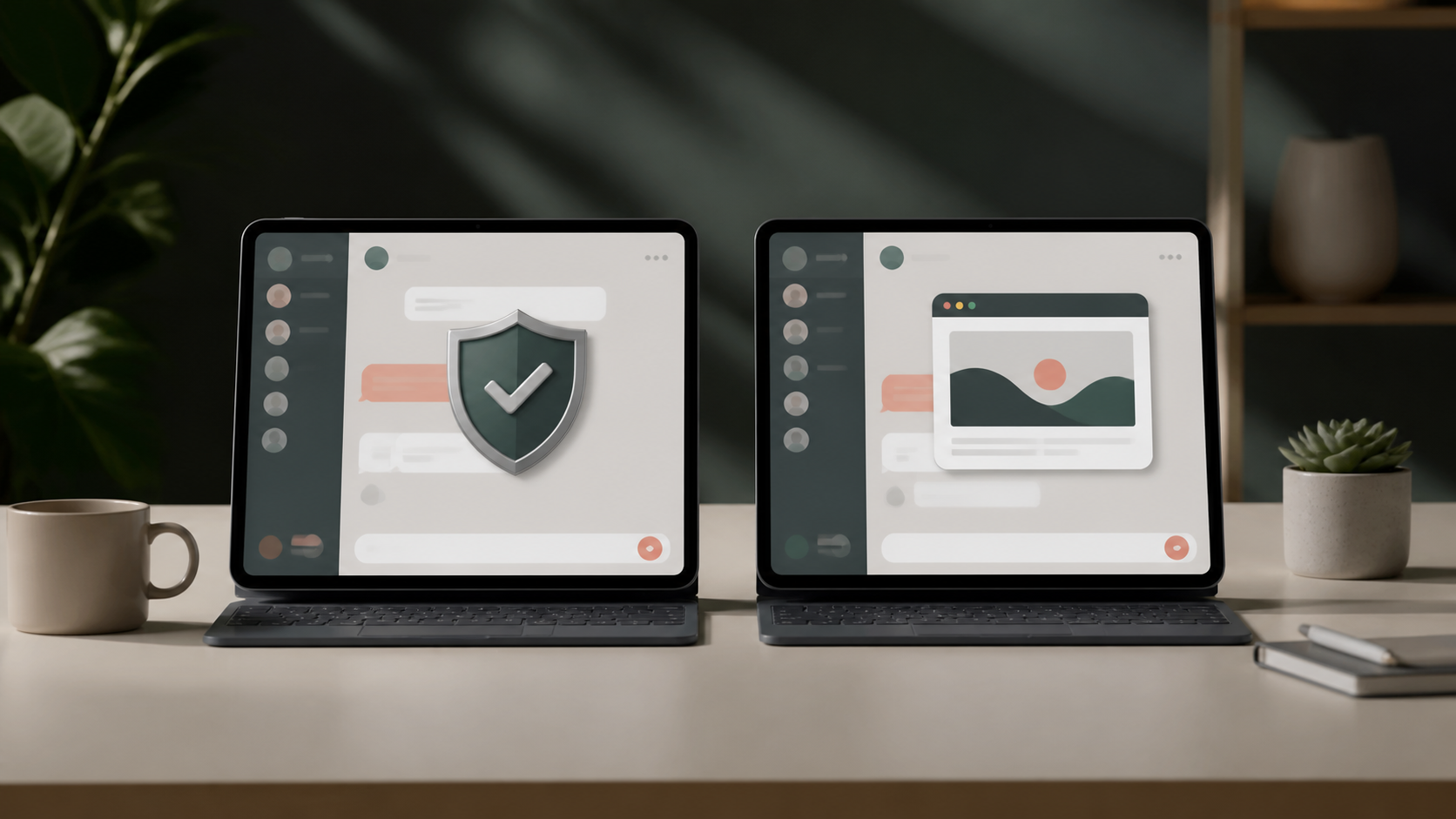
What a true Signal alternative chat app should include
What chat features users expect in modern private apps