
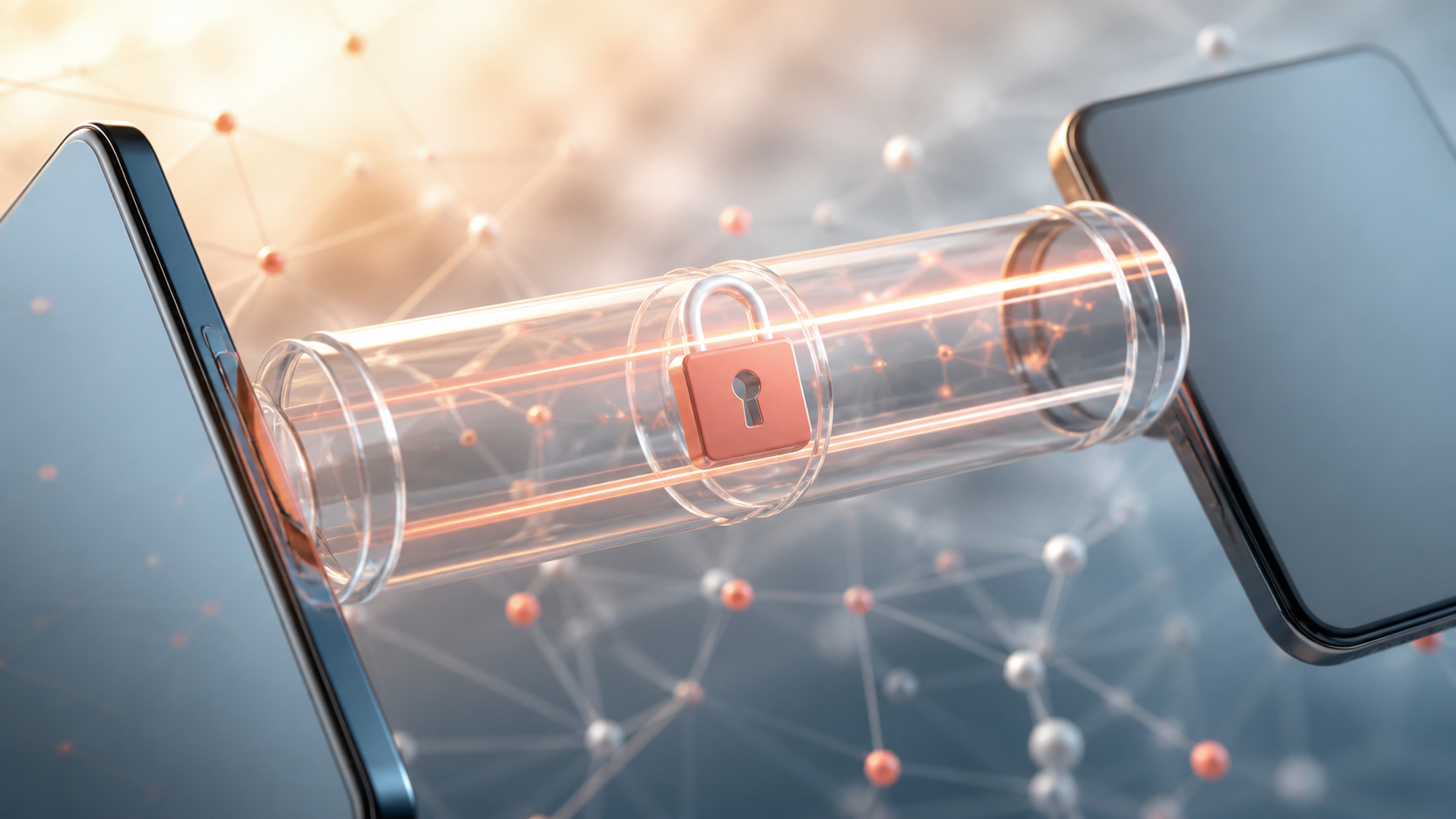
What end to end encryption protects in chat apps
Understand what end to end encryption does and does not protect in private chat apps, including metadata, device access, and backups.
End to end encryption is one of the most important privacy features in modern chat apps, but it is easy to overstate what it does. It protects message content while it is being sent and stored by the service, yet it does not make a conversation magically private in every sense. If you use an end to end encryption chat, it is worth understanding both the protection it gives and the limits it cannot remove.
That distinction matters because many privacy risks sit outside the encrypted message itself. Your device can be unlocked, a notification can be seen on screen, a backup can be exposed, or the person you are talking to can copy the message elsewhere. A private chat is only as private as the full path around the message, not just the cryptography inside it.
This article explains what end to end encryption protects in chat apps, what it does not protect, and what to look for in services such as Signal, WhatsApp, or an e2e chat app like PigeonChat. The goal is not to scare you away from encrypted messaging. It is to help you use it with realistic expectations.
What end to end encryption chat actually protects
End to end encryption means that messages are encrypted on the sender’s device and decrypted only on the recipient’s device. In practical terms, the service in the middle should not be able to read the message content. That usually includes text, photos, voice notes, and files, depending on the app’s design.
This is valuable because it limits what the provider, network intermediaries, and many attackers can access. If an encrypted chat message is intercepted in transit, it should be unreadable without the keys held by the devices involved. That is the core promise of end to end encryption chat: the platform transports your conversation, but it should not be able to inspect the substance of it.
It also means that if a provider is asked for message content, there may be little or nothing useful to hand over, provided the system is genuinely end to end encrypted and configured properly. For many people, that is the main reason to choose Signal, WhatsApp, or another private chat option that supports this model.
What encryption does not hide
Encryption protects message content, not every detail around it. In many systems, the service still needs to know some information to route messages. That can include who is talking to whom, when messages were sent, and technical details about devices or accounts. Those are often called metadata, and they can still reveal a lot.
Encryption also does not protect against what happens on the endpoints. If someone has access to your phone, laptop, or tablet, they may be able to read messages after they are decrypted. Screenshots, clipboard access, notifications, and spyware can all bypass the protection that end to end encryption provides.
It is also worth remembering that the other participant is part of the privacy picture. If you send a message to someone in a private chat, they can forward it, copy it, photograph it, or simply show it to another person. Encryption cannot stop a recipient from sharing what they have already seen.
Common privacy risks that still remain
Even in a well-designed e2e chat app, several risks remain outside the encrypted message itself. A few of the most common are worth keeping in mind:
- Device compromise - if your phone or computer is infected, encryption offers much less protection.
- Cloud backups - backups may not always be protected in the same way as live chats.
- Notifications - message previews can appear on lock screens or shared devices.
- Account recovery - phone numbers, email addresses, and recovery methods can expose identity links.
- Recipient behaviour - the other person can save, forward, or screenshot the conversation.
There is also the issue of social engineering. A convincing fake login page, a malicious link, or a request from a supposed friend can undo many technical protections. Encryption is strong, but it cannot protect someone who is tricked into handing over access.
So while end to end encryption is a powerful shield, it is not a whole privacy strategy. Think of it as one layer in a broader approach that includes device security, account hygiene, and sensible sharing habits.
Signal, WhatsApp, and the limits of trust
Apps such as Signal and WhatsApp are often mentioned in discussions about private messaging because they support end to end encryption by default for messages. That is useful, but the trust model still matters. You are trusting the app to implement encryption correctly, manage keys securely, and be honest about what is and is not protected.
Different apps also make different trade-offs. One service may protect message content but retain more metadata. Another may support encrypted chats but still rely on cloud backups or broader account systems. The phrase end to end encryption chat should always prompt the next question: what else does this app collect, store, or expose?
This is why privacy-conscious users often compare apps on more than the encryption label alone. A good private chat app should make its limits clear, not just advertise its strengths. PigeonChat is an example of a service where the useful question is not only whether messages are encrypted, but also how the surrounding account and device experience is designed.
How to use private chat more safely
If you want better privacy, start with the basics. Encryption helps, but so do simple habits that reduce exposure. A secure app is easier to trust when you also keep your device and account settings tidy.
Here are practical steps that make a real difference:
- Use a strong device passcode and enable biometric lock where appropriate.
- Keep your phone and chat app updated.
- Review notification previews on lock screens.
- Check backup settings and understand whether they are encrypted.
- Be cautious about sending sensitive content to anyone you do not fully trust.
- Use disappearing messages only when they fit your use case, not as a guarantee.
It also helps to separate privacy from secrecy. You may not need total concealment for every conversation. In many cases, you just want to reduce casual exposure, limit platform access, and avoid making sensitive information easy to misuse. That is a sensible and realistic goal.
Choosing an e2e chat app with clear expectations
When comparing chat apps, look for clear explanations rather than marketing language. A trustworthy provider should explain what end to end encryption covers, what metadata it may still process, how backups work, and what happens if you move to a new device. If those answers are vague, the privacy story may be weaker than it first appears.
It is also helpful to ask whether the app is designed for one-to-one messaging, groups, or broader collaboration. Some apps prioritise convenience and wide adoption, while others focus more narrowly on privacy. Neither is automatically right or wrong, but the trade-offs should be obvious.
If you are trying to choose between Signal, WhatsApp, or another e2e chat app, compare the whole experience, not just the encryption badge. A good private chat tool should protect message content, but it should also be honest about what remains visible to the service and to the people involved in the conversation.
Frequently asked questions
Does end to end encryption hide my messages from the app provider?
Usually, yes for message content. In a properly designed system, the provider should not be able to read the content of your chats. However, it may still see metadata such as account details, contact relationships, or timing information, depending on the service.
Can someone still read my messages if my phone is stolen?
Yes, if the device is unlocked or poorly protected, a thief may be able to access the decrypted messages. End to end encryption protects data in transit, but it does not replace a secure lock screen, device encryption, or careful account settings.
Is a private chat the same as an encrypted chat?
Not exactly. An encrypted chat protects message content, but a private chat can involve many other factors, including metadata, backups, notifications, and recipient behaviour. Encryption is an important part of privacy, but it is not the whole picture.
End to end encryption is best understood as a strong and useful boundary around message content, not a complete privacy guarantee. If you keep that in mind, you can make better choices about how you message, which app you trust, and what sensitive information is worth sharing. That is true whether you use Signal, WhatsApp, or another private chat service such as PigeonChat.
Ready to try PigeonChat?

Writer & Editor at PigeonChat
Related Articles
What a fully compliant EU chat app should include

What end to end encryption chat really protects

What a fully compliant EU chat app should include
What a privacy first EU chat app should offer
What chat features users expect in modern private apps