
What users actually want in a WhatsApp alternative
Searches about WhatsApp alternatives focus on privacy, encryption, public channels, and easy group chat tools rather than just a different logo.
When people look for a WhatsApp alternative, they usually are not comparing logos or marketing lines. They are comparing everyday friction: whether chats are easy to use, whether private chats feel genuinely private, whether backups are sensible, and whether the app works for the people they actually message.
That is why conversations about Signal, Telegram, and other chat apps tend to circle the same themes again and again. Users want a balance between privacy and convenience. If an app is too awkward, they will not keep using it. If it is too lax about privacy, they will not trust it. The winning product is usually the one that gets both sides close enough.
This matters whether you are replacing WhatsApp for personal chats, group chats, or work coordination. Even if you never switch, it helps to understand what people really value, because those needs shape the whole messaging market.
Privacy is the first filter, not the only one
For many people, privacy is the reason to start looking for a WhatsApp alternative in the first place. They may want stronger message protection, less data exposure, or simply a service that feels more respectful of their conversations. But privacy is rarely an abstract ideal. It is usually a practical question: who can see my messages, what information is collected, and how much control do I have?
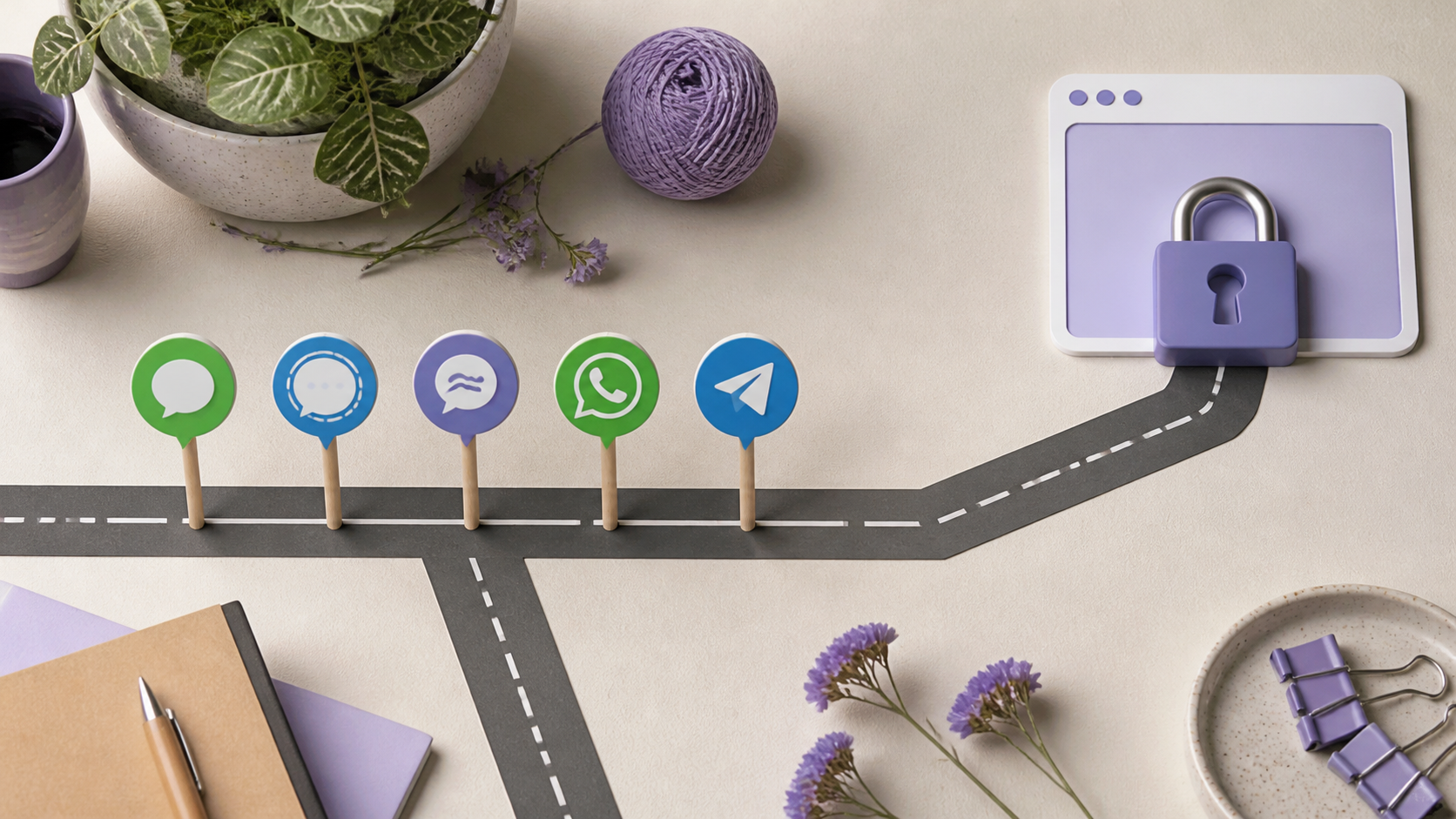
That is why apps such as Signal get so much attention. They are often discussed as the option for users who want private chats without having to build their own technical setup. Telegram, by contrast, is frequently chosen for its flexibility and large groups, but users still debate how private different chat modes actually are. In other words, people are not just asking “Is this secure?” They are asking “Is this secure enough for the way I talk to people?”
In practice, most users want a simple answer to a complicated problem. They want defaults that are sensible, a clear explanation of what is protected, and a sense that the company behind the app is not treating their messages as a product feed.
Ease of use decides whether people stay
Privacy may attract people, but usability keeps them there. A messaging app can have excellent security and still fail if people cannot find contacts, join groups, move between devices, or understand settings. If chatting feels like a chore, users drift back to whatever app everyone else already has.
This is one reason WhatsApp remains hard to dislodge. It is familiar, it is simple, and most people already know how to use it. A competing app does not just need a strong feature list. It needs to be obvious. People want fast onboarding, reliable syncing, good notifications, and a layout that does not require a manual.
When users compare apps, they often care about small details more than bold promises. Can I archive chats cleanly? Can I mute noisy groups? Can I move from phone to desktop without confusion? These are the things that decide daily satisfaction, not brand recognition.
What people actually compare across apps
Discussions around messaging tools tend to settle into a few practical questions. These are the areas that influence switching behaviour most often:
- Privacy defaults - Does the app protect chats sensibly without extra setup?
- Phone number requirements - Can you sign up without exposing the number you use everywhere else?
- Multi-device support - Does the app work smoothly on phone, tablet, and desktop?
- Group features - Are large chats, admin controls, and invite links manageable?
- Message controls - Can you delete, edit, mute, pin, or search messages easily?
- Backup and migration - Is it possible to move conversations without pain?
These are not flashy features, but they are the ones people notice after a week of use. A chat app can advertise privacy all it likes, but if the interface is confusing or the notifications are unreliable, the promise quickly loses value.
This is also where products like PigeonChat can be useful to think about. Even if you never adopt a new platform, it is worth asking whether a service respects the full shape of messaging, not just the security layer. People want a tool that fits real life, not a demo of technical ideals.
Signal and Telegram appeal to different instincts
Although people often compare Signal and Telegram as if they are direct substitutes, they tend to satisfy different preferences. Signal usually appeals to users who prioritise a smaller set of strong privacy decisions and a more restrained product philosophy. Telegram often attracts people who want broad functionality, large communities, and richer chat features.
That difference matters. Some users want a private chats app for one-to-one conversations and a separate space for public groups. Others want one app that can handle everything from casual chat to channels and file sharing. Neither instinct is wrong, but it means “best messaging app” is a subjective question.
The more useful comparison is not which app is universally superior. It is which app best matches your habits. If you mostly message family and close friends, simplicity and privacy may matter most. If you are in large communities or manage group coordination, features and scale may matter more. Users are usually clearer about this than the marketing copy suggests.
Why phone numbers still cause friction
One of the biggest pain points in messaging is phone number dependency. For many users, linking a chat account to their main number feels unnecessary. It can blur personal and professional identity, make switching harder, and create a sense that the app is tied too closely to telecom infrastructure.
This is why there is interest in alternatives that reduce reliance on phone numbers. Even when people do not need full anonymity, they often prefer more control over who can find them and how they are identified. The appeal is straightforward: chat should be easy to start without handing over more personal data than necessary.
In that context, private messaging is not only about encryption. It is also about reducing the amount of personal information needed to use the service at all. That subtle distinction is one reason some users keep looking beyond the default options.
What a convincing alternative really needs
A convincing WhatsApp alternative does not need to copy WhatsApp feature for feature. It needs to answer the questions users actually ask when they decide whether to stay, leave, or recommend an app to someone else.
At minimum, people want reliability, clear privacy choices, and enough usability that the app disappears into the background. The best messaging app is often the one that feels boring in the right way. It gets out of the way, protects conversations, and makes common tasks easy.
If you are evaluating options for yourself, it helps to test them against real scenarios rather than abstract claims. Try inviting a few people, moving between devices, muting a busy group, or searching old messages. Those small tests reveal more than any feature page can. And if you are building or choosing a platform like PigeonChat, the lesson is the same: users judge chat apps by how they fit daily communication, not by how loudly they claim to be different.
Frequently asked questions
Is Signal always the best WhatsApp alternative?
Not always. Signal is often a strong choice for people who care a lot about privacy and want a straightforward chat experience, but “best” depends on your needs. If you rely on large groups, channels, or highly custom features, another app may fit better.
Why do people still use Telegram if they care about privacy?
Because many users value its flexibility, large communities, and broad feature set. Some people are comfortable using it for certain kinds of chats while treating more sensitive private chats differently. That trade-off makes sense to some users, even if it is not ideal for everyone.
What should I test before switching messaging apps?
Check the basics first: how easy it is to find contacts, whether notifications work properly, whether group chats are manageable, and how messages behave across devices. If those everyday tasks feel awkward, the app will probably not be a good long-term fit.
In the end, what users want from a WhatsApp alternative is not mystery or hype. They want a chat app that respects their conversations, does not waste their time, and feels trustworthy enough to use every day.

Writer & Editor at PigeonChat
Related Articles

How PigeonChat.site fits the Messenger and Telegram search

How PigeonChat.site differs from WhatsApp and Telegram

How PigeonChat.site compares with WhatsApp and Signal
When Signal is not enough: comparing private chat apps
What a European chat app should offer now