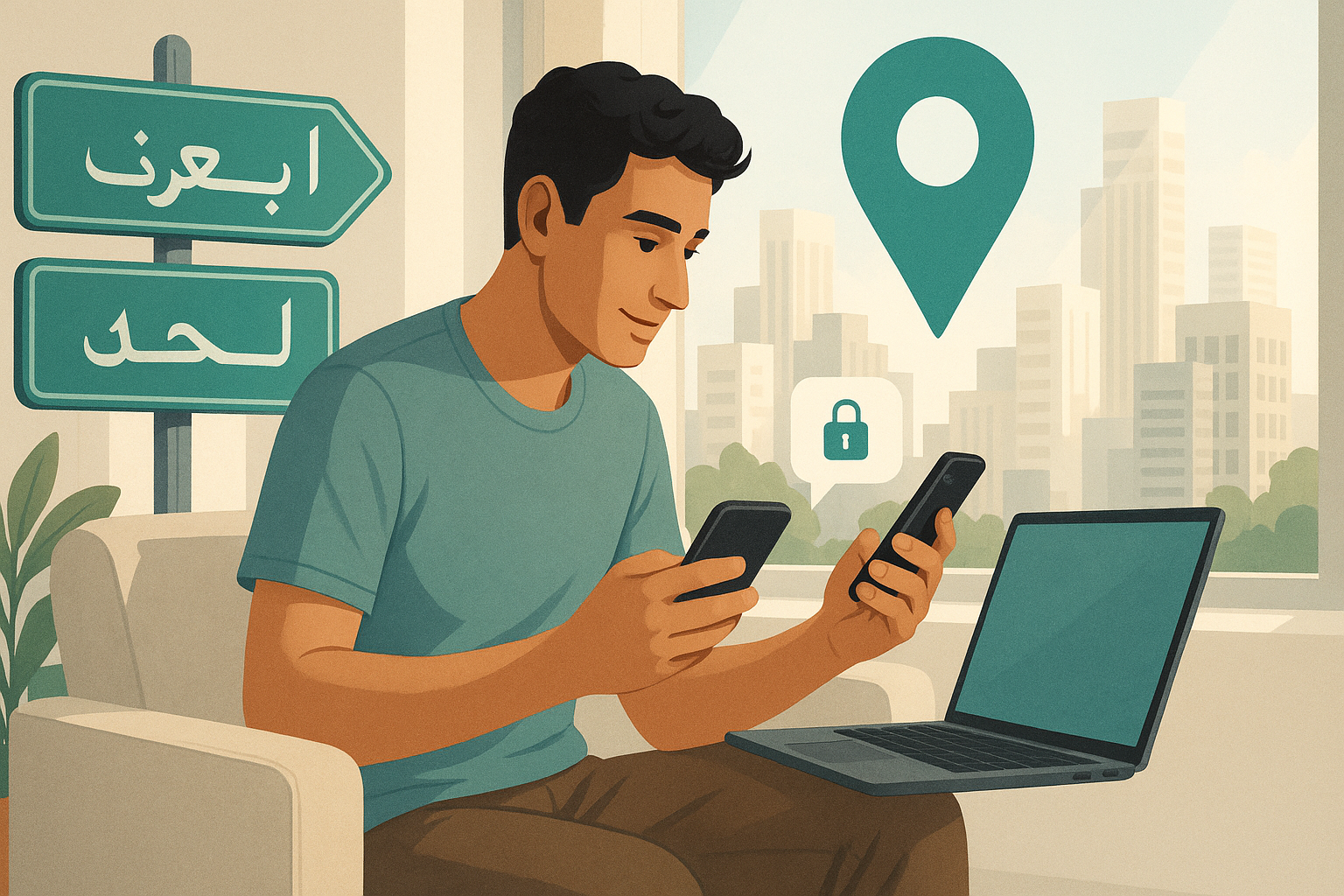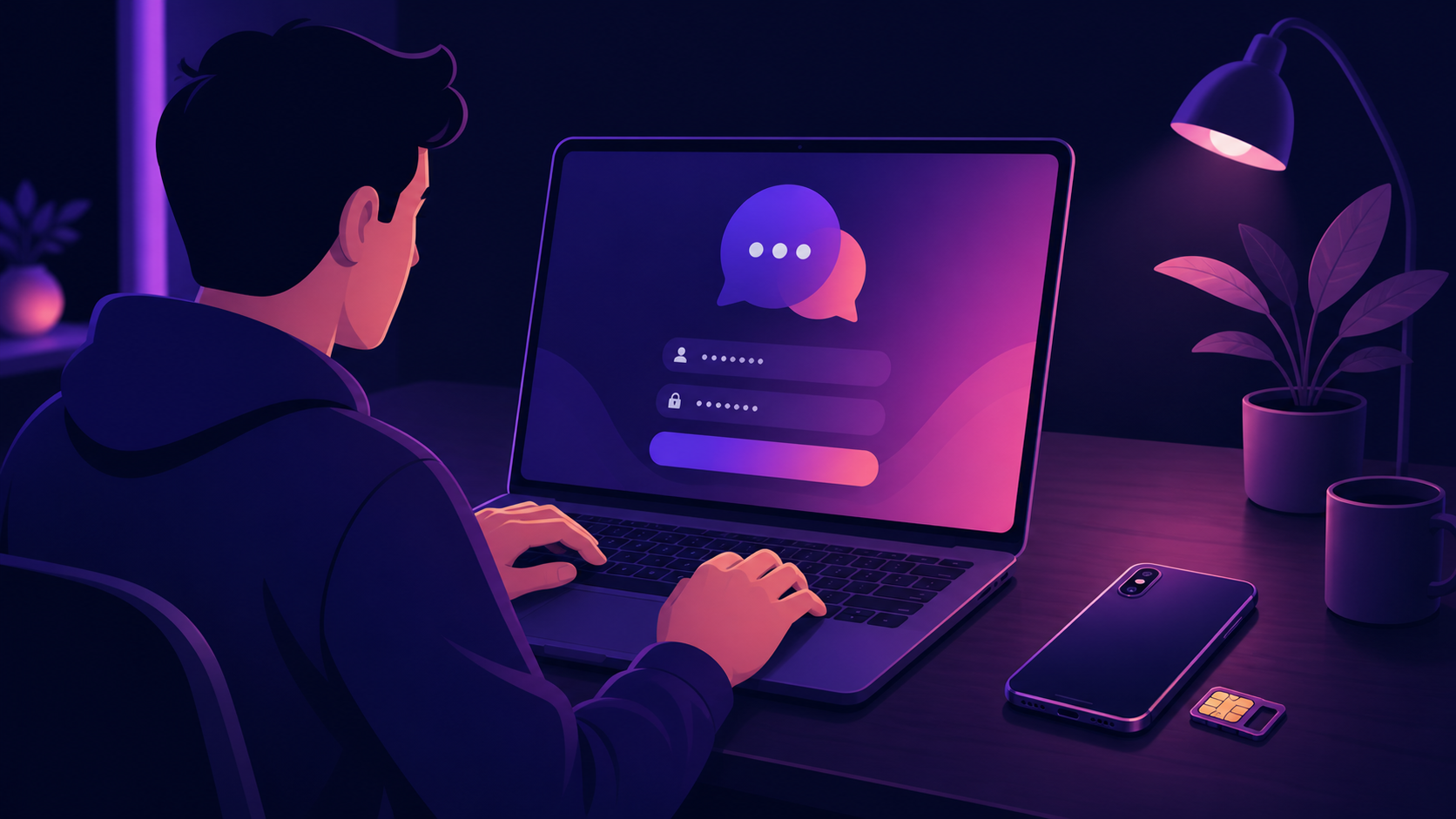
Why people want messaging without a phone number
People are asking for chat apps that do not require a SIM card or real number. This guide explains the privacy, safety, and setup reasons behind it.
For years, signing up for a chat app meant handing over a phone number as if it were the most natural thing in the world. In practice, that trade-off has always felt odd. A number is not just a login detail. It is a personal identifier that can link conversations, contacts, and often your wider digital life.
That is why messaging without a phone number is no longer a niche preference. It is becoming a basic expectation for people who care about privacy, who want clearer boundaries between different parts of their life, or who simply do not want their chat account tied to a SIM card.
The demand also comes from a simple truth: secure communication is not only about encryption. It is also about reducing the amount of personal information a service needs from the start. If an app can let you talk safely without asking for a phone number, many people see that as a better default.
Why a phone number can feel like too much
A phone number seems harmless because it is so familiar. But it can act as a durable identifier across services, devices, and contacts. If someone knows your number, they may be able to find your account, infer your identity, or connect your messaging profile to other accounts they already have.
That matters for private messaging because people often use chat apps for different kinds of relationships. You may want one account for family, another for work, and another for communities or sensitive topics. A number-based signup can blur those boundaries before you have even sent your first message.
There is also the practical issue of control. Not everyone wants to use a personal number for communication in the long term. People change numbers, travel, switch providers, use work phones, or share devices. If a chat service depends on a number, it can create unnecessary friction whenever circumstances change.
Privacy is not only about hiding message content
Many people think of privacy as the content of the message itself. That is important, but it is only part of the picture. A chat app can protect message content and still collect enough surrounding data to make users uncomfortable. Phone number requirements sit in that wider layer of metadata and identity.
For secure communication, the ideal is often minimisation. The service should know as little as possible unless it truly needs more. In that sense, phone-number-free signups align with a broader privacy principle: give the app less personal information to hold in the first place.
This is one reason the conversation keeps resurfacing in product discussions. When people ask for messaging without a phone number, they are often not asking for a novelty feature. They are asking for a more restrained design that respects the fact that not every conversation should be anchored to a permanent personal identifier.
Who benefits from phone-number-free signups
The short answer is: more people than you might expect. It is useful for anyone who wants better separation between online identities, but it is especially valuable in situations where revealing a number creates avoidable risk.
- People who want to keep personal and professional communication separate
- Users in communities where being easily identified by number is undesirable
- People who do not want their contact details exposed to every chat participant
- Those setting up a new account on a tablet, desktop, or secondary device
- Anyone who prefers not to tie long-term access to a single SIM card
For some, the appeal is also psychological. A number-based account can feel too close to a real-world identity, especially if the app is used for sensitive or semi-anonymous communication. A less intrusive signup flow can make private messaging feel genuinely private rather than simply encrypted.
At PigeonChat, this kind of thinking fits a wider idea: reduce the upfront data ask, then let people decide how much to reveal later. That approach is not only better for privacy conscious users. It is often better product design too.
Why the request is becoming more mainstream
It is easy to dismiss phone-number-free signups as a preference of advanced users. In reality, the expectation is spreading because people have become more aware of how identifiers are used across the internet. Users now ask more questions about what a service requires, why it needs it, and whether there is a less invasive alternative.
Chat apps have also become more central to daily life. They are no longer just for casual conversation. People use them for work, communities, coordination, support, and increasingly for sensitive exchanges. The more important messaging becomes, the less reasonable it feels to require a phone number as a condition of access.
That is why discussions around secure communication often keep circling back to the same point. If the app is meant to be trusted with private messages, it should earn that trust by being careful with identity data too. This is not an edge case. It is part of what users now expect from a modern chat product.
What to look for in a private messaging app
If you are evaluating a service, the signup method is only one signal. A good privacy-first app should make its data practices understandable and avoid asking for more than it needs. Phone-number-free registration is a strong sign, but it should sit alongside sensible account, device, and contact management.
Useful things to check include how the app handles recovery, whether contacts are uploaded unnecessarily, and whether you can control what is visible to others. You do not need to be a security specialist to make a sensible choice. A few careful questions go a long way.
- Can you create an account without providing a phone number?
- Does the app explain what identity information it stores?
- Can you hide your profile details from people you have not approved?
- Is there a clear way to manage devices and sessions?
- Does the service minimise contact syncing and metadata collection?
These questions matter because a chat app should be useful before it is clever. If a product is excellent at encryption but awkward about account creation or identity control, many privacy conscious users will still hesitate. The onboarding experience is part of the trust experience.
Frequently asked questions
Is messaging without a phone number less secure?
Not necessarily. Security depends on the full design of the app, including encryption, account protection, device management, and how identity is handled. A phone number is not a security feature by itself. In some cases, removing it can improve privacy without weakening security.
Why do so many apps still require a phone number?
Often because it is convenient for onboarding, account recovery, and spam reduction. It is also a familiar way to verify that a user has a reachable device. However, convenience for the provider is not the same as necessity for the user, which is why the requirement is increasingly questioned.
Can a private messaging app work well without phone-number signups?
Yes. An app can use other methods for account creation and recovery, depending on its design. The key point is that the service should choose the least intrusive option that still works reliably. For many users, that is exactly what private messaging should do.
Ultimately, the request for phone-number-free messaging is not about avoiding one small form field. It is about choosing communication tools that respect boundaries from the outset. As more people pay attention to how their identities are handled online, that expectation will only continue to grow.

Writer & Editor at PigeonChat
Related Articles
What a European chat app should offer now

What an EU chat app needs beyond privacy claims
What a browser-based end to end encryption chat app needs

How PigeonChat.site fits the EU privacy app search
Why browsers are becoming the new private chat home