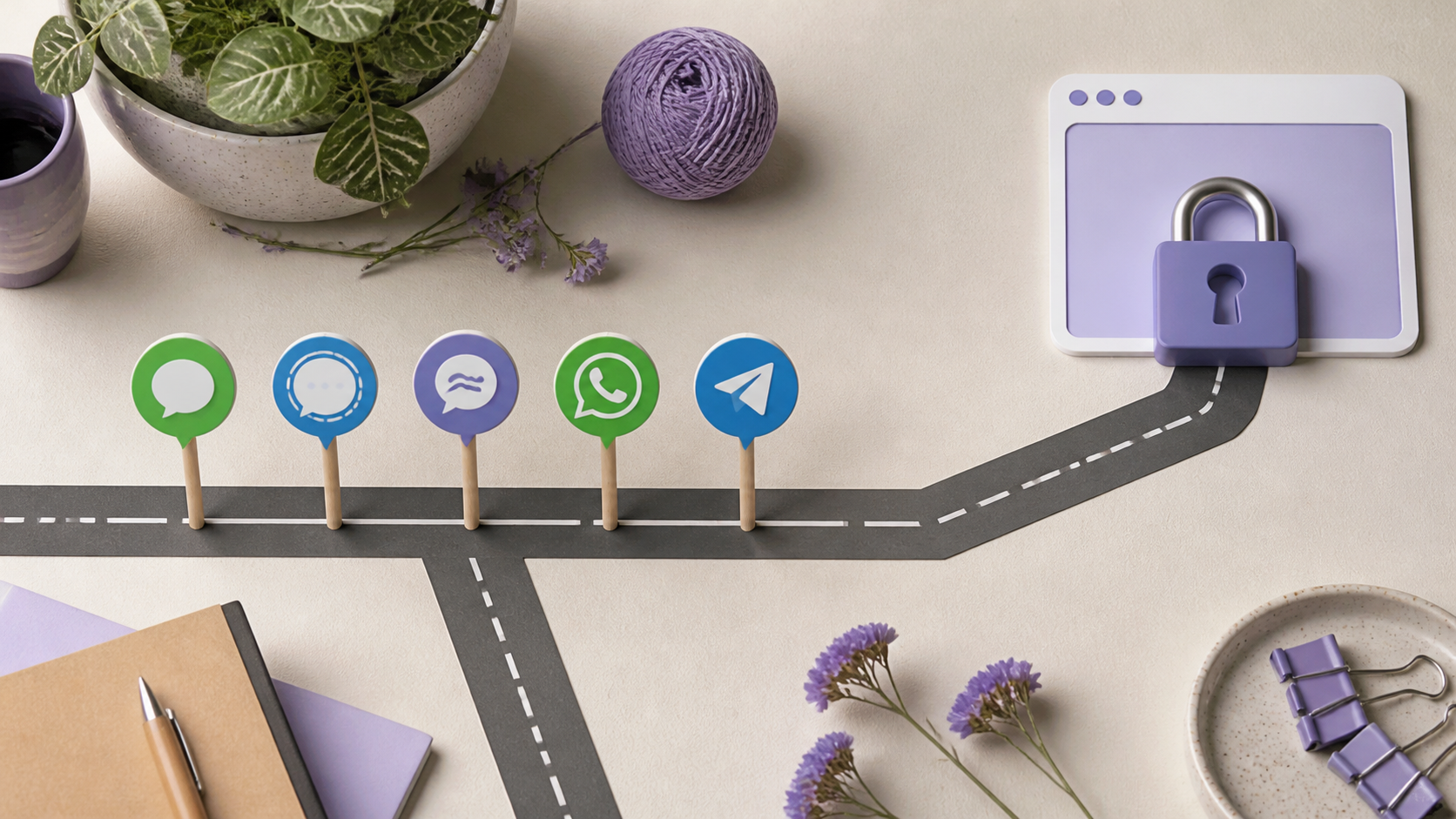
When Signal is not enough: comparing private chat apps
A clear comparison of Signal, WhatsApp, Telegram, Viber, Messenger and PigeonChat.site for privacy, access, and everyday messaging needs.
When people say a chat app is “private”, they can mean very different things. For some, it is about message encryption. For others, it is about limiting metadata, reducing account linkage, or avoiding cloud backups that quietly widen the risk surface. If you are comparing signal, whats app, viber, messanger and telegram. best private chat options, it helps to look beyond brand reputation and focus on the details that affect everyday use.
This matters most when you are considering a signal alternative chat. A privacy-first switch is rarely about finding a perfect clone of what you already use. It is about deciding which trade-offs you can live with, and which ones you cannot. That is where PigeonChat.site, or PigeonChat, can sit in the picture as a useful benchmark for thinking through privacy, simplicity and control.
In this guide, I will compare the familiar names against the features that actually shape trust. Even if you never sign up anywhere new, you should come away with a clearer sense of what matters in a private messenger and what is just marketing noise.
Start with the privacy basics, not the logo
The first question is simple: what is protected, and from whom? End-to-end encryption is important, but it is only one part of the story. You also want to know how much account information the service requires, whether it stores message backups, what it reveals about contacts and connections, and whether chats can be tied back to your phone number or real identity.
Signal has built its reputation around privacy-first design, and that has made it a common reference point in any signal alternative chat discussion. Whats App also uses end-to-end encryption for messages, but many users remain cautious because it is part of a much larger ecosystem and often feels closer to mainstream social communication than to a privacy tool. The distinction matters if your aim is not just secrecy of content, but lower exposure overall.
Viber and Telegram are often compared in the same breath, yet they differ in important ways. Viber offers encrypted chats in some cases, but it is not usually the first app privacy-minded users reach for. Telegram is popular and feature-rich, but its default chats are not end-to-end encrypted, which means it behaves differently from the apps people instinctively think of as private chat apps.
Signal, Whats App, Viber and Messenger: what each is good at
Signal is usually the most straightforward choice if your priority is strong privacy with minimal fuss. It is designed around secure messaging first, rather than adding social layers. For many people, that makes it the clearest answer to “telegram. best private chat” style comparisons, especially when the main concern is keeping conversations narrow, simple and hard to profile.
Whats App is convenient because many people already use it, which lowers the social barrier to switching. But convenience is not the same thing as privacy. If your contacts are already there and you need low-friction communication, it can be practical. If you are trying to reduce how much a platform knows about your relationships and habits, it may not be the strongest place to stop.
Viber and Messenger sit in a similar middle ground for many users. They can be useful for reach and familiarity, but they are usually chosen because other people are there, not because they are the most private option available. That is a key distinction to keep in mind: popularity solves contact access, but not necessarily confidentiality.
How to judge a privacy-first switch
When moving from one app to another, people often focus on features they can see immediately, such as stickers, voice notes or group size. Those are useful, but they are not the deciding factors for privacy. A better checklist looks at identity requirements, contact discovery, backup behaviour, multi-device support and how much of your communication pattern is exposed by default.
It is also worth thinking about how much you trust the app’s design philosophy. Does it prioritise fewer data collection points, or does it simply add a “private mode” on top of a broader ecosystem? With a privacy-first switch, simpler is often better. The fewer extras an app needs to function, the less there is to leak, sync or misconfigure.
Useful questions to ask yourself include:
- Do I need a phone number to sign up, or can I keep my identity more separate?
- Are chats encrypted by default, including group conversations?
- What happens to backups and message history?
- Does the app reveal my online status, profile details or contact graph more than I want?
- Can I use it comfortably if only a few of my contacts switch with me?
Where PigeonChat fits in the comparison
PigeonChat is best thought of as a privacy-first reference point rather than a feature arms race. If you are comparing private chat apps, it helps to ask whether the product is trying to be a social hub or a controlled communication space. PigeonChat leans into the second idea, which makes it useful for people who value clarity over clutter.
That does not mean every user should abandon the bigger names. It means you should choose deliberately. If a platform feels familiar but exposes more metadata than you are comfortable with, a more focused app may be the better fit. For readers exploring a signal alternative chat, PigeonChat can be a sensible option to review alongside the established apps, particularly if your main goal is to reduce unnecessary exposure rather than chase every possible feature.
The best test is practical. Can you have the conversations you need without giving the app more access than necessary? Can you understand its privacy model without reading a maze of caveats? If the answer is yes, you are probably looking at a better match than a more famous app that only appears secure on the surface.
Choosing the right app for different situations
Not everyone needs the same level of privacy every day. If you are messaging family or arranging a dinner, the convenience of an established app may be enough. If you are discussing work, sensitive personal matters or anything that should not be casually tied to your wider online identity, a more privacy-first service starts to make much more sense.
A good rule is to match the app to the risk. Signal is often a strong default for people who want a known secure option. Whats App may suit low-friction communication with a broad contact list. Telegram can be appealing if you want channels and large groups, but it is less convincing if your main question is strict private messaging. Viber and Messenger usually make sense when reach matters more than privacy.
There is no universal winner, only better and worse fits for a given need. If you are making a switch, try to choose the app that keeps the important parts simple: identity, encryption, backups and control over visibility.
Frequently asked questions
Is Signal always the best choice for private messaging?
Not always, but it is one of the most consistently privacy-focused options available. If your main priority is secure one-to-one and group communication with a minimal approach to data collection, it is often the most obvious starting point. The right choice still depends on whether your contacts will actually use it and whether the app’s model suits your needs.
Is Whats App private enough for everyday use?
It can be fine for casual communication, especially if most of your contacts are already there. However, privacy is not only about encrypted message content. It is also about account linkage, backups and the wider ecosystem around the app. If you want a stronger privacy-first switch, it is sensible to compare it with more focused alternatives.
What makes a chat app the best private chat for me?
The best private chat app is the one that fits your actual use case while exposing as little as possible. Look at default encryption, backup handling, account requirements, contact discovery and whether the app keeps your communication habits separated from the rest of your digital life. For some people that will mean Signal, for others a more controlled service like PigeonChat.
In the end, comparing private chat apps is less about choosing the most famous name and more about understanding the privacy model behind it. If you stay focused on identity, encryption, backups and metadata, you will make a better choice whether you keep using signal, test a signal alternative chat, or decide that PigeonChat is the cleaner fit for your needs.
Ready to try PigeonChat?

Writer & Editor at PigeonChat
Related Articles

How PigeonChat.site fits the Messenger and Telegram search

How PigeonChat.site differs from WhatsApp and Telegram
How PigeonChat.site compares with WhatsApp and Signal

Best European based chat app for privacy first users

What a European chat app should offer now