
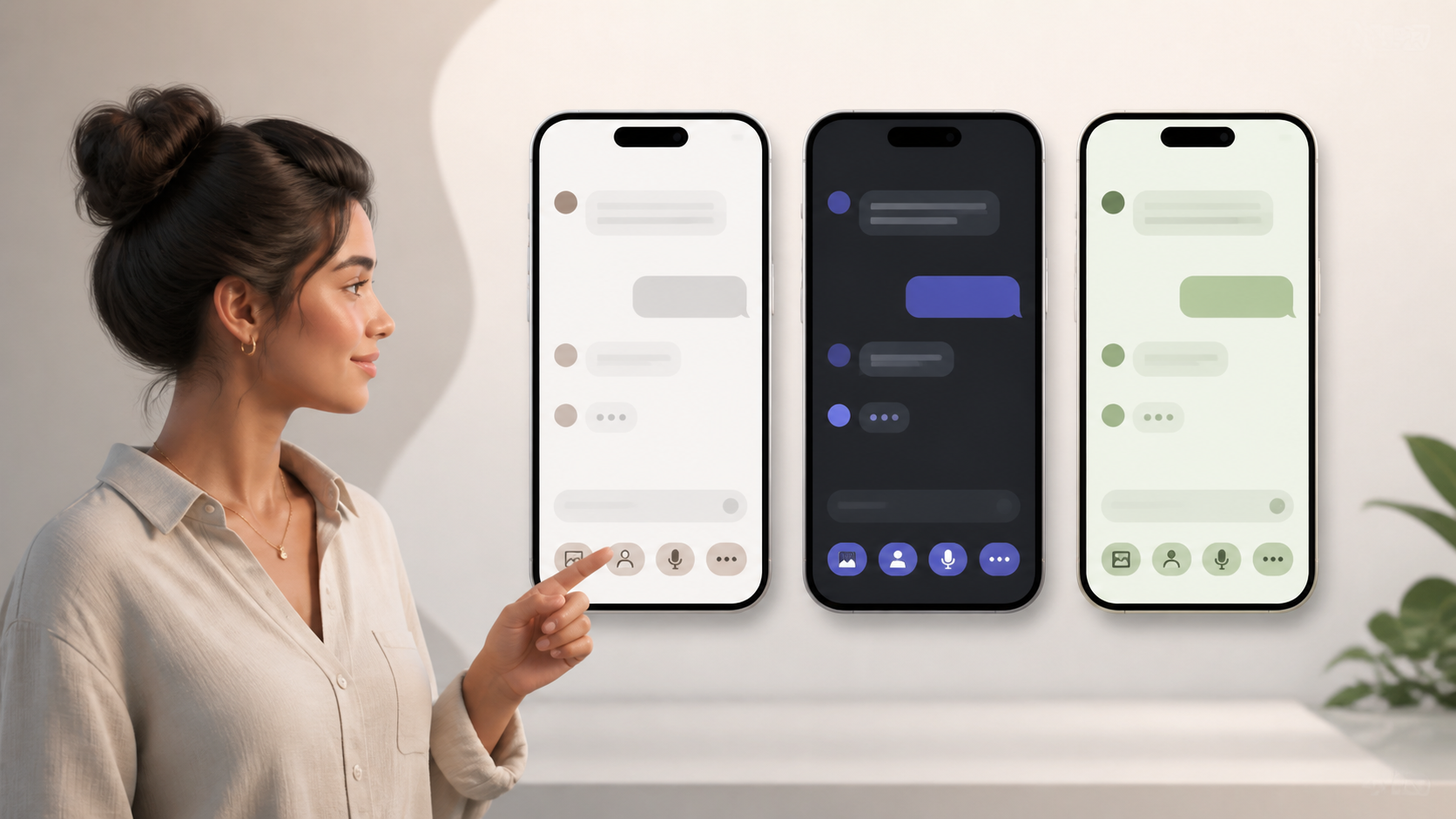
What people compare in Signal alternative chats
People comparing chat apps want privacy, simple login, and organized groups. This article explains what makes one messaging app feel better than another.
When people compare Signal alternative chats, they rarely start with branding. They start with friction. Can I message the people I already know? Does it feel private without being awkward? Will it work on my phone, my desktop, and for the group I use every day?
That is why private messaging comparisons often sound practical rather than ideological. People are usually weighing a mix of privacy, usability, adoption, and trust. In other words, they are asking which app fits their habits, not just which app has the strongest headline feature.
If you are sorting through a Signal alternative, a WhatsApp alternative, or even a Telegram alternative, it helps to know the criteria people actually use. The best choice is often the one that matches how you communicate, how cautious you want to be, and how much complexity you are prepared to live with.
Privacy is the first filter, but not the only one
For many people, privacy is the starting point. They want to know whether messages are end-to-end encrypted, whether the service can read them, and what metadata the app still keeps. These questions matter because “private” can mean very different things from one app to another.
People also compare how privacy is implemented in practice. Some apps make encrypted chats the default. Others let you choose between private and non-private modes. That difference is important because a messaging app can only protect you if the secure option is the easy one to use.
It is also common to compare the account model. Some users prefer apps that require a phone number, while others look for services that reduce the amount of identifying information they need to share. If you care about privacy, think beyond encryption alone and ask what the app learns about you just by existing.
Adoption usually decides the winner
Even the most privacy-friendly app is hard to use if nobody else is there. That is why network effect is one of the biggest comparison criteria. People often keep Signal on their phone but still rely on another app because their family, workplace, or social group already uses it.
This is where a lot of private messaging debates become practical. A WhatsApp alternative may be technically appealing, but if your local community lives in WhatsApp groups, the better app on paper can still lose. The same goes for a Telegram alternative if your contacts are split across channels, groups, and direct messages already.
When people compare apps, they are often really comparing transition cost. How much effort will it take to move conversations, persuade contacts, or maintain two apps at once? The lower that cost, the more likely the app will actually be used.
- Who already uses it in your circles?
- Can you join without making others change habits?
- Does it replace your current app or sit alongside it?
- Will you have to explain it every time you invite someone?
Usability matters more than feature lists
People often say they want features, but what they usually mean is convenience. They want reliable message delivery, easy search, clear group management, good notifications, and a desktop version that does not feel like a compromise. If those basics are awkward, the app gets ignored.
Different users value different conveniences. Some want simple one-to-one chat. Others need large group controls, voice notes, file sharing, or pinned messages. A private messaging app can be secure and still lose if it makes everyday tasks feel slow or cluttered.
This is also why some comparisons favour apps that are slightly less ambitious. A cleaner interface, fewer toggles, and predictable behaviour can matter more than an endless feature set. People do not open chat apps to study them. They open them to get things done quickly.
Trust is about governance as much as code
Once people move past encryption and usability, they often ask who is behind the app. Is it maintained by a company, a foundation, or a volunteer project? Is the development process transparent? Can the service change in ways that affect the privacy promise?
Trust is not just about whether the code is open source, though that can help people inspect what is happening. It is also about whether the project has a stable direction, sensible moderation, and a clear idea of what it is for. An app can be technically strong but still feel shaky if the team behind it is unpredictable.
That is one reason some people like a platform such as PigeonChat when they are exploring alternatives. Not because it solves every problem, but because it is easier to evaluate when the design intent is straightforward and the trade-offs are visible.
Cross-platform support and data portability can tip the balance
A messaging app is only useful if it fits into the devices people already use. Many comparisons come down to whether the app works well on iPhone, Android, desktop, or web. If you need to switch between devices during the day, a clumsy desktop experience can be a deal-breaker.
People also think about data portability, even if they do not use that phrase. Can they export chats? Can they move to a new phone without losing everything? Can they keep old conversations if they stop using the app? These details matter because chat histories often become part of daily work and personal life.
For teams and groups, admin tools matter too. If the app makes it easy to manage contacts, invite people, and control group settings, it feels less fragile. If not, users often fall back to whichever app is already the least annoying.
What people usually compare in practice
When you strip away the marketing, most app comparisons come back to a small set of questions. The list below is a good way to judge any private messaging service without getting distracted by hype.
- Privacy model - Is encryption on by default, and what metadata is still collected?
- Adoption - Are the people you need already there?
- Ease of use - Can you send messages, images, and files without friction?
- Platform support - Does it work well on your phone and desktop?
- Trust and governance - Who runs it, and how stable is the project?
- Portability - Can you move data or leave without losing everything?
These criteria explain why conversations about Signal alternative chats can sound inconsistent. One person cares most about privacy. Another cares about groups. Another simply wants an app their friends will actually answer in. The “best” app depends on which of those constraints matters most to you.
Frequently asked questions
Is the most private app always the best choice?
Not necessarily. Strong privacy is important, but an app that nobody uses, or that feels awkward in daily life, can be less useful than a slightly less strict service that people will actually adopt. The best choice balances privacy with practicality.
Why do people still use WhatsApp if they want more privacy?
Usually because other people are already there. Messaging is social infrastructure, so adoption often outweighs preference. Many users keep one secure app for certain conversations and another app for the groups they cannot easily move.
What is the main difference between a Signal alternative and a Telegram alternative?
People often use those phrases to describe different priorities. A Signal alternative is usually judged on privacy, simplicity, and trust. A Telegram alternative is often compared on groups, channels, ease of use, and how close it feels to a mainstream messaging app.
If you are comparing private messaging apps, start with your real habits, not the loudest opinions. The best chat app is the one that fits your relationships, your devices, and your comfort level with privacy trade-offs. Once you look at those factors clearly, the right choice becomes much easier to spot.

Writer & Editor at PigeonChat
Related Articles

How PigeonChat.site fits the Messenger and Telegram search

How PigeonChat.site differs from WhatsApp and Telegram
How PigeonChat.site compares with WhatsApp and Signal
When Signal is not enough: comparing private chat apps
What a European chat app should offer now