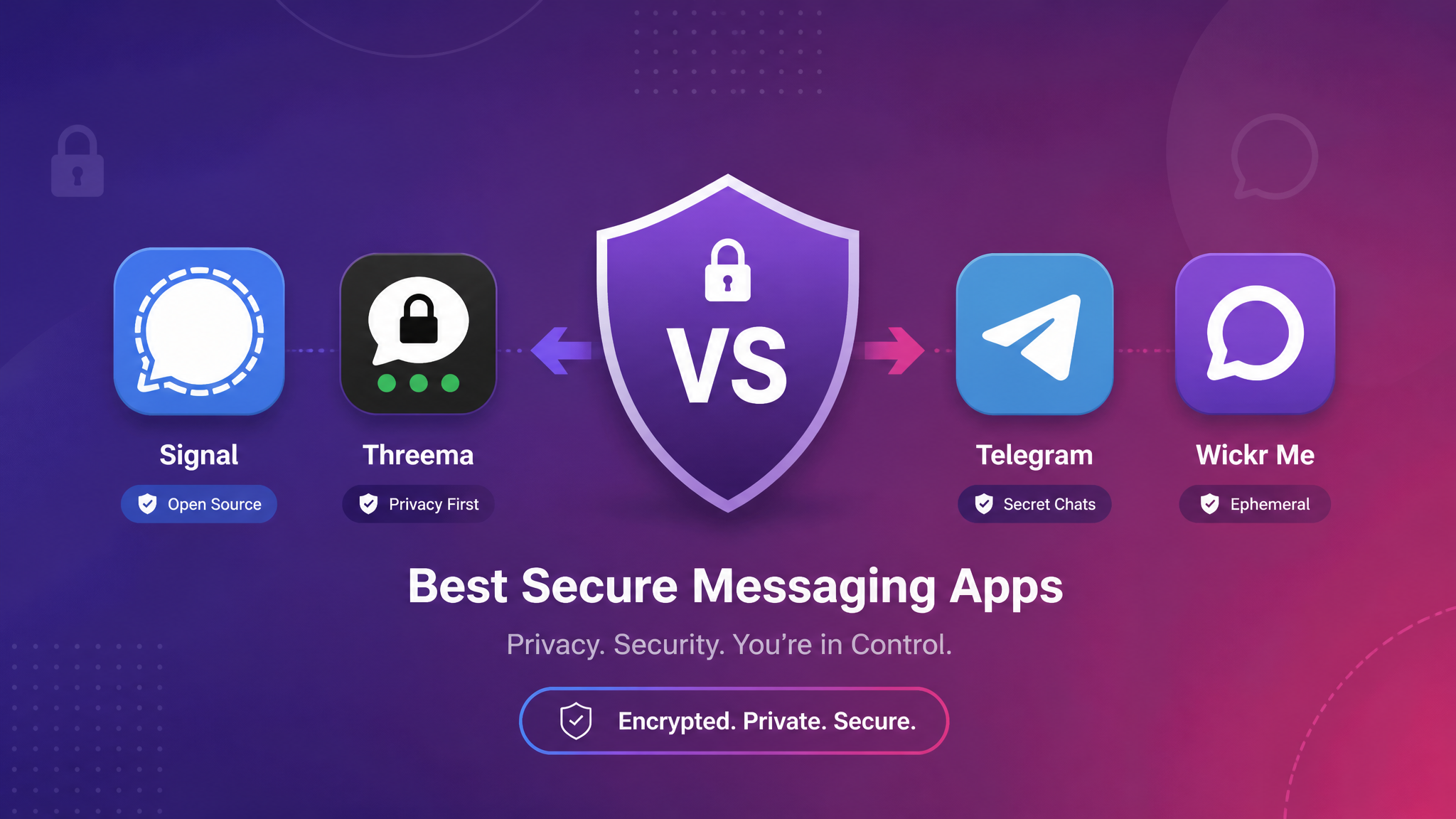
Signal Alternative 2026: Apps Like Signal (and a Facebook Alternative)
Looking for a Signal alternative or apps like Signal in 2026? An honest guide to the best secure messaging apps - no phone number, plus a real Facebook alternative.
Signal is, by most reasonable measures, the gold standard of private messaging. So why do so many people search for a Signal alternative or for apps like Signal? Usually for one of a handful of practical reasons: the phone-number requirement, the fact that friends and family are not on it, the sparse feature set compared with mainstream apps, or the desire for something that also replaces the social side of their digital life — a genuine Facebook alternative as well as a messenger.
This guide is an honest look at the best secure messaging apps of 2026 that people move to from — or alongside — Signal, what each one trades off, and where PigeonChat fits into the picture.
First, What Makes Signal Worth Copying
Before recommending alternatives, it is only fair to state what any serious E2EE messaging app is measured against. Signal set the bar with: end-to-end encryption on by default; the open-source Signal Protocol that the whole industry now licenses; a non-profit funding model with no advertising; and years of methodical work to shrink the metadata it holds. Any "Signal alternative" worth considering has to at least respect those principles, not quietly abandon them.
Why People Look for Apps Like Signal
1. The phone number requirement
Signal still ties every account to a phone number. Usernames now let you talk to people without revealing that number, but you cannot create an account without one. For anyone whose number is itself sensitive — journalists, activists, people escaping harassment — that is a real limitation, and the single most common reason to look for an alternative.
2. Nobody I know is on it
A messenger is only as useful as the people reachable on it. Signal's user base, while growing, is far smaller than WhatsApp's. Many people want the same privacy in an app that more of their contacts might actually adopt.
3. It is deliberately minimal
Signal's focus is secure messaging, full stop. It is not trying to be a social network, a community platform or a feed. If you want privacy and stories, channels and a social layer, Signal is not designed to give you that.
The Best Signal Alternatives of 2026
| App | E2EE default | Phone number | Social features | Best for |
|---|---|---|---|---|
| Signal | Yes | Required | No | Maximum-assurance private messaging |
| PigeonChat | Yes | Not required | Yes (feed, channels, stories) | Private messaging + social, no phone number |
| Threema | Yes | Not required | Minimal | Paid, ID-based privacy under Swiss law |
| Session | Yes | Not required | No | Metadata-resistant, onion-routed messaging |
| Element (Matrix) | Yes | Not required | Communities | Self-hosted, federated communities |
| Wire | Yes | Optional (email) | Team-oriented | Business and team collaboration |
PigeonChat — privacy plus the social layer, without a phone number
PigeonChat is the natural alternative for people who want everything Signal protects but also want their app to double as a Facebook alternative. Accounts are created with a username, so there is no phone number requirement. Private chats are end-to-end encrypted by default. And on top of the messenger sits a full social experience — a personal wall, stories, reels, a curated feed and public and private communities — none of it funded by advertising.
The honest trade: PigeonChat's approach is broader than Signal's laser focus, and its network is younger. If your single priority is the most battle-tested one-to-one security posture on earth, Signal still holds that crown. If you want strong E2EE messaging and a social home in one app without exposing your number, PigeonChat is built for exactly that.
Threema — paid, no phone number, Swiss law
Threema charges a small one-off fee and gives every user a random Threema ID instead of requiring a phone number. It is a mature, respected option for people who are happy to pay for privacy and value Swiss data-protection jurisdiction. It is less of a social platform and more a focused private messenger.
Session — maximum metadata resistance
Session removes phone numbers entirely and routes messages through an onion network to obscure metadata such as your IP address. For people whose threat model is specifically about who they talk to being observed, it is one of the strongest options — at the cost of some speed and features.
Element / Matrix — decentralised and self-hostable
Element runs on the open Matrix protocol, which is federated: you can run your own server and still talk to everyone else on the network, the way email works. It is the strongest choice for organisations that want to own their communication infrastructure, at the cost of more setup.
Is There a Signal Alternative That Also Replaces Facebook?
This is the request underneath a lot of "apps like Signal" searches. People do not only want private one-to-one chat; they want to stop feeding an advertising-driven social network too. The trouble is that most secure messengers deliberately do not have a social layer, and most social networks are not private.
PigeonChat exists in that specific gap. It offers the encrypted private messaging you would go to Signal for, and the feed, communities and profile you would otherwise get from a social network — in one place, under one username, with no adverts. That combination is why it appears on lists both for Signal alternatives and for Facebook alternatives.
How to Choose
Match the app to your actual reason for switching. If your problem is the phone number, choose PigeonChat, Threema or Session. If your problem is metadata specifically, Session is strongest. If you want to own the servers, choose Element. If you want privacy plus a social feed and communities in one app, choose PigeonChat. And if none of those problems apply and you simply want the most proven one-to-one messenger, there is nothing wrong with staying on Signal.
Making the Switch: A Practical Checklist
Moving messaging apps fails for one predictable reason: people install the new app, find none of their contacts there, and drift back. Here is how to actually make a switch stick, whichever alternative you choose.
1. Bring one group with you, not your whole contact list. Pick a single group that has a real reason to value privacy — a family group, a project team, a community — and move that first. A messenger with one active group is useful; a messenger with a hundred empty contacts is not.
2. Keep the old app during the transition. You do not have to delete anything on day one. Run the new app alongside the old one, shift conversations over as they naturally come up, and let usage migrate rather than forcing it.
3. Set your privacy defaults immediately. Choose a username, decide what your public profile shows, and turn on a disappearing-message timer for the chats that warrant it. Doing this on day one means you never have to remember later.
4. Explain the "why" once. People adopt a new app far more readily when they understand the reason. A single sentence — "this one is encrypted and does not need your phone number" — does more than any feature list.
Do You Have to Choose Just One?
Here is the liberating truth that most "X vs Y" articles skip: you do not have to pick a single messenger and delete the rest. Most people happily run two or three. You might keep Signal for your most security-sensitive one-to-one conversations, use PigeonChat as your everyday all-in-one app for social, communities and family, and keep a mainstream app installed purely to reach the contacts who refuse to move.
Framed this way, choosing a Signal alternative is not a divorce — it is adding the right tool for the jobs your current app does badly. If your current app does everything you need, you do not need an alternative at all. If it forces trade-offs you dislike — a phone number, no social layer, an advertising owner — then adding one that fixes exactly that is the sensible move.
Frequently Asked Questions
What is the best Signal alternative that does not need a phone number?
PigeonChat, Threema, Session and Element all allow account creation without a phone number. PigeonChat is the best pick if you also want a social feed and communities; Threema and Session are more focused private messengers.
Are apps like Signal actually as secure as Signal?
Security depends on the specifics, but the strong alternatives use end-to-end encryption by default just as Signal does. The meaningful differences are usually in metadata handling, funding model and whether a phone number is required — not in whether the content is encrypted.
Can one app replace both Signal and Facebook?
That is precisely what an all-in-one private platform like PigeonChat aims to do: encrypted private messaging plus a social feed, stories and communities, without advertising. No single app perfectly replaces the reach of either incumbent, but for daily use it can cover both roles.
Is Signal still worth using in 2026?
Absolutely. Signal remains the benchmark for one-to-one secure messaging. Looking at alternatives is about matching an app to a specific need — no phone number, a social layer, self-hosting — not about Signal being bad.
The Bottom Line
The best Signal alternative in 2026 is the one that solves the specific reason you started searching. If that reason is the phone number, the missing social layer, or the desire for a genuine Facebook alternative with real encryption underneath, PigeonChat was built for it — strong E2EE messaging and a full social experience in one app, no number, no ads.
Download PigeonChat to try it, or read how encrypted messaging works to understand what "secure" really means. For a wider view, see our best privacy apps of 2026 guide.

Writer & Editor at PigeonChat
Related Articles

How PigeonChat.site fits the Messenger and Telegram search

How PigeonChat.site differs from WhatsApp and Telegram

How PigeonChat.site compares with WhatsApp and Signal
When Signal is not enough: comparing private chat apps
What a European chat app should offer now