
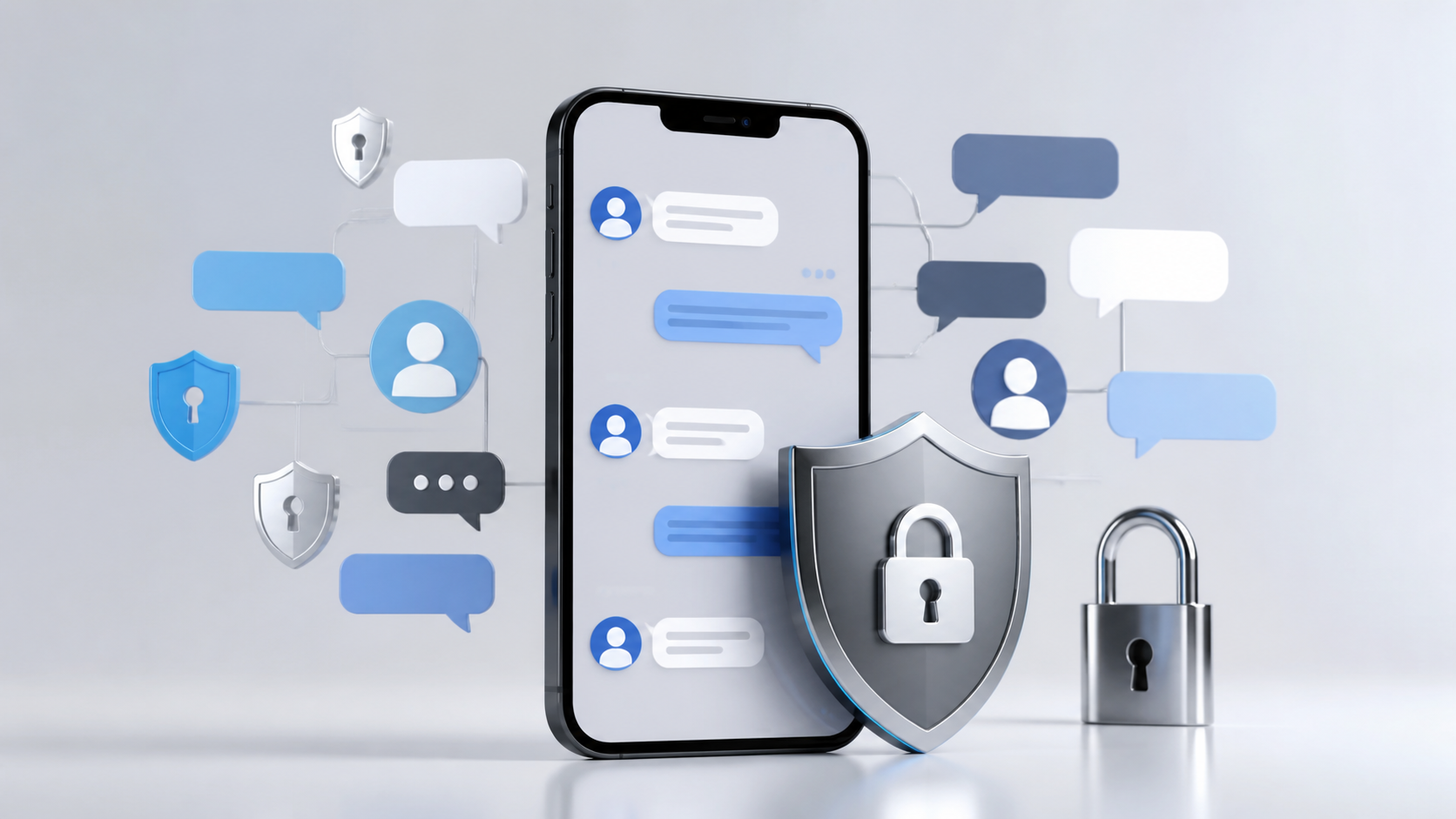
Why secure communication is trending in chat apps
Security is moving from a niche concern to a mainstream expectation. This article explains why secure communication now matters in everyday chat app choices.
Secure communication is no longer a niche feature reserved for journalists, activists, or the especially cautious. It is now part of the everyday conversation around chat apps, and that shift says a lot about what people expect from modern messaging. Privacy concerns are no longer abstract. They shape the tools people choose, the settings they look for, and the apps they trust.
That does not mean everyone is suddenly an expert in encryption. Most people just want to know that their private messaging stays private, that their conversations are not casually exposed, and that they can talk without feeling watched. In practice, the rise of online privacy awareness is pushing chat apps to explain themselves more clearly and design for trust from the start.
Even if you never plan to use a dedicated secure messenger, it helps to understand why the trend exists. The wider messaging market is moving towards stronger encryption, fewer unnecessary data requests, and more control over identity and message retention. That is a useful direction for anyone who uses chat apps at work, at home, or on the move.
Why secure communication is becoming mainstream
A few years ago, secure communication was often framed as an advanced requirement. Today, many users see it as basic hygiene. People expect their chat app to protect the content of messages in transit, keep personal details to a minimum, and make it hard for strangers or platforms to read along.
This change is partly practical. More of daily life happens through messaging now, from arranging family plans to handling payments, interviews, and support. As chat apps take on more important roles, users naturally become more concerned about the risks of weak security or broad data collection.
There is also a growing awareness that convenience and privacy do not have to be opposites. Many people are discovering that encrypted messaging can still feel simple, fast, and familiar. The market is responding by making secure features less specialised and more expected.
What users mean when they ask for privacy
When people say they want online privacy, they rarely mean one single thing. For some, it is about keeping message content encrypted. For others, it is about hiding their phone number, reducing profile visibility, or limiting what the app learns about contacts and device activity.
They may also be thinking about the broader trail left behind by communication. Metadata, backups, notification previews, linked devices, and cloud storage can all affect how private a conversation really is. In other words, secure communication is not just about the words in a message. It is also about the surrounding system.
This is why the phrase private messaging now carries more weight than it used to. Users are asking whether a platform gives them genuine control, or simply advertises privacy while still collecting enough information to build detailed profiles.
What makes a chat app feel secure
Security is partly technical, but it is also emotional. A chat app feels secure when its behaviour matches its promises. Clear settings, sensible defaults, and plain explanations matter because most people are not reading protocol documentation before sending a message.
At a practical level, secure communication usually includes several familiar signals. These are not all equally important in every context, but together they help create confidence:
- End-to-end encryption for message content
- Transparent account and device recovery options
- Minimal data collection and clear privacy controls
- Support for disappearing messages or message deletion
- Protection against unsolicited contact and spam
- Options that reduce reliance on a phone number or other sensitive identifier
Users do not necessarily want the most complicated system. They want a chat app that behaves predictably and keeps private conversations out of reach from the wrong people. That is a high bar, but it is becoming a standard one.
Why the market is moving towards stronger encryption
One reason secure communication is trending is that people have learned, sometimes the hard way, that convenience features can create exposure. Backups, integrations, syncing across devices, and account recovery often make messaging easier, but they can also widen the surface area for leaks or misuse.
As a result, encryption is becoming a selling point rather than a niche reassurance. It is not enough for an app to say messages are private. Users increasingly want to know how that privacy works, what is stored, and who can access it under different conditions.
For companies, this creates a useful pressure. If a chat app wants to stand out, it must earn trust with design choices, not just branding. That is one reason projects such as PigeonChat focus on straightforward privacy-minded messaging rather than treating security as a bolt-on feature.
The trade-offs users are starting to notice
Better privacy often requires some compromise, although the trade-offs are not always dramatic. A more secure system may ask you to use fewer identity-linked features, or it may limit certain forms of cloud convenience. That can feel inconvenient at first, especially for people used to frictionless sign-in and universal search.
Still, many users are now willing to accept a small amount of friction if the reward is stronger control over their conversations. That is a meaningful change in expectations. It suggests that privacy is no longer seen as a bonus for a few technically minded users, but as part of the baseline quality of a messaging app.
There is also a cultural shift here. People are becoming more sceptical of platforms that ask for a lot while explaining very little. In response, the most trusted apps tend to be the ones that make their limits visible and their security model understandable.
What to look for if you care about private messaging
If you are comparing chat apps, it helps to look beyond marketing language. Terms like secure communication and encrypted messaging are useful starting points, but the details matter. A privacy-friendly app should be clear about what it protects, what it stores, and what it cannot protect on your behalf.
As a general guide, ask whether the app gives you control over the following:
- Whether your phone number is required
- Whether message content is end-to-end encrypted by default
- How backups are handled and where they are stored
- Whether you can delete messages for everyone
- Whether notification previews can be restricted
- Whether the app shares data for advertising or analytics
You do not need to become paranoid to make better choices. A little curiosity goes a long way. Even if you stay with a mainstream platform, knowing the difference between content encryption, metadata exposure, and account-level privacy can help you use it more wisely.
Frequently asked questions
Is encrypted messaging the same as complete privacy?
No. Encryption helps protect the content of messages, but it does not automatically hide everything else. Details such as who you contacted, when you were active, your device information, and your backup settings may still reveal useful information. Secure communication is strongest when content protection is combined with careful data handling.
Why do some private messaging apps ask for less personal information?
Because the less sensitive data an app collects, the less there is to expose, retain, or misuse. Some users prefer not to tie conversations to a phone number or other direct identifier. That does not make an app perfect, but it can reduce unnecessary risk and improve the feeling of control.
Do I need a special app to have online privacy in chat?
Not always, but it depends on your needs. Some mainstream chat apps offer strong security features, while others prioritise convenience over privacy. If your conversations are sensitive, it is worth checking how the app handles encryption, backups, and account recovery. For many people, the right balance is a familiar app with careful settings, while others prefer a dedicated tool like PigeonChat for a more privacy-first approach.
The growing interest in secure communication is a sign that users are paying attention. They want chat apps that respect their conversations, explain their choices clearly, and make privacy part of the default experience. That expectation is likely to keep shaping the future of messaging, whether people are chatting with friends, colleagues, or customers.

Writer & Editor at PigeonChat
Related Articles

Why browsers are becoming the new private chat home

Why a European chat app matters for privacy and compliance

Why UAE users keep searching for a better chat app

Why people still look for a best chat app in the UAE

What a European chat app should offer now