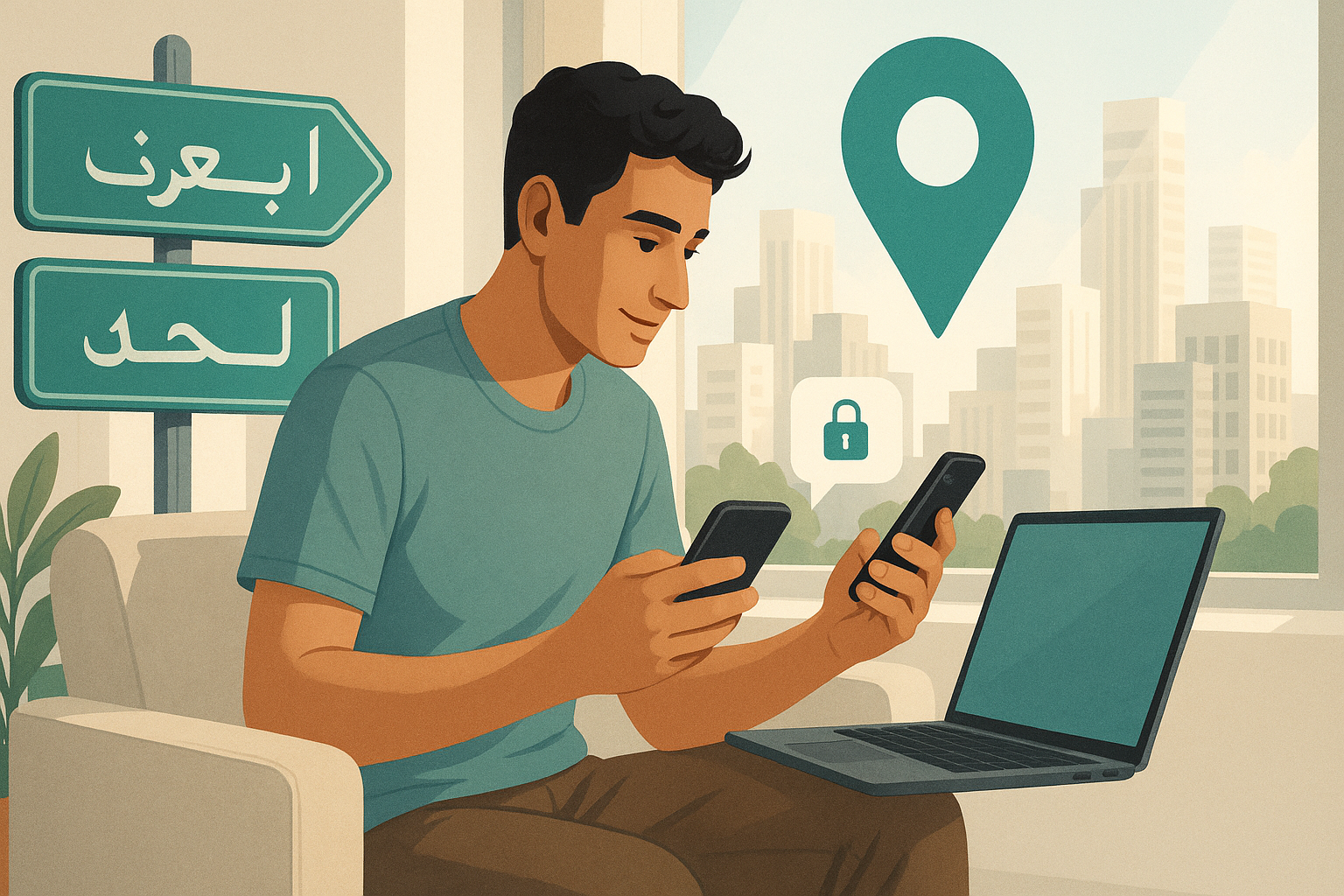

Private messaging without servers or phone numbers
Readers want a chat app that avoids phone numbers and central servers. This guide explains the privacy tradeoffs behind that request.
Private messaging has always been sold as a simple product choice, but in practice it touches much bigger questions about identity, trust and control. For many people, the issue is not whether a chat app is encrypted in transit or even whether it has a polished interface. It is whether they can talk to someone without handing over a phone number, and whether the service depends on a heavy server setup that quietly gathers more than it needs.
That is why private messaging without phone numbers or conventional servers is not a niche request. It reflects a wider online privacy concern: people increasingly want tools that reveal less by default. They want to be able to message without tying every conversation to a SIM card, a contact list or a central account that becomes another profile of their life.
For readers exploring this space, the important point is not to treat every privacy feature as interchangeable. A messaging app can be “secure” in one sense and still expose a great deal through sign-up, metadata, address book access or infrastructure design. Projects such as PigeonChat are part of a broader shift towards messaging that reduces those dependencies rather than simply decorating them with privacy language.
Why no-phone-number sign-up matters
A phone number feels ordinary, but it is also a strong identifier. Once a service asks for it, that number can become the anchor for account recovery, contact discovery and sometimes social graph building. Even when the message contents are protected, the account itself may still reveal who you are, who you know and when you are active.
For many users, avoiding phone numbers is not about secrecy for its own sake. It is about keeping a communication channel separate from the rest of their digital identity. That can matter if they use one number for work and another for personal life, if they want to talk to strangers safely, or if they simply do not want another service linked to a long-lived identifier.
There is also a practical issue. Phone numbers are not universal, permanent or neutral. People change them, lose them, share them across family devices or use numbers tied to services they do not fully control. A messaging system that can work without that dependency gives users more flexibility and a cleaner boundary between identity and conversation.
What “without servers” usually means in practice
The phrase “without servers” can be misleading if taken literally. Almost every online messaging system relies on some infrastructure somewhere. What people usually mean is that the service avoids centralised servers that store too much, control too much, or create a single point of failure and surveillance.
There are a few ways to reduce that reliance. Some systems are designed around decentralised routing. Others limit what the provider can see by using local processing, short-lived relays, or peer-to-peer style delivery. The exact approach matters, because it changes both privacy properties and usability.
It is worth asking a few basic questions when evaluating such a system:
- Does the service require a central account tied to real-world identity?
- Does it keep message metadata, contact lists or delivery history?
- Can messages be relayed without the provider building a durable record of who spoke to whom?
- What happens if the provider goes offline or changes policy?
- Can the system still work well for everyday use, not only for technically confident users?
If those questions are hard to answer, the privacy story is probably incomplete. A server-light design is only useful if it genuinely reduces what the operator can learn and retain.
Privacy is not just about message content
People often think of encryption as the whole privacy story, but message content is only one part of the picture. Metadata can be just as revealing. Who you contacted, when you were online, how often you write, and which groups you belong to can all build a surprisingly detailed picture of your life.
This is why demands for private messaging increasingly focus on the structure of the service, not just the encryption protocol. If the platform asks for a phone number, syncs your entire address book, and keeps permanent logs on central servers, then it has already collected a lot before any message is sent.
Reducing those leaks is especially important for people in vulnerable situations. That includes journalists, activists, domestic abuse survivors, healthcare workers, small business owners, and ordinary users who simply do not want their private conversations folded into a larger profile. Good privacy design helps by making the default path less revealing, not by asking users to become experts in settings menus.
The trade-offs that matter to ordinary users
Privacy-focused messaging often involves trade-offs, and it is better to be honest about them. A system that avoids phone numbers may make account discovery less convenient. A design that reduces server dependence may make onboarding slower or cross-device sync less smooth. Better privacy can come with more steps, especially at the start.
That does not make the goal unreasonable. It simply means the trade-off should be deliberate. A good product should protect privacy without turning normal communication into a technical project. If an app only works well for people who enjoy setting up keys, backups and manual contact exchange, it may be privacy-forward but not broadly accessible.
The best designs try to preserve the ordinary feeling of messaging while removing unnecessary exposure. In practice, that often means:
- letting users create accounts with minimal identifying information
- keeping contact discovery optional rather than mandatory
- minimising stored metadata and server logs
- making encryption and authentication easy to understand
- offering sensible recovery options without demanding a phone number
That balance is difficult, but it is also why the category is growing. People do not only want stronger protection in theory. They want a messaging tool that fits real life.
Why this demand keeps appearing
Interest in private messaging without phone numbers or centralised servers keeps resurfacing because the wider internet has become more identity-heavy. More services ask for verification, more apps want contact access, and more platforms try to link behaviour across products. In that climate, a messenger that asks for less stands out immediately.
There is also a trust issue. Users know that companies change policies, redesign systems and sometimes make privacy decisions that favour growth over restraint. When a chat app depends on a large central infrastructure, users are effectively asked to trust that operator for the long term. Some people are comfortable with that. Many are not.
This is where platforms like PigeonChat sit within the conversation. The appeal is not novelty for its own sake. It is the idea that messaging should not require handing over more data than necessary just to talk to someone privately.
How to judge a privacy-first messenger
If you are comparing messaging apps, the most useful approach is to look beyond slogans. “Private” can mean many things. A thoughtful evaluation asks what the app needs from you, what it stores, and how much of your communication depends on a single operator.
Start with the basics. Does it need your phone number? Can you create an account without importing contacts? Is the app transparent about what data it keeps? Are backups encrypted? Can you leave without losing access to your history or exposing your network?
You do not need to be a security specialist to make a good decision. A few good habits go a long way: read the sign-up flow carefully, check what permissions the app asks for, and prefer tools that minimise data collection at the account level. If the privacy model is difficult to explain, that is often a warning sign.
Frequently asked questions
Is phone-number-free messaging always more private?
Not automatically. Avoiding phone numbers removes one major identifier, but privacy still depends on how the app handles metadata, storage, device permissions and encryption. A service can be no-phone-number and still collect a lot elsewhere.
Can messaging really work without servers?
In a strict sense, most online systems rely on some infrastructure. What people usually mean is a design that avoids centralised servers storing unnecessary data or controlling the whole network. The important question is how much the provider can see and retain.
What should I look for if I want more private messaging?
Look for minimal sign-up requirements, optional contact discovery, clear encryption practices, limited metadata retention and transparent account controls. If you care about online privacy, choose tools that ask for less data by default and explain their design clearly.
Private messaging without phone numbers or heavy server dependence is not a fringe preference. It is a sensible response to an internet that too often asks for more identity, more linking and more centralisation than communication really needs. The demand is not for secrecy alone. It is for normal conversations to stay normal, and private by default.

Writer & Editor at PigeonChat
Related Articles
What a European chat app should offer now

What an EU chat app needs beyond privacy claims
What a browser-based end to end encryption chat app needs
How PigeonChat.site fits the EU privacy app search
Why browsers are becoming the new private chat home