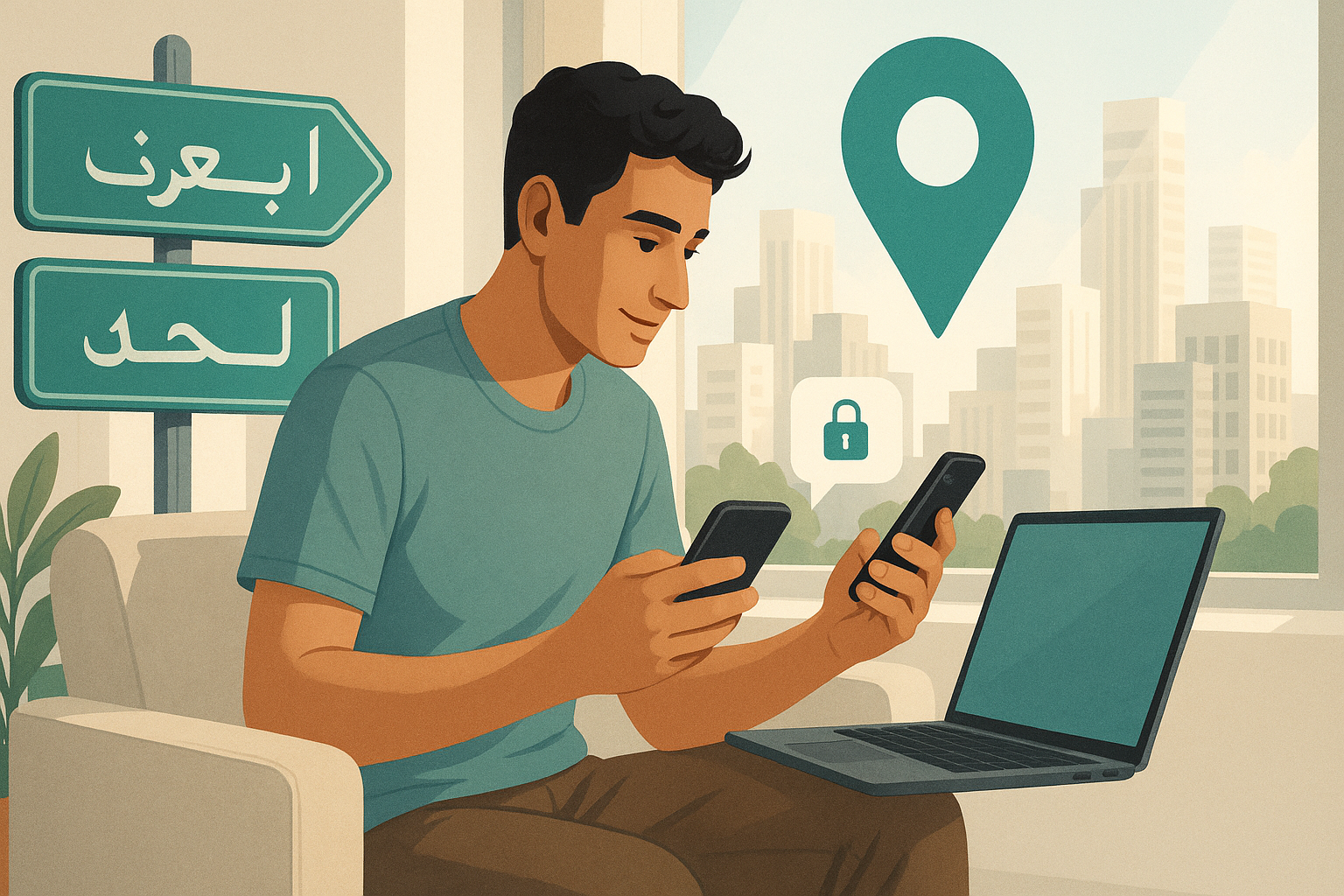
How private chats fit everyday privacy habits
Private chats are not only for sensitive conversations. This article shows how people use them for routine, low-drama communication and stronger privacy.
Private chats are no longer something people use only for sensitive conversations. They are becoming part of ordinary digital routines, alongside banking, photo backups, map apps and shared calendars. That shift matters because privacy is rarely about one dramatic moment. It is usually about small habits repeated every day.
When people ask for better online privacy, they are not always making a grand statement. Often they want a messaging app that feels straightforward, does not collect more than it needs, and lets them talk without wondering who else can see the conversation. In that sense, private chats fit neatly into how many people already manage their digital lives: by choosing tools they trust and limiting unnecessary exposure.
This is why private messaging is increasingly relevant even for readers who are not especially privacy focused. The habit of using encrypted messaging, turning on extra security settings, and thinking more carefully about what gets shared has started to look normal rather than niche.
Private chats are becoming part of everyday behaviour
People already use privacy-preserving tools for many routine tasks. They lock their phones, use password managers, and avoid leaving sensitive documents in shared folders. Private chats follow the same pattern. They are a practical response to a simple question: who really needs access to this conversation?
That question comes up in everyday situations more often than many realise. A family group arranging care for an older relative, a freelancer discussing a client brief, or a friend sharing travel details all have a natural need for discretion. The point is not secrecy for its own sake. It is the ability to keep ordinary communication within the circle it was meant for.
As a result, private chats are less about special occasions and more about reducing friction. If a message contains a address, a payment detail, a health update or a candid opinion, people increasingly expect the chat itself to be a reasonable place for it, rather than a public social feed or a searchable inbox.
Why private messaging feels more normal than it used to
There was a time when encrypted messaging sounded like something only journalists, activists or technical users needed. That is changing. Privacy concerns now sit alongside the everyday desire for convenience, because people have become more aware that digital services often work by collecting, storing or analysing data.
At the same time, messaging has become one of the main places where life happens online. Plans, links, photos, quick decisions and emotional conversations all move through chat apps. Once messaging becomes central, expectations change. Users begin to assume their private chats should have the same baseline of respect as a locked front door or a sealed letter.
This does not mean everyone studies encryption protocols. Most people simply want a familiar experience with fewer risks. That is why privacy has moved from a specialist concern to part of mainstream product choice. A service like PigeonChat fits into that shift by making confidentiality feel like a normal default rather than a complicated setting.
What people actually want from private chats
When people choose a messaging app for online privacy, the features they care about are often more modest than marketing suggests. They want messages to stay between the people involved. They want clear controls. They want fewer surprises. And they want the app to behave sensibly without constant attention.
That usually means a combination of familiar qualities rather than one dramatic feature. Good private chats are often appreciated because they are boring in the best possible way. They let you communicate without needing to think about data trails, public visibility or whether a platform is quietly building a profile around your conversations.
- Clear controls over who can join a chat
- Encryption that is on by default, not buried in menus
- Simple ways to manage message history
- Limited collection of unnecessary personal data
- Cross-device use without turning convenience into exposure
These expectations are now common enough that many people compare apps not just on features, but on trust. The best privacy tools do not ask users to become experts. They help them make ordinary choices with less risk.
How to think about online privacy without overcomplicating it
Online privacy is often discussed as if it requires a perfect system. In practice, most people benefit more from better habits than from perfection. Choosing private chats is one of those habits. It does not solve every privacy problem, but it reduces the amount of information floating around in places you do not control.
A useful way to approach privacy is to match the tool to the task. Public posts are fine for announcements. Email may be enough for formal documents. Private chats are better for conversations that are personal, time-sensitive or simply not meant for a wide audience. That kind of separation is healthy, and it makes digital life easier to manage.
It also helps to remember that privacy is relational. The point is not to hide everything. It is to keep sensitive material within the right context. Messaging apps that support that expectation, including PigeonChat, give people a clearer way to organise their communications without making privacy feel theatrical.
Private chats work best as one part of a broader habit
Private messaging should not be treated as a magic shield. It is one useful layer in a wider routine of digital care. People still need to think about device security, app permissions, backups and whether they are sharing more than necessary in the first place.
That said, chat privacy is often the easiest place to start because it affects so much daily communication. If you get the chat layer right, you reduce the chance that sensitive details are scattered across tools that were never meant to hold them. Over time, that can make your digital footprint smaller and easier to understand.
It can also change behaviour in a positive way. When people know a conversation is private, they tend to communicate more clearly and with less self-censorship. That is not only good for security. It is good for trust, which is why private chats have become such a natural part of everyday life.
Frequently asked questions
Are private chats only for people with serious privacy concerns?
No. Private chats are useful for anyone who wants ordinary conversations to stay ordinary. Many people use them for family updates, work coordination, personal plans and shared links. You do not need to be highly technical or especially cautious to benefit from better online privacy.
Does encrypted messaging mean nothing can ever be compromised?
Not quite. Encryption helps protect message content in transit and, depending on the service, at rest. But privacy also depends on your device security, account protection and how the app handles metadata and backups. It is best to think of encryption as an important layer, not a complete solution.
How do I know whether a messaging app is a good fit for private chats?
Look for clarity. A good app should explain how it protects conversations, what data it collects and what controls you have over your messages. It should also feel usable enough that you will actually keep using it. Privacy works best when it fits naturally into daily habits rather than demanding constant effort.
Private chats are becoming normal because everyday life is becoming more digital, more interconnected and more sensitive in small ways. People do not need a dramatic reason to value discretion. They simply need communication tools that respect the boundaries they already expect. That is where the real future of private messaging sits: not at the edge of the internet, but in the centre of daily routine.

Writer & Editor at PigeonChat
Related Articles
What a European chat app should offer now

What an EU chat app needs beyond privacy claims
What a browser-based end to end encryption chat app needs
How PigeonChat.site fits the EU privacy app search
Why browsers are becoming the new private chat home