

What people mean by a private chat app without install
The appeal of no-install messaging is simple: join faster, switch devices easily, and start chatting without app-store friction.
When people ask for a private chat app without install, they usually mean something very practical: they want to start a conversation quickly, from almost any device, without downloading anything first. That could be a shared office computer, a borrowed laptop, or a phone with little storage left. In other words, no install is not a novelty feature. It is often the difference between trying a tool and giving up before the first message.
For first-time users, browser-based messaging removes one of the biggest points of friction. There is no app store search, no account setup just to test the basics, and no waiting for an update before the chat window opens. If the service also supports privacy-conscious design, it becomes easier to offer a calm, low-pressure way to talk. That is the appeal behind tools like PigeonChat, and it is why install-free access matters more than it sometimes gets credit for.
At the same time, people can mean slightly different things by private. For some, it is about keeping chats away from public social feeds. For others, it means limiting who can join, reducing the amount of personal data collected, or making conversations harder to stumble across. A good private chat app without install should make those expectations clear rather than hiding them in marketing copy.
What “without install” really means
In most cases, no install means the chat app runs in your web browser. You open a link, and the interface loads immediately. There is nothing to add to your device, and nothing to remove later if you only need it once.
This matters because installation creates a decision point. Some people are happy to install software. Others are cautious, short on time, or using devices they do not want to personalise. Browser-based messaging lowers that barrier and makes the first interaction feel much simpler.
It also helps on mixed-device workflows. You might start a conversation on a work desktop, continue on a phone, and then come back to a laptop later. When the app lives in the browser, the experience is often more consistent across devices, even if the screen sizes differ.
Why no install is a usability win
Usability is not just about how polished a chat app looks. It is about whether someone can get from curiosity to a working conversation with minimal effort. Fewer steps usually mean fewer drop-offs.
That is especially true for first-time users. If they need to create an account, verify an email, install an app, and grant permissions before they can even see the chat room, many will simply stop. A private chat app without install reduces that burden and makes the value obvious faster.
There is also a trust angle. People are often more comfortable trying something in a browser than installing software they do not yet understand. A clear web experience can feel more approachable, especially when the app explains what it does and does not collect.
Privacy expectations to look for
The word private can cover a lot of ground, so it helps to be specific. A service can be private in one sense and not in another. Before using any browser-based messaging tool, it is worth checking what kind of privacy it actually offers.
- Does it let you create or join conversations without making your details public?
- Does it explain what data it stores, such as message history or account information?
- Can you use it with minimal personal details, or does it ask for more than you expect?
- Is access restricted to invited people, a shared link, or a visible public room?
- Does it make deletion or logout straightforward if you only need it temporarily?
Not every use case needs the same level of privacy. A team chat, a family message thread, and a customer support conversation all have different needs. The important thing is that the app is honest about its model so users can decide whether it fits.
Features that matter more than extra complexity
When people search for features, they often think of the flashy ones first. In practice, the most useful features in a no install chat app are usually the most ordinary ones. They reduce confusion and make the chat feel reliable.
Look for clear conversation joining, readable message threads, and simple controls for muting, leaving, or returning later. If files, links, or images are supported, they should be handled in a way that does not overwhelm the interface. The goal is to keep the experience light, not crowded.
For a private chat app without install, small details often matter more than long feature lists. Does the link open cleanly? Is it obvious where to type? Can new people figure it out without a walkthrough? These are the things that determine whether the app actually gets used.
Who benefits most from browser-based messaging
People with limited device storage are an obvious group, but they are not the only ones who benefit. Browser-based messaging is also helpful in schools, shared workspaces, community events, and temporary collaboration settings where installing an app would be inconvenient.
It is useful whenever the audience is mixed. Some users will be technically confident, while others will prefer the least complicated option possible. A no install approach meets both groups in the middle, which is one reason it can work so well for first-time users.
It is also a sensible choice when you want a conversation to begin immediately. If you are sharing a link with a guest, client, or volunteer, every extra step makes participation less likely. A simple web entry point removes that problem before it starts.
How to judge whether a no install chat app is worth using
Before choosing any tool, ask a few practical questions. You are not just checking features. You are checking whether the app makes communication easier without creating new problems.
- Can someone join in seconds, or does setup take too long?
- Does the app clearly explain its privacy model?
- Is the interface easy to understand on mobile and desktop?
- Are the core features obvious, rather than hidden behind menus?
- Does it feel suitable for short-term use as well as longer conversations?
If a product passes those tests, it is usually doing something valuable. Tools such as PigeonChat show why this matters: when access is easy, people are far more likely to actually start talking. That is not a minor convenience. It is the whole point of the product.
Frequently asked questions
Is a private chat app without install less secure than a normal app?
Not necessarily. Security depends on how the service is designed, how it handles accounts and messages, and what protections it offers. A browser-based app can be secure, but you should still check its privacy information and understand what data it stores.
Can browser-based messaging still feel private on shared devices?
It can, if the app is designed sensibly and you take basic precautions such as signing out and closing the tab when finished. The browser approach is often easier to access, but shared devices always require a bit of care.
Why would I choose no install if I could just download an app?
Because no install is faster, simpler, and often easier for first-time users. It is a good choice when you want someone to join quickly, when storage is limited, or when you do not want to ask people to commit before they have tried the service.
In the end, “private chat app without install” is really another way of saying low-friction communication with a clear privacy model. That combination is valuable because it respects people’s time, their devices, and their comfort level. If a chat product can make the first message easy, it has already solved one of the hardest parts of getting people to talk.
Ready to try PigeonChat?

Writer & Editor at PigeonChat
Related Articles

How chat folders change the way busy chats stay organized

Chat features that make private apps easier to use
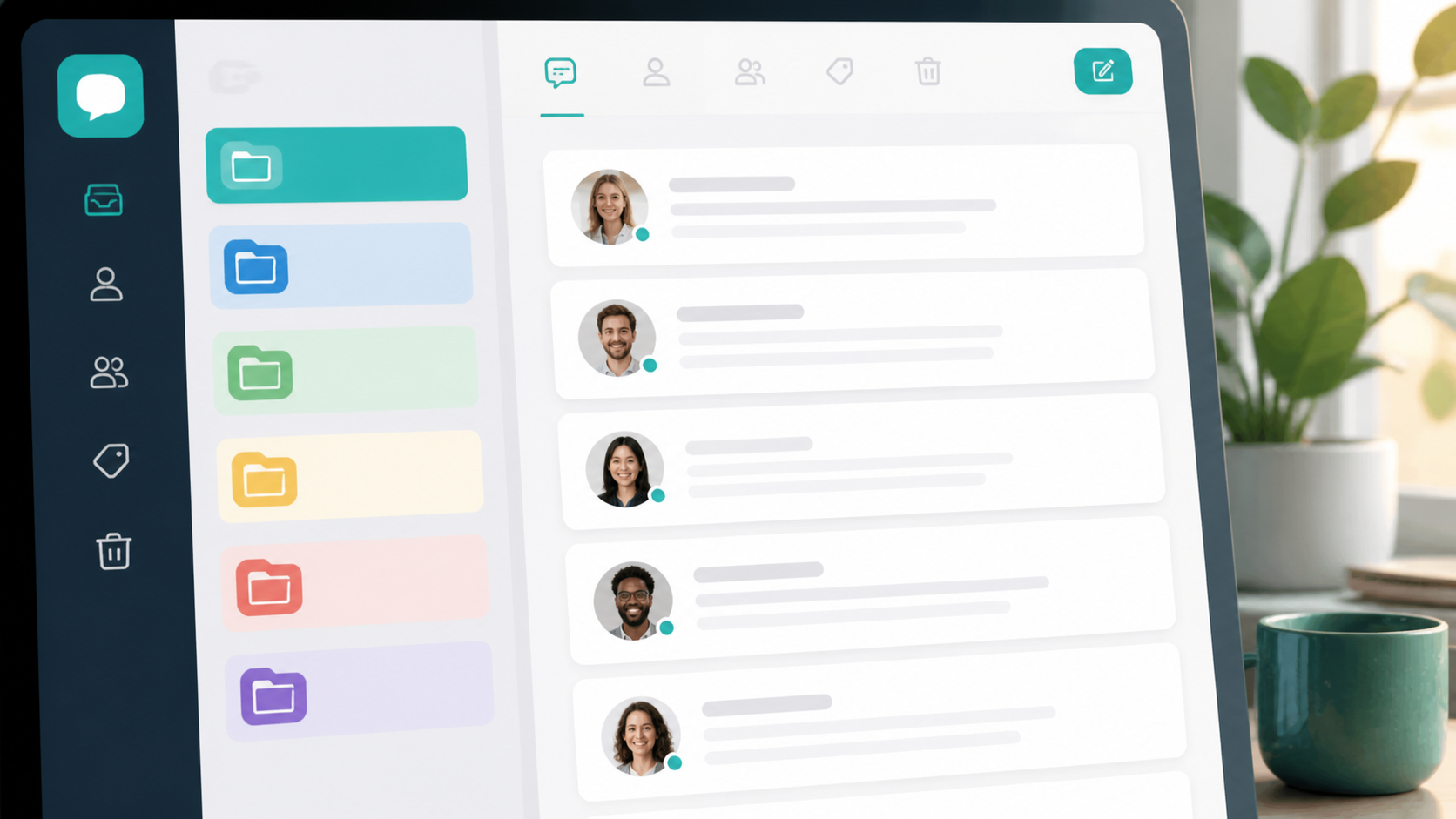
Why chat folders matter for busy group conversations

Why chat folders matter for busy group conversations

What a European chat app should offer now