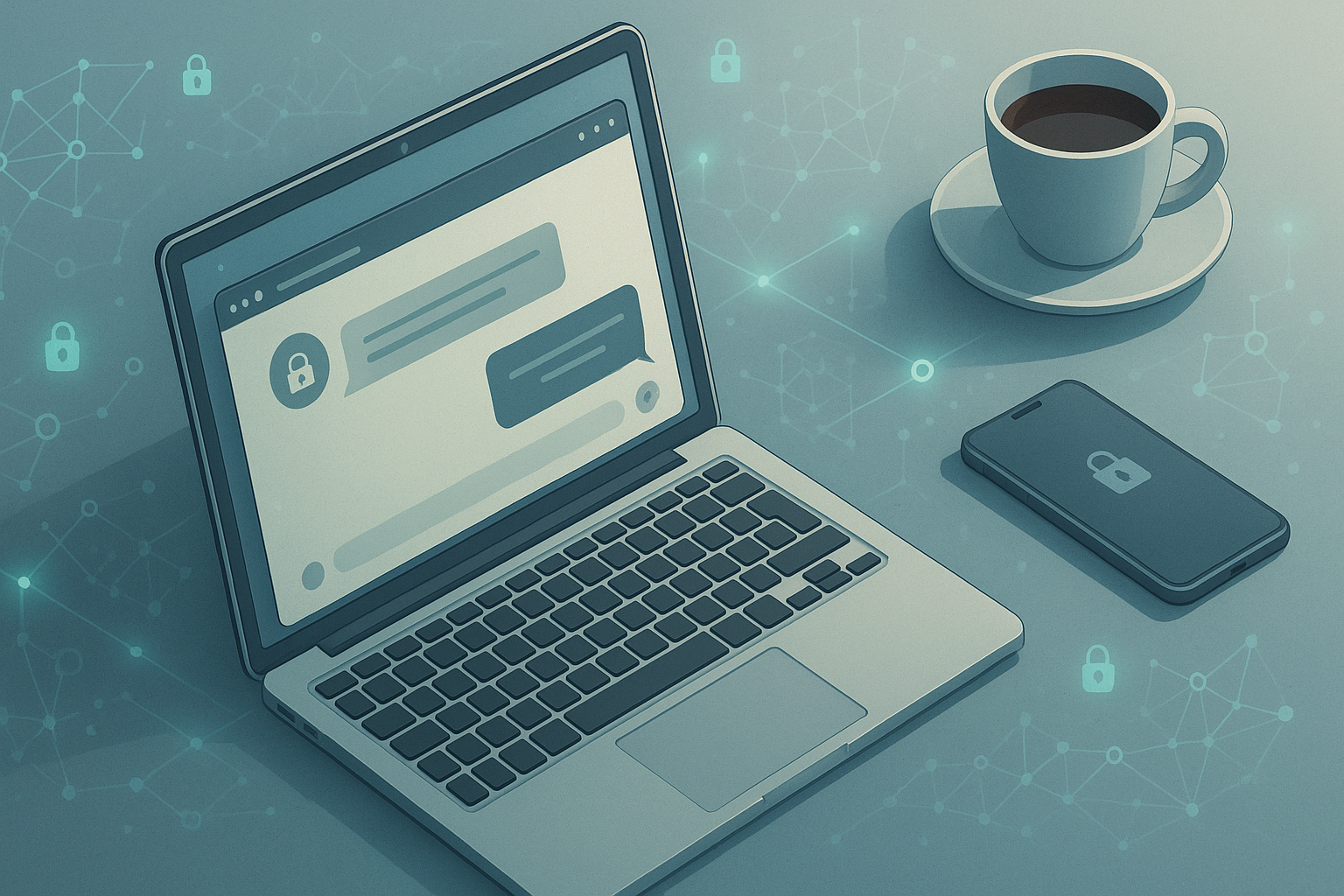
What people ask before switching to private browser chat
A practical guide to the real questions people ask before moving to a private browser chat app: privacy, login, installs, and sharing.
When people ask about switching to private browser chat, they rarely start with encryption. More often, they ask practical questions: Do I have to install anything? Can I use it on a work laptop? Will it ask for my phone number? Those are really questions about friction, trust, and access, and they matter because a chat tool only feels private if it is easy to use in the moments you actually need it.
That is why browser chat without install has become such a common search. People want a simple path into a conversation, especially when they are trying to keep work, family, or side projects separate from their main messaging apps. If you are comparing options, it helps to know what these questions usually mean in practice, and where the real trade-offs tend to be.
This guide is for readers who want clarity before they switch, including those who may never sign up for anything at all. The same principles apply whether you are testing PigeonChat or any other private browser chat service.
Why the first question is usually about hassle, not privacy features
Many people assume the main barrier to private chat is concern about security. In reality, the first barrier is often effort. If a chat tool needs a download, an account setup flow, permission prompts, and a lengthy profile process, some users will stop before they even see the interface.
That is why no phone number login matters so much. It removes one of the most common points of hesitation. For people who want a temporary space, a low-commitment space, or simply a different identity for a particular conversation, asking for a phone number can feel like too much data too soon.
There is also a trust angle here. A browser chat that opens quickly and asks for only what it needs often feels easier to assess. You can look around, understand the basics, and decide whether the service suits your needs without handing over more personal details than you are comfortable sharing.
What private browser chat can and cannot solve
Private browser chat is useful because it lowers the barrier to entry. You can often join from almost any modern device, which makes it easier to switch between home, office, and travel without keeping a dedicated app installed. For many people, that convenience is the real benefit.
But a private browser chat does not magically solve every privacy concern. The level of protection depends on how messages are handled, how long data is retained, and what the service can or cannot see. Terms like encrypted private chats are important, but they still need context. Encryption can protect content in transit or at rest, yet it does not automatically answer every question about account metadata, device access, or sharing behaviour.
So the useful question is not, “Is it private?” in a vague sense. It is, “What exactly is protected, and what am I giving up for convenience?” That framing helps you compare services more honestly.
The access questions people should ask before switching
If you are evaluating a new chat tool, a short checklist is often more useful than a long feature list. Start with the basics that affect daily use, because these are the parts people usually discover only after they have committed to a platform.
- Do I need to install an app, or is it browser-based?
- Can I use it without a phone number login?
- What devices and browsers are supported?
- Can I leave and rejoin easily if I only need it temporarily?
- Are messages encrypted, and if so, in what way?
- What personal details are required to create or recover access?
These questions are simple, but they reveal a lot. A service that is easy to access and clear about its data handling usually creates less friction than one that asks for more upfront and explains less. That matters whether you are chatting with friends, coordinating a project, or setting up a discreet side channel for work.
If the answers are hard to find, that is information too. A trustworthy service should make its access model understandable without making you hunt through support pages or guess at the fine print.
How trust is built in a browser chat experience
Trust is not created by one feature alone. It comes from a combination of clarity, restraint, and consistency. A good browser chat experience tells you what it needs, why it needs it, and what happens if you stop using it. That kind of transparency does more for confidence than a long list of buzzwords.
People also trust tools that do not overreach. If a chat service asks for only the minimum information required to function, it tends to feel less intrusive. If it works smoothly across devices without extra setup, it also feels more predictable. Predictability is underrated in privacy tools, because users often equate calm behaviour with safer behaviour.
At PigeonChat, the core appeal is similar. A straightforward interface and browser-first access can make the experience feel lighter, especially for people who want to start chatting without building a whole new routine around the tool.
Common reasons people switch from app-based messaging
Switching is often about reducing clutter. Some people are tired of installing another app for every short-lived conversation. Others want a clean separation between personal messaging and a one-off workspace, club, event, or support channel. In all of these cases, browser access makes it easier to experiment without long-term commitment.
Another common reason is control. App stores, notifications, permissions, and background syncing can all make messaging feel more persistent than necessary. A browser-based approach can feel more contained, especially if you only need private chats for specific situations rather than all-day communication.
There is also the simple matter of device flexibility. If you move between machines, or if you are using a shared or temporary computer, browser chat without install can be far more practical than managing another app install, update, or login state.
How to judge whether the switch is worth it
The best test is not whether a platform sounds advanced, but whether it reduces friction without introducing new doubts. If it is easier to join, easier to use, and easier to understand, that is a meaningful improvement. If it adds complexity in exchange for vague promises, it may not be worth the move.
Think in terms of your own habits. Do you mainly need quick access, or do you need deep integration with a mobile app? Do you want to avoid phone-based signup entirely? Are you looking for encrypted private chats because the content matters, or because you want a sensible default for everyday conversations? The answer will point you towards the right kind of tool.
It can also help to test a service in a low-stakes way first. Try it for one conversation, one project, or one event. If the experience feels easy and the access model makes sense, the switch becomes much simpler to justify.
Frequently asked questions
Is private browser chat actually private if it runs in a browser?
Yes, it can be, but privacy depends on how the service is designed. The browser itself is just the delivery method. What matters is whether messages are protected, what data the provider can access, and whether the platform is transparent about its policies. Browser-based does not mean unsafe, and it does not automatically mean secure either.
Why do people care so much about no phone number login?
Because a phone number links a chat account to a personal identifier many people would rather keep separate. For some, that is about privacy. For others, it is about convenience, avoiding spam, or creating an account without relying on a mobile number. It is one of the clearest signs that a service is trying to reduce friction.
What should I look for if I want encrypted private chats?
Look for clear language about what is encrypted, when it is encrypted, and what the service does with metadata or stored content. Good providers explain things in plain English rather than hiding behind technical terms. If you cannot tell how the protection works, ask whether the service is really meeting your needs.
Most switch questions are really questions about ease, confidence, and control. If a private browser chat gives you those things without making you jump through unnecessary hoops, it is likely solving the right problem. And if you are still comparing options, that is fine too. The best choice is the one that feels understandable before you rely on it.
Ready to try PigeonChat?

Writer & Editor at PigeonChat
Related Articles

PigeonChat.site in the UAE chat app search

What makes a strong European chat app today

What users expect from chat features in 2026

How PigeonChat.site fits private messaging needs today
What a European chat app should offer now