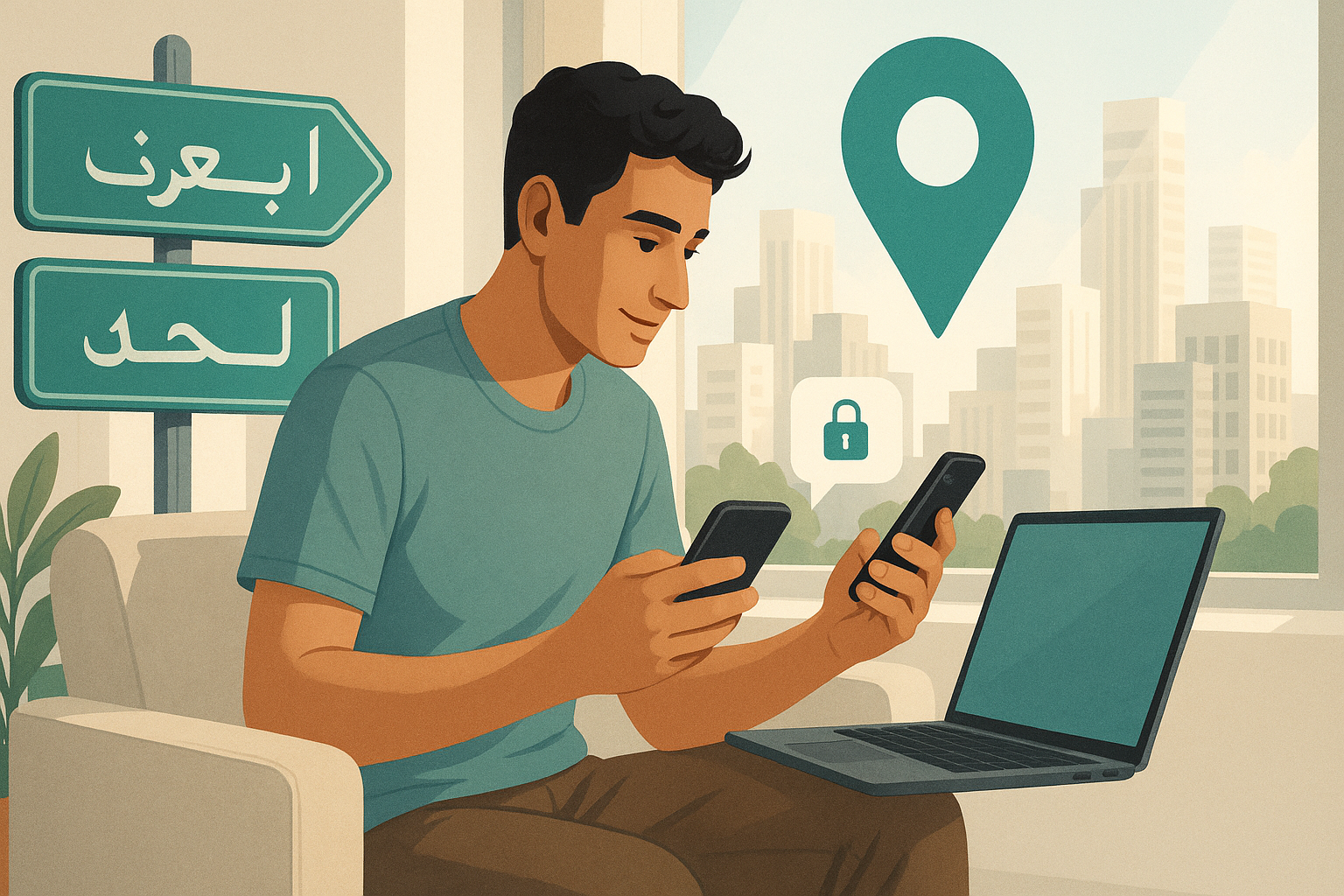

Why no phone number login matters in chat apps
Explore why users look for messaging apps without a phone number, and how that changes onboarding, anonymity, and community access.
For many people, the idea of a chat app asking for a phone number feels unnecessary at best and risky at worst. A phone number can be tied to your identity, your SIM card, your carrier account, and sometimes your wider online presence. If you are just trying to chat, that is a lot of extra exposure for a simple task.
That is why no phone number login is not a niche preference. It is a real privacy and convenience need. Some people want to keep their personal number private. Others travel frequently, use a work device, or simply do not want to hand over a stable identifier before they can test an app. For those users, the barrier is not minor. It changes whether the app feels usable at all.
At PigeonChat, we think sign-up should fit the way people actually communicate, not force them into a one-size-fits-all identity check. You do not need a phone number to understand why that matters. In practice, the difference is about control, simplicity, and lowering the cost of trying a service.
Why phone numbers feel more sensitive than they look
A phone number is often treated as a convenient login, but it is also a strong personal identifier. People hand it out less casually than an email address because it can reveal or connect to real-world relationships. If a chat app requires it, you may reasonably ask what else the app can infer about you.
That concern is not just about surveillance in the abstract. It is about the everyday risk of having your number linked across accounts, discovered through contact sync, or used as the basis for account recovery and discoverability. Once a number becomes the default identity layer, it can be harder to separate different parts of your life.
This is also why “private” means more than encrypted messages. Privacy starts earlier, at the point of signup. If an app can work without your phone number, it reduces the amount of personal data you need to trust it with on day one.
Convenience matters just as much as privacy
People often frame phone-number-free signup as a privacy feature, and it is, but convenience is just as important. Not everyone wants to install a chat app on a device tied to their personal SIM. Some use tablets, secondary phones, shared devices, or work handsets where a personal number is not appropriate.
There is also the practical issue of speed. If you are helping a friend, joining a community, or testing a new product, forcing a phone number can add friction before you have seen any value. The more steps there are, the more likely people are to stop halfway through.
A better pattern is simple: let people start chatting first, then decide later whether they want to add more recovery options or identity details. That feels respectful, and it works for more situations.
How major chat apps approach identity
Different messaging apps take different views on identity, and that shapes the user experience. WhatsApp is built around a phone number as the core account identifier. That makes contact discovery and onboarding straightforward, but it also means your number is part of the service’s basic structure.
Signal also uses a phone number-based model, although it has introduced more ways to reduce how visible that number is to others. For some people, that is a good balance. For others, the initial requirement remains a deal-breaker because they do not want the number involved at all.
Telegram sits somewhere in between in the public imagination because many people use usernames and public handles, but the account still begins with a phone number. The important point is that “easy to use” and “no phone number login” are not the same thing. A service can be familiar and popular while still imposing a requirement that some users want to avoid.
Where phone-number-free login helps in real life
It is easiest to see the value of no phone number login in practical scenarios. The need is not theoretical. It shows up when people are trying to separate contexts, stay safe, or avoid unnecessary account linking.
- Personal privacy: keeping a private number out of a public or semi-public service.
- Work-life separation: using chat without tying it to a personal SIM.
- Travel and temporary use: joining while abroad or using a device without a regular number.
- Shared or secondary devices: accessing chat without exposing a primary identity.
- Low-friction testing: trying an app before deciding whether to commit.
These are not edge cases. They are ordinary situations for students, freelancers, remote workers, travellers, and anyone who values a boundary between their communication tools and their personal phone number.
Phone-number-free signup also helps people who are cautious about data collection in general. If an app asks for less, users can make a more informed decision. That alone can make a service feel more trustworthy.
What to look for in a private chat app
If you want a chat app that respects privacy, do not stop at the signup screen. Look at the whole design. Does it require your contacts? Can you use a username instead of exposing a number? Is it clear what is public, what is private, and what can be discovered by others?
Good privacy design is usually boring in the best way. It avoids surprises. It explains what is needed and why. It does not ask for more than it needs simply because that is the easiest path for the product team.
When evaluating options, ask yourself a few simple questions:
- Can I sign up without giving a phone number?
- Can other people find me without learning personal details?
- Is contact syncing optional rather than forced?
- Can I use the service on devices that are not tied to my main number?
- Does the app make identity visible by default, or let me control it?
These questions are useful even if you never use PigeonChat. They help you judge whether an app is designed for real people, not just for the convenience of the platform.
Why this is becoming a stronger expectation
More people now understand that a phone number is not just a contact detail. It is a stable, valuable piece of identity infrastructure. As a result, users increasingly expect services to justify why they need it. “Because that is how chat apps work” is no longer a satisfying answer.
This does not mean phone-number-based apps are automatically bad. It means the market has room for different models, and users should be free to choose the one that matches their needs. Some people will prioritise familiarity. Others will prioritise separation and anonymity. Both are valid preferences.
That is the real point: no phone number login is not a special feature for a small group. It is a sensible default for anyone who wants messaging to feel less invasive. PigeonChat is one example of how that can be done without making the product feel complicated.
Frequently asked questions
Why do so many chat apps ask for a phone number?
Usually because it makes onboarding, account recovery, and contact discovery simpler for the app. A phone number is also a convenient unique identifier. The downside is that it adds a layer of personal data that some users do not want to share.
Is no phone number login better for privacy?
Often, yes. It reduces the amount of personal information you hand over at signup and can make it easier to keep your messaging separate from your real-world identity. That said, privacy also depends on other factors such as encryption, contact syncing, and what the app collects behind the scenes.
Can I still use a chat app securely without a phone number?
Yes. Security does not depend on phone numbers alone. A secure app can use usernames, email-based recovery, device-based authentication, or other methods. The important thing is that the app handles identity and recovery carefully without forcing unnecessary exposure.
The best chat app is the one that fits your boundaries. For some people, that means a familiar number-based system. For others, it means a service like PigeonChat that lets them start without handing over a phone number. Either way, the principle is the same: communication should be easy to use, but it should not demand more personal data than it needs.

Writer & Editor at PigeonChat
Related Articles
What a European chat app should offer now

What an EU chat app needs beyond privacy claims
What a browser-based end to end encryption chat app needs
How PigeonChat.site fits the EU privacy app search
Why browsers are becoming the new private chat home