How encrypted private chats fit everyday use
Encrypted chats are no longer just for experts. This guide explains how private browser messaging fits daily conversations at work, school, and home.
Encryption is easy to treat as a specialist concern, something for journalists, activists or people handling sensitive work. In practice, it matters in the ordinary moments of daily life. A quick check-in with a partner, a family plan, a job conversation, a link to a document, a note about finances - these are all the kinds of messages people expect to stay private.
That is where encrypted private chats earn their place. The best private messaging is not the most complicated or the most technical. It is the kind that lets people speak normally without having to think about the security model every time they open the app. If a tool feels awkward, slow or unfamiliar, most people will quietly drift back to whatever is easiest.
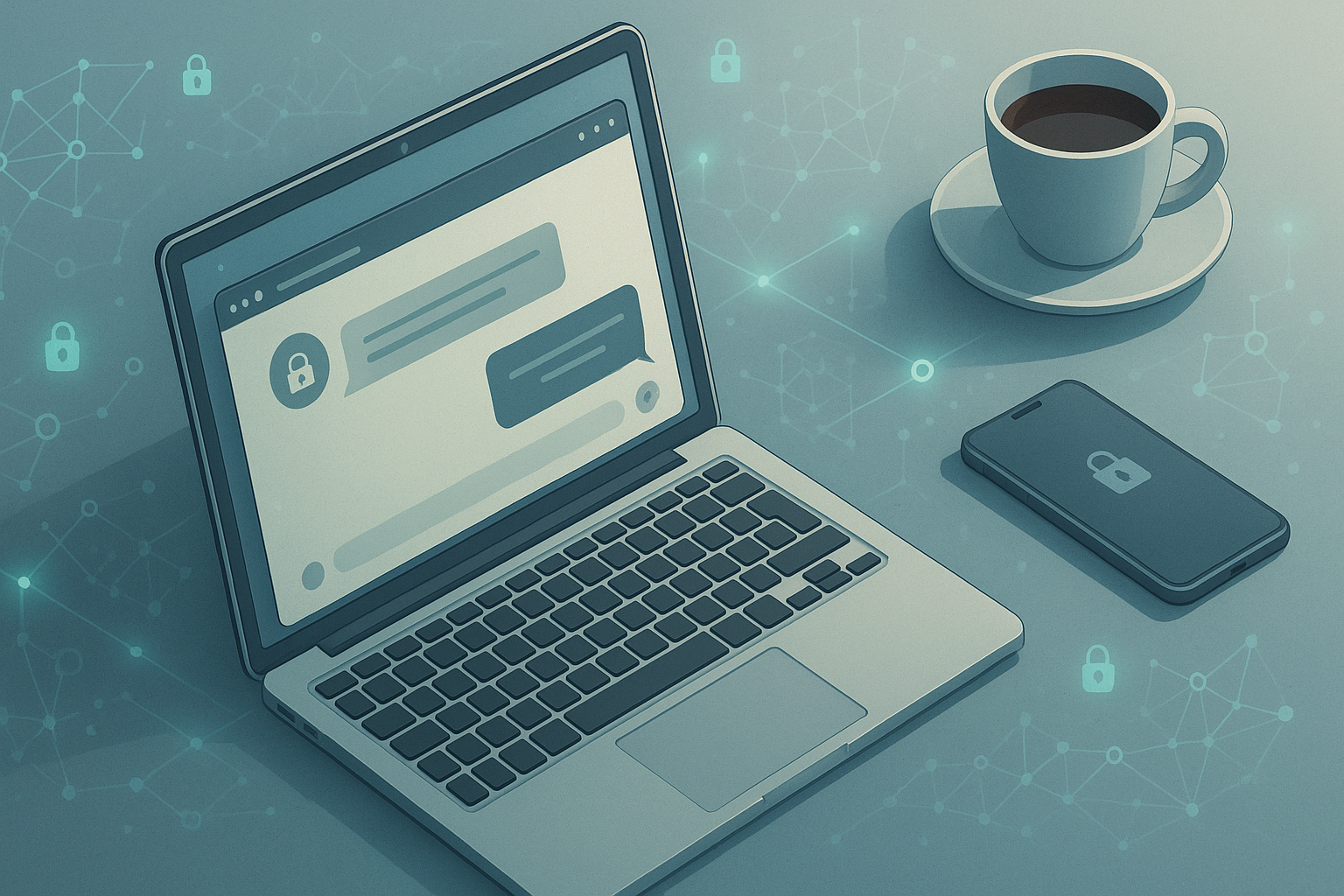
For that reason, encryption only really matters when it fits naturally into everyday use. A browser app, a familiar interface and clear controls can make the difference between a feature people trust and one they ignore. This is true whether you use Signal, a web-based service like PigeonChat, or another private chat tool that respects your attention.
Why privacy becomes more important in normal conversations
Most private messages are not dramatic. They are about timing, money, work, health, plans, and little frustrations that you would not want broadcast. The value of encrypted private chats is that they protect these ordinary exchanges without forcing you to label them as “sensitive” first.
People often think privacy is only for rare cases, but everyday communication creates a surprising amount of personal context. A string of harmless messages can still reveal routines, relationships, and habits. Encryption helps reduce that exposure by limiting who can read the content.
The practical point is simple: if a conversation would feel awkward read out loud in a public place, it probably benefits from private messaging. That does not mean every chat must be secret. It means having the option to keep ordinary life ordinary.
What “encrypted private chats” actually change
Encryption changes who can access the message content while it is being sent and stored, depending on the system design. In everyday terms, it means your chat is not just floating around in a readable form for anyone along the way. That is the core of why people choose private channels over open ones.
It also changes expectations. When a conversation happens in an encrypted space, users can speak with more confidence that the channel itself is doing some of the protection work. That does not remove the need for good habits, but it does lower the burden on the person using the tool.
For many people, that is the real win. Security should not require constant vigilance. The more a private messaging app handles behind the scenes, the easier it becomes to use it in daily life without second-guessing every message.
Why ease of use is part of security
Security features that are difficult to use are often skipped, misunderstood or misconfigured. In practice, a simple browser app can be more effective than a “stronger” system that people abandon after a week. When the interface feels clear, users are more likely to stay within the protected path.
That is why design matters. Good encrypted private chats should make the secure choice feel like the normal choice. If users have to remember extra steps, manage complicated settings or explain the app to everyone they want to talk to, the friction starts working against privacy.
Think about the situations where people actually chat: on the move, between meetings, late at night, or while juggling several things at once. In those moments, a clean interface is not a luxury. It is what makes private messaging usable enough to become part of everyday routine.
Where private messaging fits alongside other tools
No single app has to do everything. Some people prefer Signal for its long-standing reputation. Others want a browser app that opens quickly and works across devices without installing yet another client. The right choice depends on the way you already communicate.
That flexibility matters because privacy is not only for technical users. A good tool should fit into real habits, whether you are chatting with one person, a small team, or a family group. If the app aligns with how you already talk, it is much easier to keep using it.
This is one reason services like PigeonChat can be useful to explore. Even if you never sign up, the idea is worth understanding: private messaging works best when it feels like a normal part of your day, not a separate system you must learn from scratch.
Simple habits that make encrypted chats more useful
Encryption is only one part of privacy. The way you use a chat app still matters. A few basic habits can improve your day-to-day safety without making communication feel heavy or paranoid.
- Keep conversations in the app rather than copying them into less secure places.
- Use strong device locks, because private chats are only as private as your phone or laptop.
- Check who is included in a group before sharing something personal.
- Be thoughtful about notifications on shared devices or screens.
- Prefer apps that make private messaging obvious, not hidden behind confusing menus.
These habits are not complicated, but they are easy to overlook. A private chat system works best when the surrounding behaviour supports it. In other words, encryption is strongest when the rest of your routine does not undermine it.
Frequently asked questions
Are encrypted private chats only for people with sensitive information?
No. They are useful for everyday conversations too. Most people have messages they would rather not expose, even if those messages are not high-stakes. Encryption helps protect ordinary life, not just exceptional situations.
Is a browser app less private than an installed chat app?
Not necessarily. Privacy depends on how the service is designed and operated, not only on whether it runs in a browser. A well-built browser app can still support encrypted private chats effectively if it handles security carefully and is easy to use.
Do I still need to think about privacy if I use Signal or another private messenger?
Yes, but less than you would otherwise. A secure tool helps a lot, yet your own habits still matter. Who you message, what you share, and which device you use all affect how private the conversation really is.
In the end, encryption matters most when it disappears into the background and lets people talk normally. That is why the best private messaging tools are the ones that feel effortless to open, simple to trust, and easy to keep using. Whether you choose Signal, a browser app, or PigeonChat, the goal is the same: make privacy a natural part of everyday conversation.

Writer & Editor at PigeonChat
Related Articles
What a European chat app should offer now

What an EU chat app needs beyond privacy claims
What a browser-based end to end encryption chat app needs
How PigeonChat.site fits the EU privacy app search
Why browsers are becoming the new private chat home