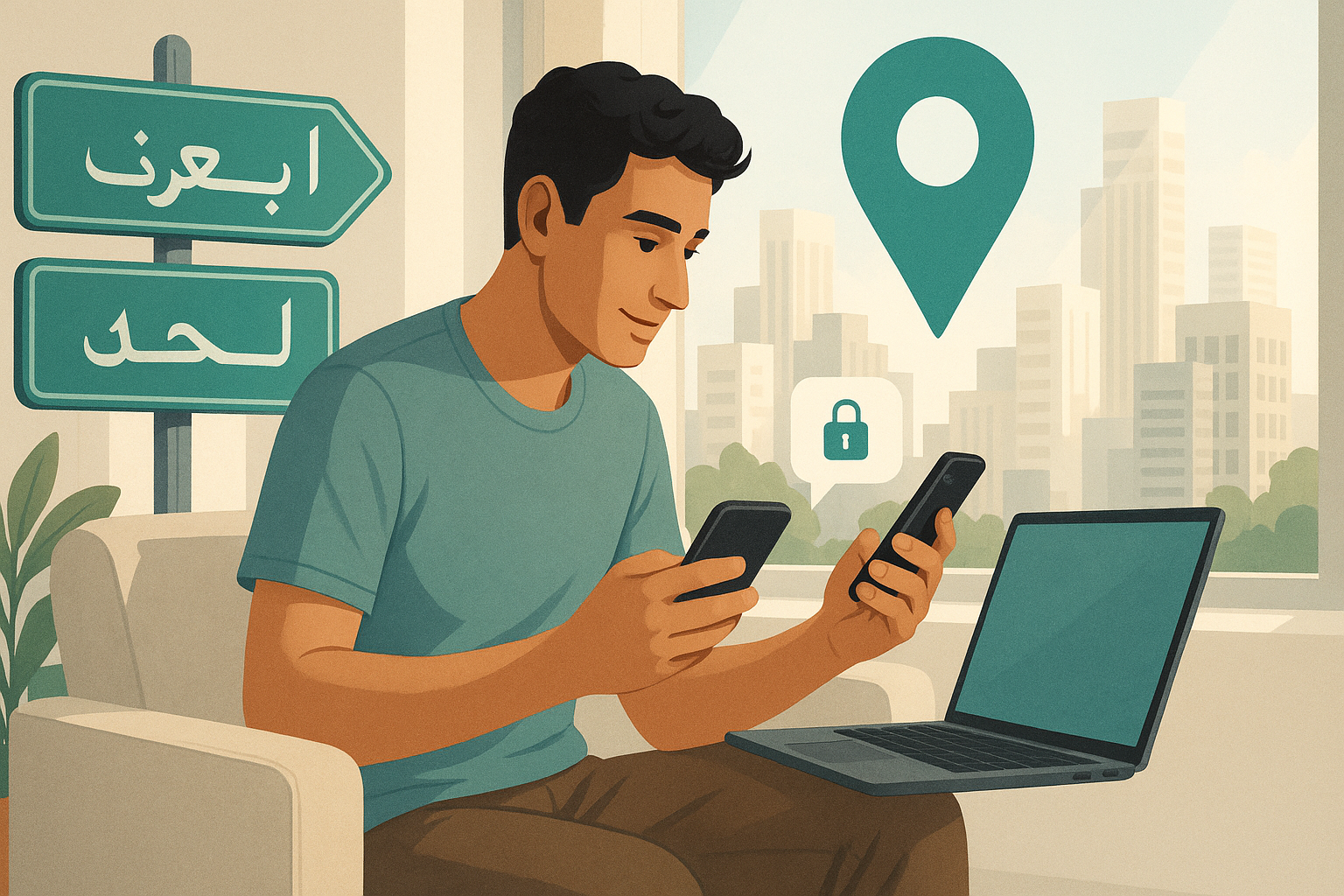

How encrypted private chats work in a browser app
Learn what encrypted private chats mean in a browser app, what users expect, and what privacy claims should actually be checked.
Browser based private chats can be genuinely private if the app is designed with encryption first, not added later as a feature. The browser is only the place where you open the conversation. What matters is how keys are created, how messages are protected in transit, and whether the service can read them at all.
That distinction is important because many people assume a web app must be less secure than a desktop app. In practice, the real question is not browser versus native. It is whether the messaging system is built so that only the intended participants can decrypt the content. A well designed private chat app can run in a browser and still keep conversation content out of reach from the provider.
If you are evaluating encrypted private chats for work, communities, or personal use, it helps to understand the basic mechanics. You do not need to be a cryptographer to spot the difference between marketing claims and a design that actually protects people.
What encryption changes in a browser app
In an encrypted private chat, your message is turned into unreadable data before it leaves your device. The server may still help deliver the message, but it should not be able to interpret the content. That is the core idea behind end to end encryption, and it is just as possible in browser based private chats as it is anywhere else.
The browser runs the code that prepares and decrypts messages. That means the security of the system depends on both the cryptographic design and the integrity of the code delivered to the browser. If the app is built well, your device creates or stores the keys locally, and message content stays protected during storage and transport.
This is why browser based private chats are not automatically weak. They are only weak if the service can secretly change the code, mishandle keys, or store sensitive data in ways that undermine the model. A private chat app should make those risks hard, not invisible.
How keys usually work
Encryption is only useful when the right people hold the right keys. In a private chat, each participant needs a way to encrypt messages for the other person and a way to decrypt messages sent to them. In practice, this often means public key and private key pairs, or a shared session key that is negotiated securely.
The public key can be shared more widely because it is used to lock messages, not unlock them. The private key must stay protected on the user side. In a browser app, that usually means the key is generated in the browser and stored locally, often in encrypted form, so the server does not have a copy in plain text.
Some systems also use ephemeral session keys that change over time. That limits the damage if a key is exposed later. Good encrypted private chats also support forward secrecy, which helps ensure that one compromised key does not reveal everything from the past.
- Keys should be created on the user’s device, not by the server.
- The server should not need the private key to deliver messages.
- Session keys should be replaced regularly where possible.
- Backup and recovery features should be designed carefully, because convenience can weaken privacy.
What the server can and cannot see
A strong private chat system tries to reduce what the server learns. Ideally, the server sees only the minimum needed to route messages, such as account identifiers, timestamps, or delivery state. It should not be able to read the content of messages or attachments.
That said, encryption does not erase every trace. Even when message bodies are protected, metadata may still exist. Metadata can include who talked to whom, when they talked, how often they connected, and which devices were involved. For many users, that is still useful to understand, because privacy is not all or nothing.
Good browser based private chats are honest about these limits. If a service claims total invisibility, be sceptical. If it explains exactly what is encrypted and what remains visible for functionality, that is a better sign. PigeonChat, for example, is useful to look at as a design reference because it makes the privacy model part of the product story rather than an afterthought.
The browser security question
People often worry that a browser is a bad place for private messaging because browsers execute code from the web. That concern is reasonable. If the page is compromised, the attacker could potentially alter what you see or steal data at the point of use. This is sometimes called the client side trust problem.
That does not mean browser apps cannot be secure. It means they need strong controls around code delivery, authentication, session handling, and protection against common web attacks. Secure transport, careful content handling, content security policies, and good key management all matter. A browser is just the runtime. The quality of the security comes from the implementation.
For many people, the browser still offers practical advantages. It is easy to access from different devices, simple to update, and convenient for teams or communities that do not want to install software everywhere. The important thing is to choose a service that treats the browser as a serious security environment, not a shortcut.
Signs of a trustworthy private chat app
When you are comparing encrypted private chats, do not stop at the word encrypted. Look for design details that tell you the service understands privacy trade-offs. A trustworthy product usually explains how messages are protected, how keys are handled, and what happens if you lose access to a device.
It is also worth checking whether the app supports clear user controls. Can you sign out remotely? Can you remove trusted devices? Are backups encrypted separately? Does the service document how attachments, previews, and notifications are handled? These details matter because private communication fails most often at the edges, not in the core algorithm.
Some useful signs include:
- Clear explanation of end to end encryption in plain language.
- Local key generation or local key storage.
- Transparent handling of backups, recovery, and linked devices.
- Regular security updates and a straightforward privacy policy.
- Limitation of collected metadata where feasible.
If a platform is vague about any of these areas, treat that as a signal to ask more questions. A good private chat app should make the privacy model understandable without forcing you to read implementation notes.
Practical habits that improve privacy
Even the best encrypted private chats depend on user habits. If your device is unlocked, your browser profile is open, or your account is shared, encryption cannot protect against every form of exposure. Security is layered, and the user side matters a great deal.
Start with basic account hygiene. Use a strong password, enable additional authentication where available, and keep your browser and operating system updated. Be careful with browser extensions too, because they can see more than you expect. If a conversation is especially sensitive, use a separate browser profile or device where possible.
It also helps to think about what you send. Encryption protects content in transit and storage, but it does not make risky sharing safe. Once a message is read by the recipient, they can copy it, forward it, or screenshot it. That is true in every messaging system, browser based or otherwise.
Frequently asked questions
Can a browser app really be as private as a native app?
Yes, if it is designed properly. The browser itself is not the deciding factor. The key questions are whether messages are encrypted before they leave your device, whether the server can read them, and how securely keys are managed. A browser app can be very private when those pieces are handled well.
Does end to end encryption protect metadata too?
Usually not completely. End to end encryption is focused on message content. Some metadata may still be visible to the service, such as timing or routing information. A strong private chat app should be clear about what is and is not protected, so users understand the limits.
What should I look for if I want a browser based private chat?
Look for plain explanations of encryption, local key handling, device management, and backup behaviour. Check whether the service is clear about metadata, notifications, and attachments. If you want a simple benchmark, choose tools that are transparent about their security model, like PigeonChat, and avoid products that rely on vague claims.
In the end, encrypted private chats in a browser app are not a contradiction. They are a design choice. When the service respects key management, limits server access, and treats the browser as part of a serious security architecture, private conversations can stay private without forcing people into complex software. For most users, that is the practical goal: secure communication that is easy enough to use every day.
Ready to try PigeonChat?

Writer & Editor at PigeonChat
Related Articles
What a European chat app should offer now

What an EU chat app needs beyond privacy claims
What a browser-based end to end encryption chat app needs

How PigeonChat.site fits the EU privacy app search
Why browsers are becoming the new private chat home