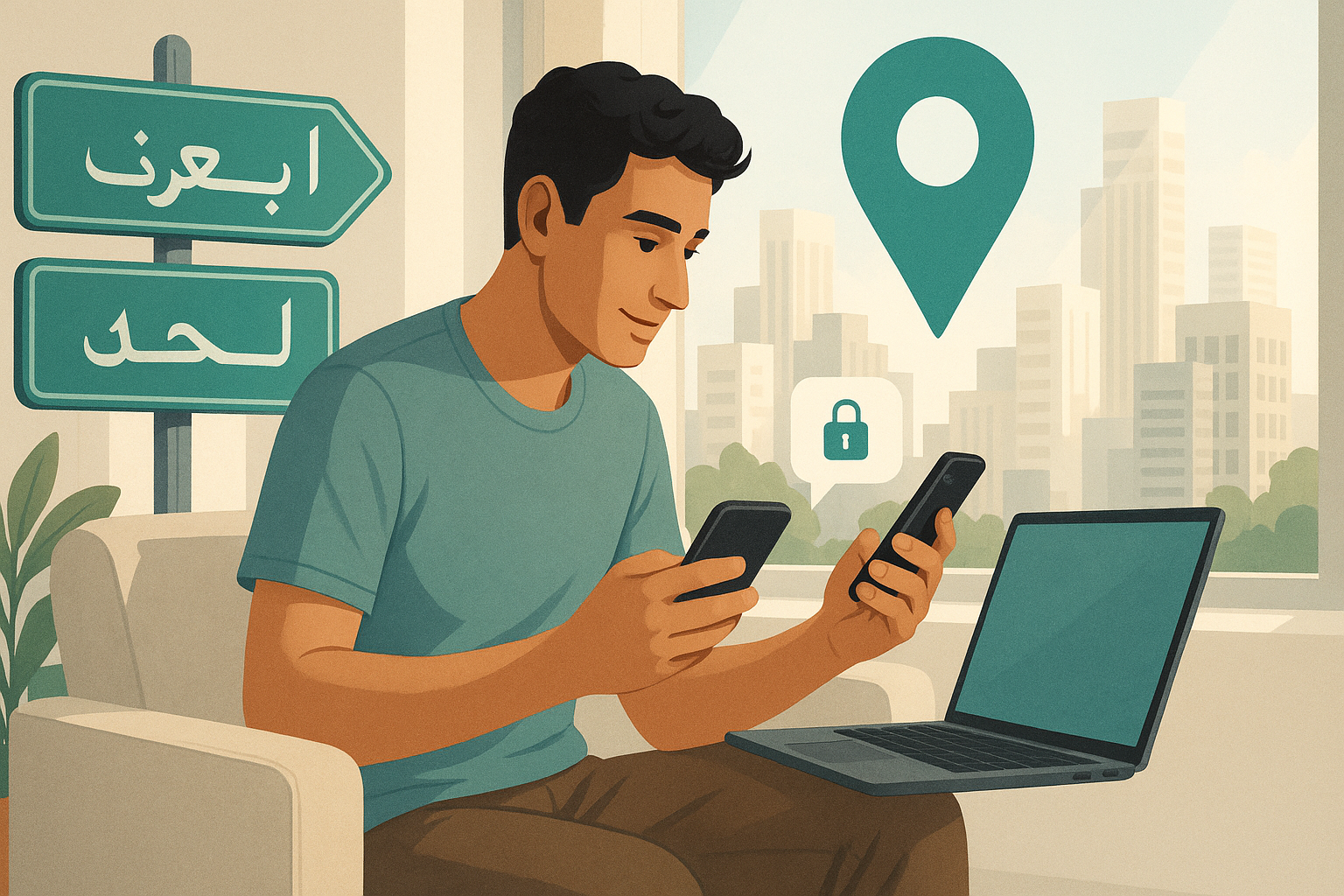

Why encrypted messaging is back in the privacy debate
From chat control debates to platform data collection, more people are asking how encrypted messaging protects private conversations online.
Encrypted messaging has been part of the privacy conversation for years, but it keeps returning to the foreground because the stakes keep changing. More of daily life now happens in chat threads: work, family, finances, health, and quick decisions that would once have happened in person or over a phone call. That makes online privacy less abstract. It becomes about whether your private chats stay private when they travel across networks, devices, and cloud backups.
The renewed interest is not only about fear. It is also about practicality. People want secure communication that feels normal to use, not something reserved for activists or technical specialists. As concerns about data collection, platform tracking, and account linkage continue, the question is no longer whether encryption matters. It is which encrypted messaging tools actually reduce exposure in everyday use.
That is why the privacy debate keeps circling back to messaging apps. A chat app can be marketed as private, but the real question is what it protects, what it still records, and what it requires from you to sign up. Tools like PigeonChat sit in this wider discussion because people increasingly want private chats without having to become security experts first.
Why encrypted messaging feels relevant again
There has always been a gap between what people expect from a conversation and what digital systems actually capture. In a face to face exchange, the words usually stay in the room. In a chat app, the message can pass through multiple services, be stored in backups, and be tied to identifiers that reveal more than the content itself. That is why online privacy concerns often begin with messaging.
What has changed is that more people now understand the difference between convenience and control. Many mainstream platforms are built around broad data collection, cross-device syncing, and account recovery features that can be useful but also expand the privacy surface. When public attention turns back to encrypted messaging, it is often because people realise that a chat thread can carry a lot of personal context, even when the words seem harmless.
There is also a broader cultural shift. Users are more aware that free services are rarely free in a simple sense. If a tool is not charging directly, it may still be extracting value elsewhere, whether through ads, metadata, or deeper platform integration. That makes private communication feel less like a niche preference and more like a sensible default.
What encryption does and does not protect
Encryption is often described in broad terms, but it helps to be specific. In a well-designed secure communication system, encryption protects message content while it is in transit and, in some cases, while it is stored. That means intermediaries should not be able to read the actual text of your messages simply by handling the traffic.
However, encryption is not the same as invisibility. A service may still know who is talking to whom, when messages were sent, what devices are connected, and other metadata. It may also collect profile information, contact lists, or device details. So while encrypted messaging is essential for private chats, it is only one part of online privacy.
It is useful to think of privacy in layers:
- Content privacy - whether the message text is readable to the platform or third parties.
- Metadata privacy - whether the service can map your network of contacts and activity patterns.
- Account privacy - whether your identity is tied to a phone number, email address, or other identifier.
- Device privacy - whether your chat history is exposed through backups, notifications, or synced devices.
Understanding those layers helps set realistic expectations. A private messenger can reduce risk substantially without eliminating every trace of communication. That distinction matters, because unrealistic claims often lead to disappointment, while clear claims help people choose tools they can actually trust.
Why people are rethinking mainstream chat apps
For many users, the renewed interest in encrypted messaging comes from frustration with mainstream platforms. People may accept broad data collection when the service is convenient, but that tolerance weakens when the same app becomes central to work and personal life. The more sensitive the conversation, the more uncomfortable it feels to keep it inside a general purpose platform.
There is also a growing awareness that account-based ecosystems can make switching difficult. If your chat history, contacts, and identity are all tied to one company, leaving can feel costly. That lock-in can be a privacy issue as well as a usability issue, because it limits your ability to choose a better system later. In that sense, secure communication is partly about freedom of movement.
Some users are also reacting to the increasing blending of messaging, productivity, and social networking. A tool that starts as chat can quickly become a place where documents, calendars, files, and personal notes all converge. That may be convenient, but it also means one service can accumulate a very detailed picture of your life. PigeonChat is part of the wider move away from that model, where people prefer narrower tools that do one job well.
What to look for in a private chat app
If you are comparing private chat options, look beyond the marketing language. The right question is not simply whether an app says it is encrypted. It is how the service is designed, what data it requires, and what happens to your messages once they leave your device.
Useful indicators include clear explanations of the encryption model, minimal account requirements, and sensible defaults for backups and notifications. A privacy-focused chat app should not make you hunt through obscure settings just to avoid unnecessary exposure. The less friction there is between the promise and the actual behaviour, the more credible the product is likely to be.
Here are some practical things to check:
- Does the app require a phone number, email address, or other strong identifier?
- Are messages encrypted end to end by default, or only in certain modes?
- What metadata does the service say it stores?
- Are backups encrypted, and can you control whether they exist at all?
- Can you use the app without giving access to your full contacts list?
- Is the privacy policy written clearly enough to understand without legal training?
No app will be perfect for every situation, but a good one should make trade-offs visible. That transparency is often more valuable than a long list of features. It helps you make informed decisions about which conversations belong where.
Why privacy debates now include trust, not just technology
One of the biggest changes in the privacy debate is that encryption alone is no longer enough to reassure users. People want to know who runs the service, how it is funded, and what incentives shape product decisions. A technically strong messenger can still be a poor privacy choice if it collects too much surrounding data or makes account creation overly intrusive.
This is where trust becomes part of secure communication. Users are not only choosing a protocol or feature set. They are choosing a stewardship model. That is why discussions around private chats often mention design choices like open documentation, minimal data retention, and whether the app can function without invasive identifiers. These details shape confidence as much as encryption itself.
For some users, the ideal is a messenger that feels ordinary in daily use but conservative in what it asks for. That balance is difficult, which is one reason the market remains lively. When people feel they need real privacy, they start looking for tools that are simpler in principle and more honest in practice.
Frequently asked questions
Is encrypted messaging enough for full privacy?
Not usually. Encryption protects message content, but a service may still collect metadata, account information, device details, or backup data. For stronger online privacy, you should look at the whole system, not just whether the chat text is encrypted.
Why do privacy-focused apps care so much about phone numbers?
Phone numbers are often used as a convenient identifier, but they can also link a chat account to a real-world identity. Some users are comfortable with that trade-off, while others prefer private chats that do not depend on such a strong personal identifier. The less linking required, the better the privacy posture tends to be.
What is the easiest way to improve secure communication today?
Start by moving sensitive conversations to an app that clearly explains its privacy model and uses encryption by default. Then review your own settings, especially backups, notifications, and contact permissions. Even small adjustments can reduce exposure without making messaging hard to use.
Encrypted messaging is back in the privacy debate because the problem it addresses has not gone away. If anything, it has become more ordinary, woven into daily routines and ordinary conversations. People now want tools that make private communication practical, not ceremonial. That is a healthy sign, because it shows online privacy is becoming a normal expectation rather than an afterthought.

Writer & Editor at PigeonChat
Related Articles
What a European chat app should offer now

What an EU chat app needs beyond privacy claims
What a browser-based end to end encryption chat app needs
How PigeonChat.site fits the EU privacy app search
Why browsers are becoming the new private chat home