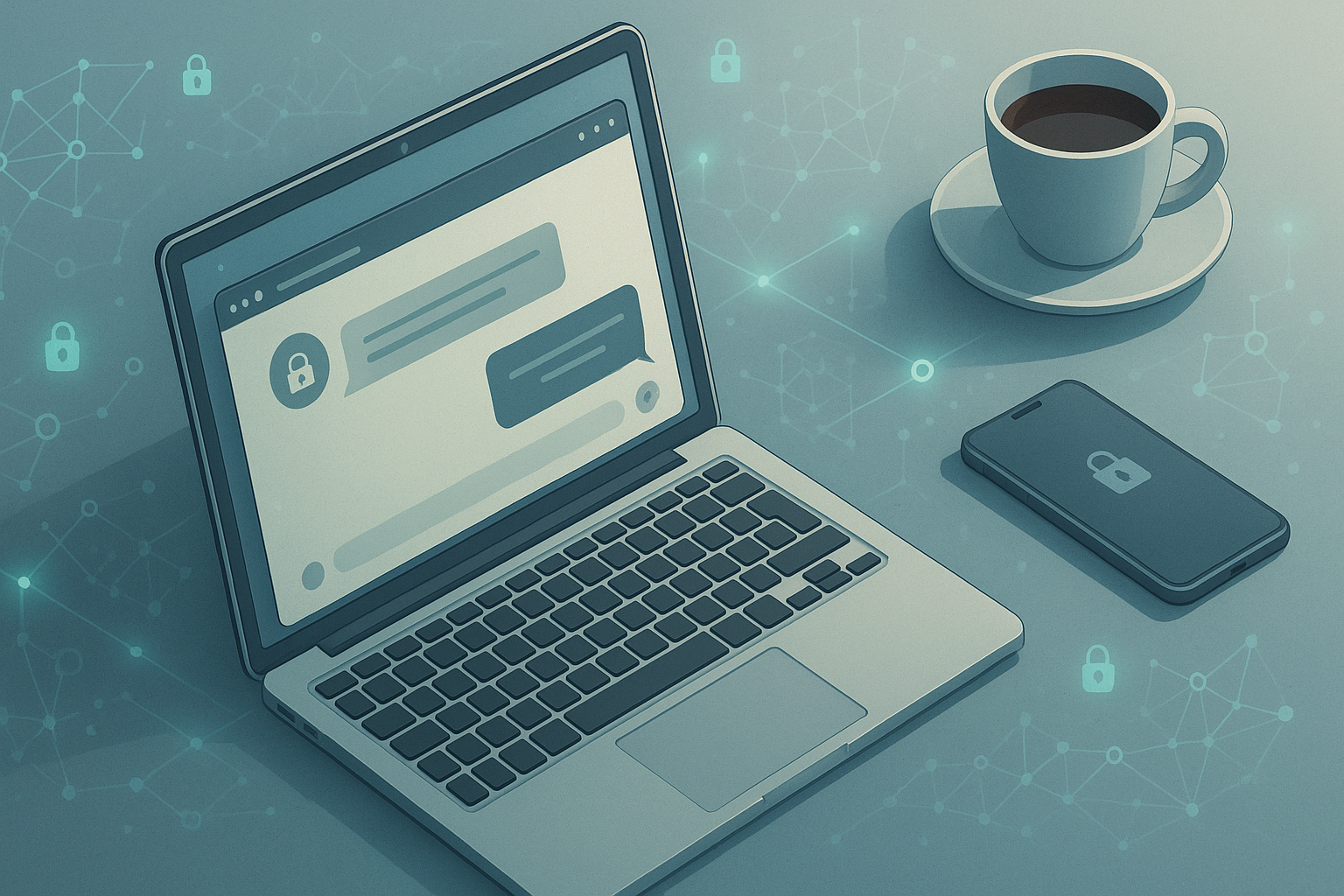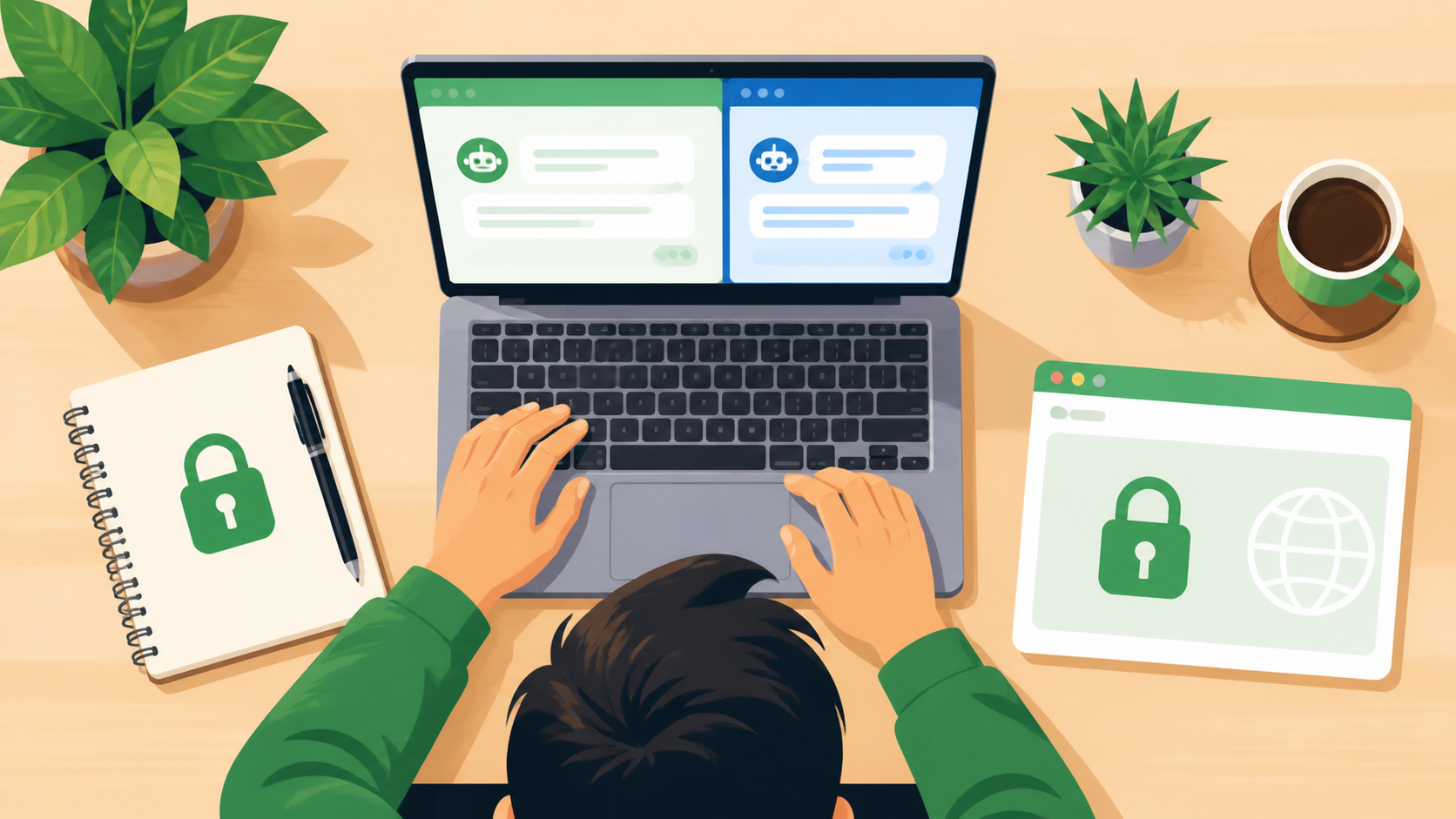
What people ask before switching to a private chat app
A practical look at the questions people ask before moving to a browser-based messenger, from privacy and access to everyday use.
People usually do not switch to a private chat app because of one feature alone. They switch because a few practical questions start to matter more than habit: Do I need to hand over my phone number? Can I use it in a browser? Who can see my messages? Will it feel awkward for the people I actually talk to?
Those are the real decision points. If you are comparing a browser-based messenger with mainstream apps, the difference is rarely about novelty. It is about control, simplicity, and how much personal data you want tied to everyday conversation. That is where private chats, no phone number login, and encrypted private chats begin to feel less like buzzwords and more like useful design choices.
This guide walks through the questions people ask before switching, and why they matter even if you never end up changing apps. It is written for anyone trying to choose a calmer way to message, not just for privacy enthusiasts. If you want to see one example of this approach in practice, PigeonChat is built around those same ideas.
Why do people want a private chat app in the first place?
Most people do not start from abstract concern about surveillance. They start from annoyance. Too many sign-ups, too many contacts requested, too much friction, and too many messages sitting inside systems they do not fully trust. A private chat app appeals because it promises a simpler relationship with messaging: fewer personal details, clearer boundaries, and less dependence on a single account identity.
For some, that means separating work, community, and personal life. For others, it means not linking a conversation to a permanent phone number. And for many, it is simply about feeling that a message should stay between the people involved, rather than becoming part of a wider data profile.
Is no phone number login really a big deal?
For many users, yes. A phone number can be useful, but it is also a strong identifier. It can follow you across devices, contact lists, and account recovery systems. If you are trying to keep a boundary between your messaging identity and your everyday number, a no phone number login can make that much easier.
There is also a practical side. Some people do not want to share their number with acquaintances, groups, or short-term contacts. Others may use a secondary number, a shared device, or a work line and prefer not to mix everything together. A browser-based messenger with no phone number login can reduce that pressure and make the first step into a conversation feel lighter.
How important is browser-based access?
Browser-based access matters because it lowers the threshold for trying something new. You do not need to install another app, remember another password manager entry, or reserve storage space on your phone. That makes it easier to use on shared computers, work machines, tablets, or older devices.
It also helps people who move between devices during the day. If a messenger works in the browser, the experience can feel more consistent. You are less likely to get stuck because one device is out of date or because you have not synced everything properly. For many users, that convenience is what makes a browser-based messenger more realistic than a privacy tool that lives only on one phone.
- Quick to try without installing software
- Useful on shared or temporary devices
- Less tied to one operating system
- Often easier for occasional use
- Can reduce clutter on your phone
What do people actually mean by encrypted private chats?
This is one of the most common questions, and a fair one. People often hear “encrypted” and assume it automatically means private in every sense. In practice, encrypted private chats usually mean the content of the message is protected while it travels or while it is stored, so it is harder for outsiders to read it.
That said, encryption is only one part of the picture. People still care about who can sign up, what identifiers are used, what metadata is collected, and whether the service keeps things simple or adds unnecessary tracking. A good private chat app should make those details easy to understand rather than hiding them behind technical language.
What makes people hesitant to switch?
Hesitation is usually less about privacy and more about social friction. People worry that their friends will not move with them, that the new app will be too spare, or that they will lose the convenience they are used to. That is especially true when a messenger is used for group chats, family updates, or work coordination.
There is also the question of trust. Users want to know whether the app will stay available, whether it will stay easy to use, and whether it is trying to collect more than it needs. A sensible switch is rarely about replacing everything at once. It is often about using a different tool for the conversations that benefit most from it.
How do people compare private messaging options in practice?
When people compare services, they tend to focus on a small set of everyday questions rather than technical claims. Those questions usually reveal whether the app fits their real needs.
- Can I use it without giving my phone number?
- Does it work in a browser as well as on mobile?
- Are the chats encrypted in a way that is clearly explained?
- How much setup is needed before I can send a message?
- Can I use it for both quick one-to-one chats and longer conversations?
- Does it feel like a tool I can trust, not just a feature demo?
These are sensible questions because they reflect real life. A private chat app that looks impressive but is awkward to use will not last in your routine. By contrast, a modest browser-based messenger that handles the basics well can become the one you reach for when you want a calmer conversation.
Frequently asked questions
Is a private chat app only for people with serious privacy concerns?
No. Many people use one simply because they prefer a cleaner sign-up process, want to avoid using a phone number, or like keeping certain conversations separate. Privacy is part of the appeal, but convenience and control matter too.
Does browser-based mean less secure?
Not necessarily. Browser-based access is about where you use the app, not whether it is secure. What matters is how the service handles authentication, encryption, session management, and data storage. A browser-based messenger can still be designed carefully.
Should I replace all my messaging apps at once?
Usually not. It is often easier to start with one type of conversation, such as a private thread, a temporary group, or a contact you do not want to link to your phone number. That way you can judge whether the app fits your habits before making a bigger change.
The decision to switch is rarely dramatic. It is usually a quiet judgement about what feels sensible, respectful, and easy to live with. If a private chat app helps reduce friction, keeps your number out of the loop, and gives you encrypted private chats in a browser-based messenger, that may be enough. And if it simply helps you ask better questions about the tools you already use, that is useful too.
Ready to try PigeonChat?

Writer & Editor at PigeonChat
Related Articles
PigeonChat.site in the UAE chat app search

What makes a strong European chat app today
What users expect from chat features in 2026

How PigeonChat.site fits private messaging needs today
What a European chat app should offer now