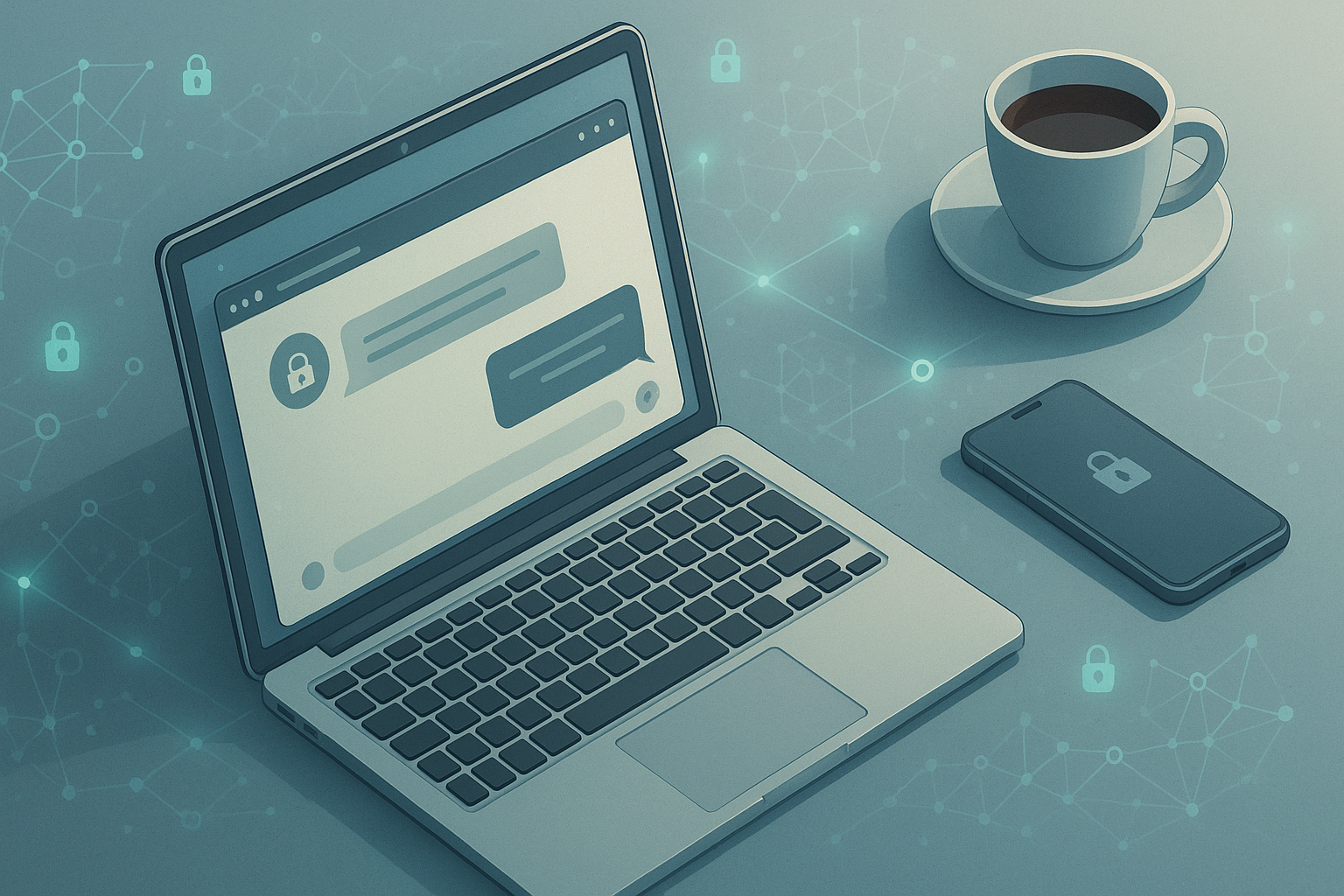
Why private chat apps are part of digital wellbeing
More people want calmer messaging, fewer interruptions, and less public pressure. This article connects private chat apps to digital wellbeing goals.
Digital wellbeing is often discussed in terms of screen time, sleep and notifications, but the apps we choose matter just as much as the amount of time we spend online. A chat app can either support calm, focused communication or quietly add friction, noise and pressure to everyday life.
Private messaging sits in a useful middle ground. It keeps conversation social, but it is usually narrower, more intentional and less performative than public-feeling platforms. That difference can shape how attention, stress and connection feel from one day to the next.
If you have ever felt more at ease in a smaller chat thread than in a busy social feed, there is a reason for that. Private chats change the social rules. They reduce the audience, lower the stakes and make it easier to communicate with purpose rather than for visibility.
Why private chats feel different from social media
Social media is designed around reach, discovery and constant movement. Even when it includes messaging, the surrounding environment is built to keep you browsing. Private chats, by contrast, are usually about a specific person or group and a specific conversation. That narrower design can make them feel less draining.
When you open a private message, you are typically responding to someone you already know. There is no algorithmic feed trying to extend the session, no public audience and often no pressure to perform. That makes the interaction more like a conversation and less like a broadcast.
This does not mean private chats are automatically healthy. A busy group thread can still be overwhelming, and constant availability can still become tiring. But compared with social media, private messaging often gives people more control over pace and context, which is a meaningful part of digital wellbeing.
How app design affects attention and stress
Attention is not just about willpower. App design shapes what feels urgent, what feels rewarding and what keeps pulling you back. If a service repeatedly introduces new content, social comparison or public signals like likes and views, it can increase mental load even when the individual action seems small.
Private chat apps tend to be simpler. You usually arrive with an intention: to reply, check in or share something practical. That simplicity can reduce cognitive switching. You are not constantly deciding whether to read, scroll, react or explore. In that sense, the app supports a more bounded form of communication.
For many people, that boundary matters. Less noise means fewer interruptions, fewer emotional spikes and fewer moments of accidental overstimulation. It is one reason some people prefer services such as PigeonChat for conversations they want to keep focused and low-key.
What makes private messaging more manageable
Private messaging can support digital wellbeing because it is easier to set expectations around it. A chat can be muted, archived, answered later or kept to a small circle. These controls help communication fit around life rather than taking over it.
There is also less social ambiguity. Public platforms often encourage people to think about how a message will look to others. In a private chat, the goal is usually simpler: be understood by the people involved. That can make communication feel more human and less self-conscious.
- Smaller audience, so less pressure to impress
- More direct communication, so fewer distractions
- Easier to mute or pause when you need space
- Less exposure to algorithmic content loops
- More likely to support practical, intentional exchanges
These are small differences, but digital wellbeing is often shaped by small differences repeated every day. A calmer interface, a narrower social context and fewer attention traps can all make messaging feel more sustainable.
Privacy and wellbeing are connected
Privacy is not only about secrecy. It is also about comfort. When people know a conversation is not being widely broadcast, ranked or mined for engagement, they are often more willing to be honest, brief or vulnerable as needed. That can improve the quality of the exchange.
There is also a stress benefit to fewer unknowns. Public platforms often create a sense that everything is visible, permanent and judged. Private messaging offers a different atmosphere. It creates a smaller social space where people can ask questions, make plans or share concerns without the same sense of exposure.
That is why chat app choice can matter so much. The technical features are important, but the emotional experience matters too. A well-designed private chat app can reduce friction in a way that supports both privacy and peace of mind. If you are exploring options, PigeonChat is one example of a service built around that more contained style of communication.
Choosing a chat app with digital wellbeing in mind
If you want messaging to feel healthier, it helps to look beyond feature lists and ask how the app affects your habits. Does it encourage endless checking, or does it support clear conversations? Does it feel calm to use, or does it compete for your attention?
A good rule is to favour tools that fit the kind of communication you actually want. If most of your important conversations are with a small number of people, then a private chat app may be a better fit than a social platform that also happens to include messaging. The simplest option is often the one that creates the least mental clutter.
When comparing apps, consider the following:
- Does it make it easy to mute, archive or leave chats?
- Are notifications controllable and understandable?
- Does the interface encourage quick replies without pressure?
- Is the conversation space private by default?
- Can you use it without being pushed towards extra content?
These questions are practical, not moral. The point is not to find a perfect app, but to choose one that supports the sort of online social time that feels healthy to you.
How to make private chats healthier in daily life
Even a good app can become tiring if it is used without boundaries. Digital wellbeing is as much about habits as it is about software. Private messaging works best when you treat it as a channel for communication, not a place you must monitor constantly.
Simple adjustments can make a large difference. Turn off non-essential alerts, set reply windows, and let some conversations wait. If a group chat is becoming too busy, mute it for a while. If you need a more deliberate space for messaging, keep your core conversations separate from noisier platforms.
It can also help to be explicit with friends, family or colleagues about response times. Private chats are often more manageable when everyone involved understands that instant replies are not always expected. That single expectation can lower stress for everyone.
Frequently asked questions
Are private chat apps always better for digital wellbeing?
Not always. They are usually less noisy than public social platforms, but a private chat app can still create pressure if it is filled with constant messages or if you feel obliged to reply immediately. The benefit comes from the combination of a smaller social context and healthier habits.
Can private messaging reduce social media fatigue?
Yes, for many people it can. Private messaging tends to be more intentional and less performative than social media, so it often feels easier to keep bounded. It can give you a place to stay socially connected without the extra pull of feeds, recommendations and public engagement metrics.
What should I look for in a private chat app?
Look for controls that support calm use: mute options, clear notification settings, simple conversation management and privacy by default. The best app is the one that helps you communicate without constantly demanding attention. A service like PigeonChat may suit people who want that simpler, more focused experience.
Digital wellbeing is not about avoiding technology altogether. It is about choosing tools that make your online life feel more deliberate and less overwhelming. Private chat apps can do that well when they keep conversation close, manageable and human.

Writer & Editor at PigeonChat
Related Articles

What browser chat changes for people who hate installs

How digital wellbeing changes the way people chat
Why digital wellbeing matters in chat app design

Why digital wellbeing is becoming a chat app feature
What a European chat app should offer now