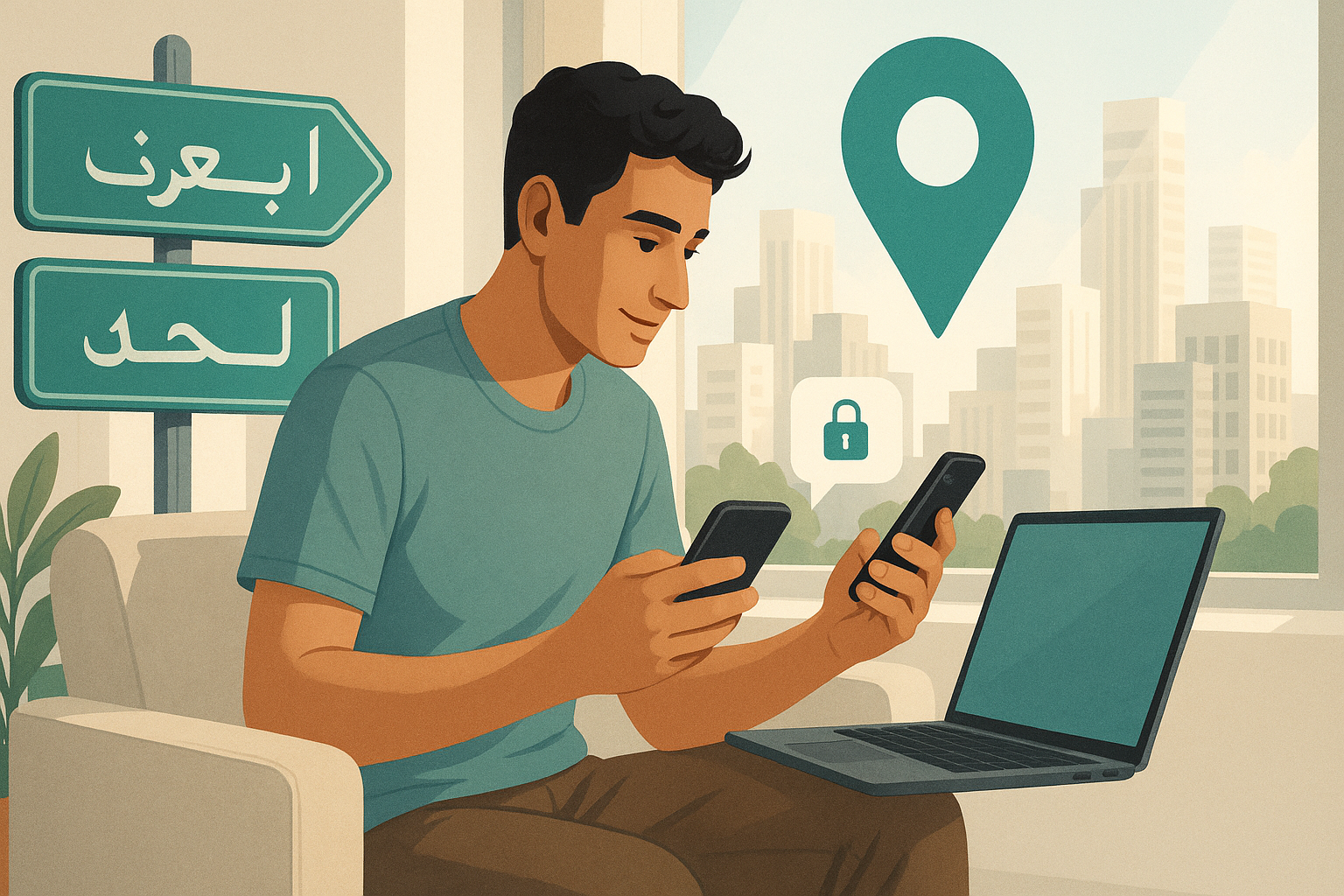
What no phone number login changes in messaging
Learn why users look for chat apps that do not require a phone number and how that affects privacy, access, and account ownership.
Signing up for a messaging app without a phone number sounds like a small product choice, but it changes quite a lot about the relationship between the service and the person using it. At the most basic level, it reduces identity exposure. A phone number is often a durable, widely reused identifier, so removing it from the login flow can make the account feel less tied to a single real-world contact point.
It also changes the shape of first-time use. Instead of asking for a number, waiting for an SMS code, and possibly linking the account to a personal SIM card, a no phone number flow can move straight to a username, passkey, email address, or other lighter method. That usually feels simpler, especially for people who want private messaging but do not want to hand over more personal data than necessary.
This is not only about convenience. It is about narrowing the amount of information a messaging platform needs to hold, process, and potentially expose. For privacy-conscious users, that can be the difference between a service that is merely encrypted in transit and one that also feels less intrusive at the account layer. Services such as PigeonChat are built around that idea, while still keeping the experience straightforward.
Why phone numbers matter so much
Phone numbers are convenient for login, but they are also a powerful identity anchor. Many people reuse the same number for years, share it with banks and delivery services, and connect it to contacts, messaging apps, and account recovery. When a messenger requires a number, it may become easier for the service, or anyone who gains access to it, to connect that account to a broader identity.
That does not automatically mean the app is unsafe. It does mean the user has handed over a piece of data that is more revealing than a random username. In private messaging, reducing the number of obvious identifiers is often a sensible first step, particularly if the goal is to keep casual contacts, group chats, or community accounts separate from a personal number.
What changes when signup skips the number
The biggest change is identity exposure. A no phone number service can allow someone to participate without revealing a mobile number to the platform or to other users. That matters if you are avoiding spam, reducing the risk of contact harvesting, or simply keeping work and personal communication apart.
It also simplifies the sign-up process. A phone number usually means an SMS verification step, and sometimes delays, formatting issues, or problems when travelling. Removing it can make onboarding quicker and less fragile. For some people, it is simply easier to create an account on a laptop, tablet, or secondary device without having to reach for their SIM.
There is another practical benefit: fewer accounts are built on a single, reusable identifier. If a messaging platform is breached or misused, a phone number can make it easier to correlate accounts across services. A different login model can lower that linking risk, even if it does not remove every privacy concern.
Private messaging is not just about encryption
People often think of private messaging only in terms of message content. End-to-end encryption is important, but account registration and recovery also shape privacy. If a service asks for a number, it may learn more about the user than is necessary to move messages between devices.
Skipping the number can therefore improve the privacy posture of the whole service. It does not magically make everything anonymous, because metadata, usernames, profile details, and social connections still exist. But it does remove one of the most sensitive and persistent identifiers from the account setup.
For users, that means a better chance of keeping communication compartmentalised. For example, you may want a separate identity for community groups, side projects, or professional conversations. A no phone number setup can make that separation more realistic without turning account creation into a chore.
Trade-offs you should expect
No login method is perfect, and phone number free systems have their own compromises. Recovery can be trickier if you lose access to your account. A number can double as a simple fallback, so if the service does not use one, it needs another recovery path that is secure and manageable.
There may also be practical limits around abuse prevention. Phone numbers are sometimes used as a crude way to slow down spam, although they are far from foolproof. If a platform does not use them, it needs other safeguards such as rate limits, reputation systems, reporting tools, or manual moderation. Good private messaging services think about this early rather than bolting it on later.
- Better privacy: less direct identity exposure at sign-up.
- Faster onboarding: no SMS code or SIM-based verification.
- Cleaner separation: easier to keep different roles or communities apart.
- Potential recovery challenges: alternative account recovery becomes important.
- Different anti-abuse needs: the platform must rely on other controls.
What to look for in a no phone number messenger
If you are evaluating a private messaging app, the absence of a phone number requirement is a good sign, but it should not be the only thing you check. Look at what the service asks for instead, how account recovery works, and whether the privacy model is clear about what is stored.
It is also worth checking whether the app lets you control who can find you, whether usernames are optional or changeable, and whether contact discovery is limited. A service like PigeonChat is worth considering when you want a simpler account model without giving up everyday usability.
In practice, a good no phone number flow should feel calm and unremarkable. You should be able to sign up, message, and manage the account without being pushed towards oversharing. If the product keeps asking for more and more personal data later, the initial privacy gain is reduced.
When skipping the number is most useful
This approach is especially helpful if you want to separate your messaging identity from your everyday mobile identity. That might include people using a second account for communities, activists who want to reduce traceability, freelancers who want to keep work contacts tidy, or anyone who simply prefers to avoid giving out a number.
It is also useful for people who travel, change devices often, or use shared hardware. In those situations, a login model based on a number can be awkward. A more flexible sign-up method can make messaging easier without compromising the underlying goal of privacy.
At the same time, it is important to stay realistic. No phone number does not mean no data, and it does not replace good operational habits. You still need sensible passwords or passkeys, careful device security, and attention to what you share in profile fields and chats.
Frequently asked questions
Is a no phone number login the same as anonymous messaging?
No. It reduces a major identity link, but it does not make messaging fully anonymous. Your username, profile, message content, network details, and contact patterns can still reveal a lot. It is better to think of it as a privacy improvement, not a complete shield.
Why do some apps still ask for a phone number?
Usually because it is convenient for verification, recovery, and spam control. A number is easy to validate and many users already understand SMS login. The drawback is that it can expose more personal information than is needed for simple private messaging.
What is the main benefit of private messaging without a phone number?
The main benefit is reduced identity exposure. You can join a service without tying the account to a personal SIM card, which makes it easier to keep conversations separate and limits how much personal information the platform has to store.
In the end, skipping phone numbers is less about novelty and more about restraint. A private messaging service should ask for only what it truly needs, and a lighter account model usually makes that principle easier to follow. If you want messaging that feels less intrusive from the first tap, no phone number sign-up is a practical place to start, whether you are exploring alternatives or trying PigeonChat for yourself.
Ready to try PigeonChat?

Writer & Editor at PigeonChat
Related Articles
What a European chat app should offer now

What an EU chat app needs beyond privacy claims
What a browser-based end to end encryption chat app needs
How PigeonChat.site fits the EU privacy app search
Why browsers are becoming the new private chat home