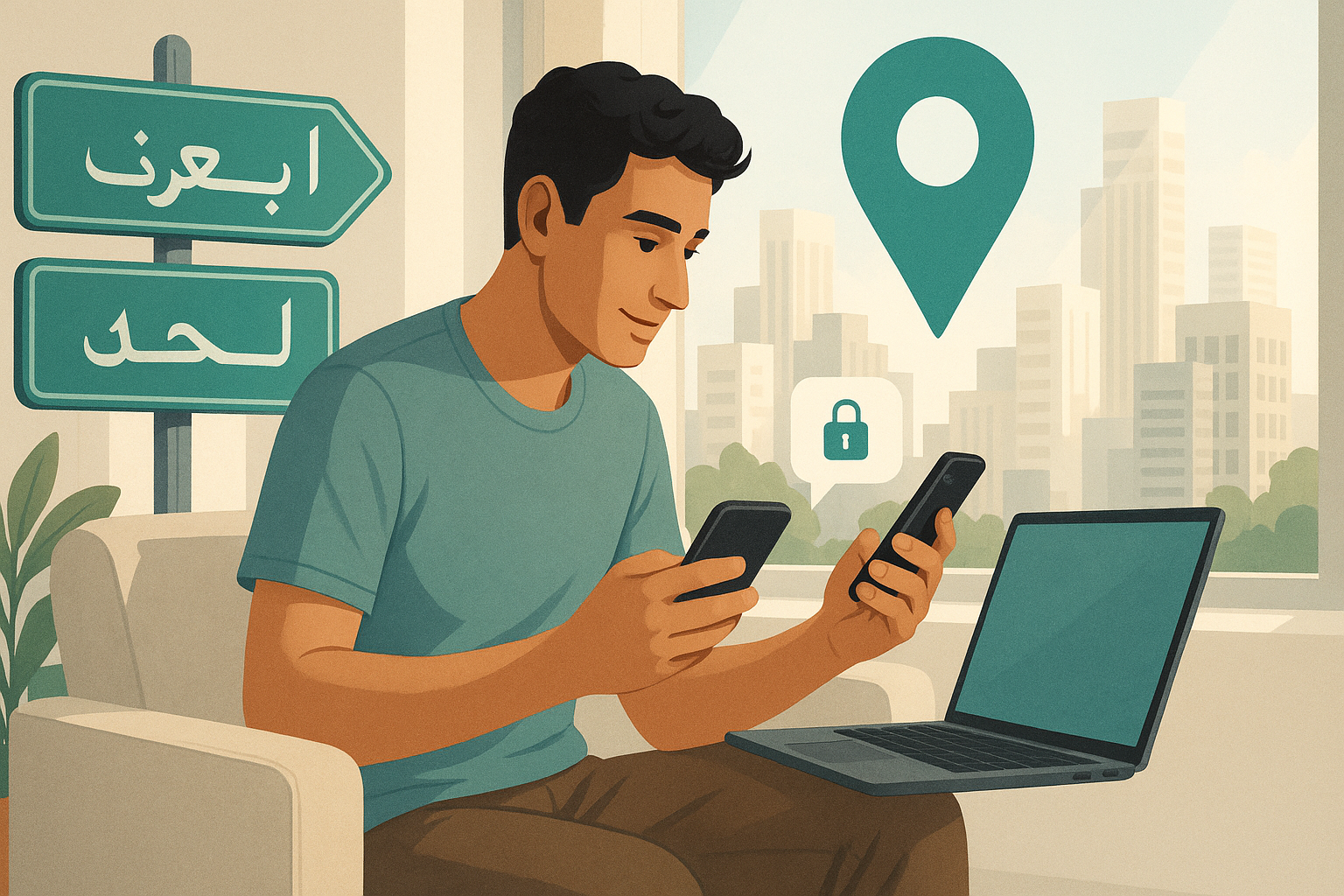

What no phone number login changes in messaging
A messaging app without phone number signup changes who can join, how fast they start, and what personal data they need to share.
Phone numbers have become the default login for many messaging apps, but that does not make them a neutral design choice. A number is more than a convenient account identifier. It is often tied to a person’s real-world identity, contact graph, and long-term traceability. When a messenger asks for a phone number, it is quietly asking you to bring a familiar piece of identity into a place that many people want to keep lightweight and private.
That is why no phone number login matters. It changes messaging from something anchored to your SIM card and address book into something that can stand on its own. For a private chat app, that shift is not just technical. It affects who can find you, what they can infer about you, and how much of your social life gets folded into the app’s design.
For people who simply want to message without exposing a personal number, the benefits are easy to understand. For product teams, the trade-offs are equally important. A messenger that does not rely on phone numbers has to solve identity, discovery, trust, and abuse prevention in different ways. Those choices shape the whole experience, whether the app is a minimal tool or something more ambitious like PigeonChat.
Why phone numbers changed messaging in the first place
Phone numbers made sense when texting was the obvious model. They are unique, broadly available, and easy to verify through a handset. For a long time, that seemed like a practical shortcut: if the network already knows who you are by number, why build another identity system?
But convenience came with a hidden cost. A phone number is usually persistent, portable between apps, and often linked to a person outside the messenger. Once it becomes your login, the app no longer has just a messaging identity. It has a bridge to your wider digital and social identity.
That bridge can be useful, but it also narrows privacy. In a phone-number-based messenger, contact discovery often depends on address books and imported relationships. This can make the app feel efficient, but it can also make it feel intrusive, especially when you want to message someone without revealing your personal number or automatic social connections.
What changes when a messenger does not require a phone number
A private chat app without phone number login usually starts from a different assumption: your account should be an account, not an extension of your telco identity. That means sign-up can be based on a username, invite link, passkey, email, or another non-phone identifier. The exact method matters less than the principle. The point is to reduce the amount of real-world information needed to begin chatting.
This has immediate practical effects. You can separate your messaging identity from your mobile contract. You can reduce the chance that someone will guess or harvest your number. You can also make it easier to use the app in contexts where phone numbers are awkward, such as shared devices, work environments, or international communication.
There is also a psychological shift. Without a phone number at the centre, the app can feel less like an extension of your contacts app and more like a dedicated communication space. That tends to support more intentional conversations, especially where people want a sense of distance between their personal number and their chat persona.
Privacy benefits people actually notice
The most obvious benefit is reduced exposure. If someone can find you in a messenger only by a username or invitation, they learn less by default. They do not automatically get your number, and you do not automatically get tied to every other account that shares that number.
Another benefit is limiting the spread of metadata. Even when message content is protected, contact and identity signals can still reveal a lot. Removing phone numbers does not solve all privacy issues, but it removes one of the most useful linking keys in a person’s digital life.
- Less chance of exposing a personal number to strangers
- Cleaner separation between public and private identities
- Fewer automatic imports from the address book
- More room for pseudonymous or role-based accounts
- Reduced dependence on SIM-based verification
For many people, these are not abstract advantages. They translate into fewer unwanted contacts, less data leakage, and less friction when choosing who gets access to a chat identity. PigeonChat, for example, is the kind of messenger that can benefit from this model because it treats identity as something to be designed, not merely inherited from a phone.
The product trade-offs are real
Removing phone numbers also removes a familiar onboarding path. Users often understand the concept of entering a number and receiving a code. Once that disappears, the app has to offer something else that is just as clear. Good design becomes more important, not less.
Account recovery is another issue. People are used to numbers as a fallback. If a messenger no longer uses them, it needs a sensible recovery story that does not recreate the same privacy problems. That might involve recovery codes, secure backup options, or carefully designed email support. The best approach depends on the app’s audience and risk model.
There is also the question of abuse. Phone numbers can be a weak form of friction, but they are still friction. Without them, a private chat app has to think more carefully about spam prevention, rate limiting, invitation flows, reputation systems, and moderation tools. A cleaner privacy model should not become a freer lane for abuse.
What users should look for in a no phone number messenger
If you are evaluating a messenger, the absence of phone-number login is only one part of the story. The broader question is whether the app respects identity boundaries in a consistent way. A privacy-friendly login is less meaningful if the app still pushes contact syncing, public profile exposure, or weak account controls.
It helps to ask a few simple questions before signing up:
- Can I create an account without sharing my number?
- Can I control how others find me?
- Does the app support pseudonyms or usernames?
- What happens if I lose access to my account?
- Does the app import my address book by default?
- Are group joins and invites designed to limit unwanted discovery?
These checks are useful even if you never use the app. They help you understand how modern messengers think about identity. The direction is clear: people increasingly want communication tools that are less tied to permanent personal identifiers and more adaptable to context.
Why this matters beyond privacy enthusiasts
No phone number login is not just for security-minded users. It also matters to people who manage separate roles in life. A freelancer may want one identity for client chats and another for friends. A community organiser may need a public-facing account that does not reveal a personal number. A parent, teacher, or volunteer may want a messenger that keeps boundaries clean.
It also matters in places where phone numbers are inconvenient, expensive, or simply not the right anchor for trust. Messaging should be available to people with different needs and constraints, not only those willing to turn a mobile number into a universal account key.
That is why the best no phone number login systems feel quieter. They do not demand more information than the conversation needs. They let identity be chosen, scoped, and changed with less exposure. If a messenger can do that well, it is not just more private. It is more respectful of how people actually communicate.
Frequently asked questions
Is no phone number login the same as anonymous messaging?
No. It usually means you can sign up without sharing a phone number, but the app may still know your username, device details, or other account information. That can still be useful for safety and account management. It is better to think of it as reduced identity binding, not total anonymity.
Are private chat apps without phone numbers harder to use?
They can be, if the onboarding is poorly designed. But a good messenger can make non-phone sign-up feel straightforward. The challenge is to replace the familiar number-and-code flow with something equally clear, such as usernames, invite links, or secure recovery options.
Does removing phone numbers make messaging more secure?
It can improve privacy and reduce exposure, but security depends on many factors. Strong authentication, encryption, recovery design, moderation, and abuse controls all matter. Removing phone numbers is one good design choice, not a complete security model on its own.
In the end, no phone number login changes messaging by making it less automatic and more intentional. It gives people room to separate identities, protect personal details, and choose how they are found. That is a small interface decision with a large effect on how a messenger feels, whether you are comparing products, building one, or simply deciding what kind of app deserves your trust.
Ready to try PigeonChat?

Writer & Editor at PigeonChat
Related Articles
What a European chat app should offer now

What an EU chat app needs beyond privacy claims
What a browser-based end to end encryption chat app needs
How PigeonChat.site fits the EU privacy app search
Why browsers are becoming the new private chat home