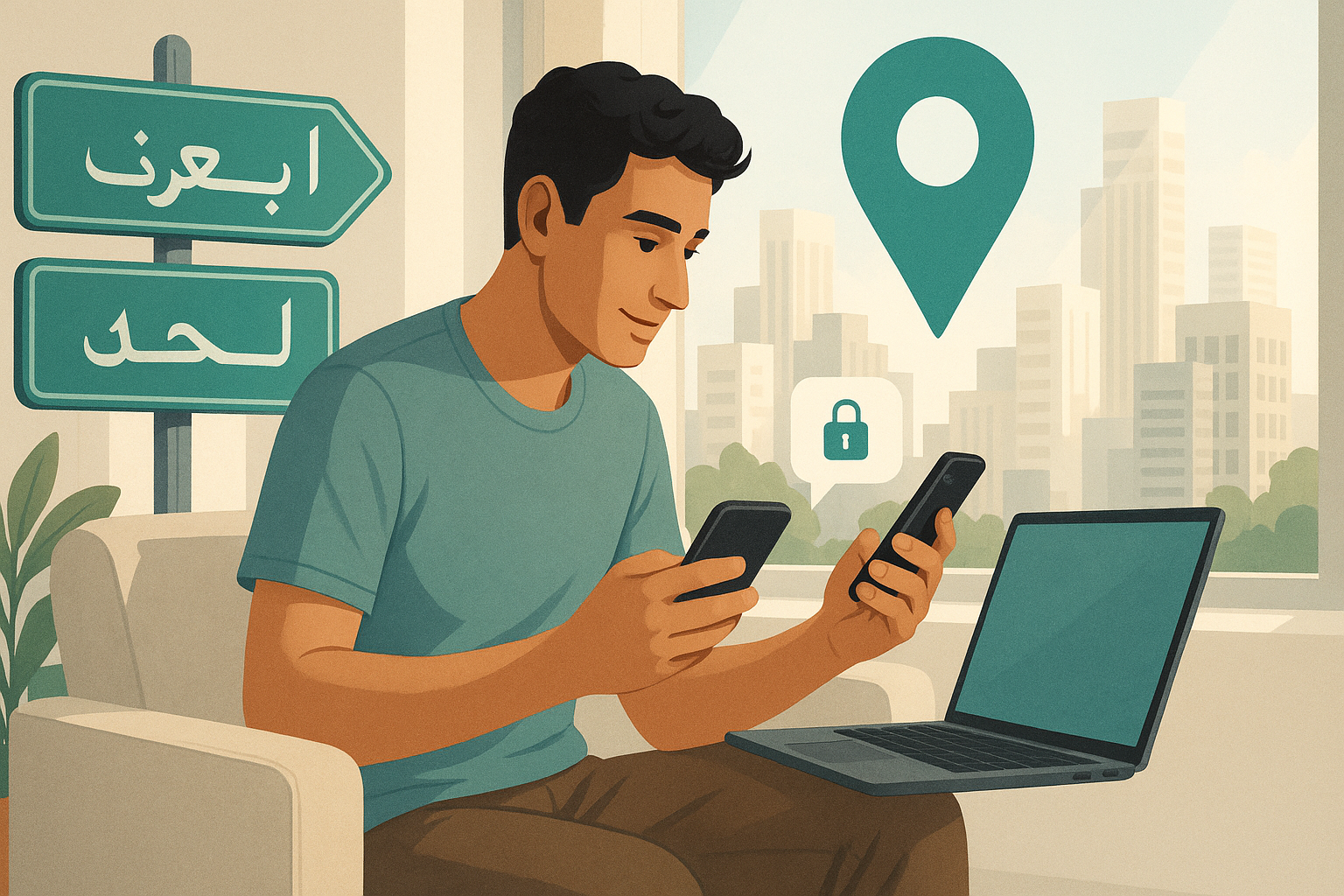

Why no phone number login changes messaging
Many people want chat apps that do not depend on a phone number. This piece explains why that matters for privacy, access, and everyday use.
Phone number login can feel convenient at first, but it also changes the shape of a messaging app. The moment a service asks for a number, it is no longer just helping you sign in. It is linking your account to a piece of personal data that many people would rather not hand over for private messaging.
That matters more than it might seem. A phone number is often tied to identity, address books, carrier records, and years of other accounts. If a messenger needs it for every user, then choosing a private messaging app becomes less about what it does and more about what it asks for. That is why no phone number is not a gimmick. It is part of the product promise.
Browser based login makes the point even more clearly. When you can open a service in the browser and start chatting without giving away your mobile number, the friction drops and the privacy story improves at the same time. For many people, that is the difference between trying a tool and avoiding it entirely. PigeonChat is built around that idea, but the wider lesson applies to any WhatsApp alternative.
Why a phone number is a heavy form of identity
A phone number looks small on a sign-up form, but it is a durable identifier. People change email addresses, usernames, and devices more often than they change numbers. That makes a number useful for services, but it also makes it easier to reuse across accounts and easier to associate with your real-world identity.
For messaging, that creates a subtle trade-off. If the app uses your number as the default account key, then discovery, contact matching, recovery, and verification may all revolve around it. Even if the service is well run, users still have to trust that their number will not become the anchor for spam, profiling, or unwanted contact.
There is also the social expectation problem. A phone number can feel more personal than an email address because people are reluctant to share it casually. A no phone number approach respects that boundary. It tells users that private messaging should begin with minimal data, not with the most portable identifier they own.
Convenience improves when sign-up is lighter
Convenience is not just about shaving off a few seconds. It is about whether someone can join without friction, without a SIM card, and without the awkward step of deciding whether to expose their number at all. Browser based messaging can make that simpler, especially on shared or work devices where installing another app is not ideal.
This is one reason phone-number-free login is practical rather than ideological. It helps people who travel, use multiple devices, keep separate personal and work identities, or simply do not want to connect every service to their handset. It can also reduce the barrier for someone trying a new messenger for the first time.
Think about the difference in these journeys:
- Open a site, choose a username, and begin chatting.
- Install an app, enter a number, wait for a code, and then decide whether to sync contacts.
- Use a browser on a borrowed laptop without exposing a personal mobile number.
- Set up a second identity for a community, project, or side business without mixing it with your main phone.
When the first path exists, people are more likely to explore the product on their own terms. That is why services such as PigeonChat emphasise low-friction access. The convenience is real, and it does not have to come at the expense of privacy.
Private messaging starts with less data, not more
Many people think of private messaging as end-to-end encryption, disappearing messages, or message history controls. Those features matter, but privacy begins earlier. It starts with asking what personal data the service needs before a single message is sent.
If a messenger does not need your phone number, then it avoids collecting a piece of information that can be misused, correlated, or demanded later. That is useful even if the app never suffers a breach. Good privacy design is not only about resisting attacks. It is about reducing the amount of sensitive data in the first place.
That is why a no phone number model often feels more trustworthy. It is easier to understand. Users can see the boundary immediately: chat identity does not have to equal real-world contact identity. For people who value discretion, that clarity is a major benefit.
Why browser based access changes the experience
Browser based messaging is often underrated because it sounds less polished than a native app. In practice, it can be a strong fit for private communication. It removes the need to hand over app permissions, keeps the entry point lightweight, and makes it easy to use different devices without syncing a phone-first identity everywhere.
There is also a subtle advantage in terms of control. A browser session can be opened, closed, and used more selectively than a permanently installed app. For people who want messaging to feel purposeful rather than constantly present, that can be a welcome change.
It is worth saying that browser based does not automatically mean private. The design still matters. But when browser access is combined with no phone number login, the overall experience becomes more respectful of user boundaries. That is a strong reason many people now look for a WhatsApp alternative that works this way.
What to look for in a phone-number-free messenger
If you are evaluating a messaging service, the sign-up page tells you a lot. A privacy-friendly messenger should make it easy to understand what data it collects, how identity works, and what is optional. If the first step is a demand for your number, that is useful information in itself.
Beyond sign-up, look for design choices that support private use rather than just marketing language. A strong product should be understandable without reading a long policy document first. It should be practical for ordinary users, not just for privacy enthusiasts.
- Can you create an account without a phone number?
- Can you use it in a browser as well as on mobile?
- Does the service explain how recovery works without linking to a number?
- Are contact discovery and profile visibility optional?
- Does it minimise data collection at sign-up and after sign-in?
These questions are useful even if you never join the service. They help you spot the difference between privacy as a feature and privacy as a design principle. PigeonChat exists in that second category, but the standard is one that any messaging platform can learn from.
Frequently asked questions
Is no phone number login only for privacy-conscious users?
No. It is useful for privacy-conscious users, but it also helps anyone who wants less friction, fewer account ties, or a separate identity for a project or community. Reducing sign-up requirements is a convenience improvement as well as a privacy improvement.
Does a phone-number-free app mean messages are automatically private?
Not by itself. Phone-number-free login reduces the data the service collects, but private messaging still depends on the rest of the system, including how messages are stored, protected, and shared. It is a strong start, not a complete guarantee.
Why would someone choose a browser based messenger over a native app?
Because it is often easier to access, easier to try, and easier to use on different devices without installing anything. For many people, browser based access is the most straightforward way to keep messaging lightweight and separate from their main phone identity.
The bigger lesson is simple: if messaging is meant to help people communicate privately and conveniently, it should not begin by demanding unnecessary personal data. No phone number login is not a niche preference. It is a sensible requirement for modern private messaging, and one reason services like PigeonChat feel different from the default.

Writer & Editor at PigeonChat
Related Articles
What a European chat app should offer now

What an EU chat app needs beyond privacy claims
What a browser-based end to end encryption chat app needs
How PigeonChat.site fits the EU privacy app search
Why browsers are becoming the new private chat home