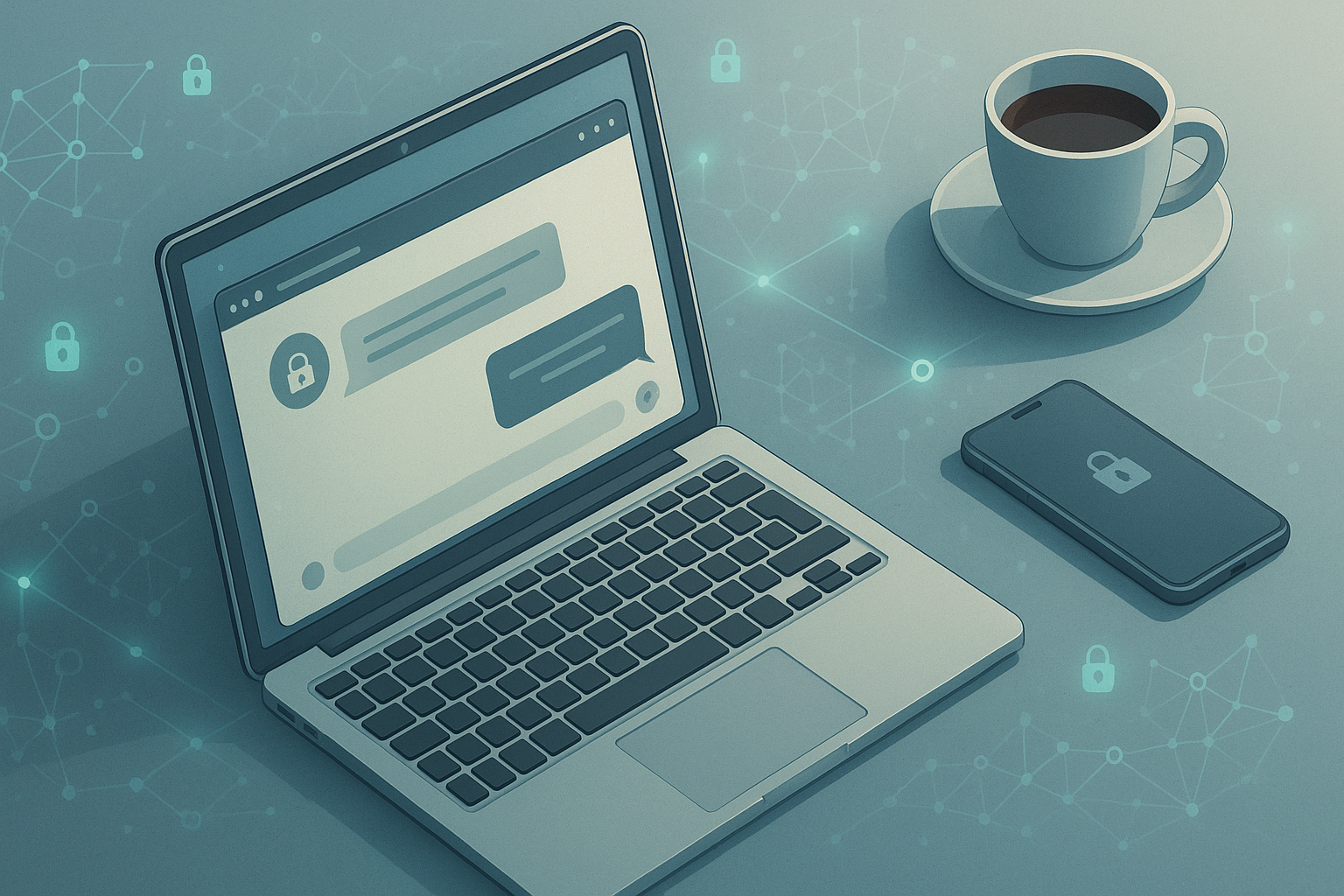

What private browser messaging means for communities
Browser-based messaging can still be private and secure. This article explains how communities use it without installing another app.
Communities work best when people can talk freely without making that freedom a public performance. That is where browser based messaging with strong privacy starts to matter. It lets people join from a familiar web page, while keeping the actual conversation protected in a way that feels suitable for real groups, not just casual chat.
For many communities, the appeal is straightforward. Members do not want another app to install, another account to manage, or another platform to distrust. They want something that loads quickly, works on different devices, and supports encrypted private chats without turning the experience into a technical project. Done well, that balance is practical rather than flashy.
Private browser messaging is not only about hiding content. It is about making it easier for organisers, moderators, volunteers, clubs and niche groups to keep conversations focused, useful and reasonably safe from prying eyes. PigeonChat sits in that space, but the broader lesson matters even if you never sign up.
Why browser access changes the experience
A browser based system lowers the friction of joining a conversation. People can open a link, sign in if needed, and get on with the discussion. That matters for communities where participation is already fragile, because every extra step can reduce engagement.
Browser access also makes it simpler to support mixed devices. Some people use laptops, others use shared computers, tablets or work machines where installing software is awkward. A web interface gives those users a route in without creating a special technical burden for them or for the community admins.
There is a second benefit as well. When the interface is web first, updates can be rolled out centrally. That often means fewer version mismatches, fewer support headaches and a more consistent experience across the group.
What privacy needs to cover in real community chat
Privacy in community messaging is not just a slogan. At minimum, people need confidence that message content is not being casually exposed to service operators, outsiders or other members of the platform. Encrypted private chats help with that by limiting who can read the conversation itself.
But privacy also includes context. Who is in a group, when they joined, what channels they can see and what metadata is retained can all matter. A system can be technically secure and still feel uncomfortable if it collects too much information around the edges.
This is why communities should think in layers. Content encryption is important, but so are sensible account practices, minimal data retention and clear moderation tools. The best private messaging systems are the ones that reduce exposure without making everyday use awkward.
Why communities value encrypted private chats
Groups often need to discuss matters that are not meant for public view. A neighbourhood association may talk about sensitive disputes. A volunteer team may coordinate safeguarding issues. A hobby community may want a quieter space for planning and feedback. In each case, private messaging is useful because it keeps the conversation inside the intended circle.
Encryption helps make that boundary meaningful. If messages are protected end to end or with similarly strong safeguards, the community can focus on the conversation itself rather than worrying that every note will be readable by anyone with access to the service backend.
That does not remove the need for trust, but it reduces the amount of trust required. For many communities, that is a sensible trade-off. People are more likely to speak honestly when the platform design itself supports discretion.
How to judge whether a platform is suitable
If you are assessing a browser based private messaging tool, start with the basics. Ask whether it clearly explains how messages are protected, whether it supports private conversations, and whether the group structure fits the way your community actually works. A simple product that fits the use case is often better than a feature-heavy one that creates confusion.
Look at the sign-in flow too. Community messaging should be accessible, but it should not be so open that anyone can wander in. The right balance depends on the group, yet some form of controlled access is usually important for keeping conversations focused and reducing spam or impersonation.
You should also consider moderation. Even private spaces need rules, reporting routes and admin controls. Privacy does not mean an absence of governance. It means the community can manage itself without exposing more than necessary.
- Check whether the platform clearly states how encryption works.
- Look for access controls that fit invite-only or member-only groups.
- Review what metadata is collected and how long it is kept.
- Confirm that moderators can manage abuse without seeing more than they need.
- Test the experience on the devices your members actually use.
When browser based messaging is the right fit
Browser based messaging is often a strong fit when a community values convenience, lower support effort and easy access across devices. It can work especially well for groups that meet irregularly, have members with different levels of technical confidence, or need a secure space that does not demand a full software rollout.
It is also useful for communities that want to keep private messaging close to their existing web routines. People already understand browsers, tabs and links. That familiarity lowers the learning curve, which is important when the goal is participation rather than technical enthusiasm.
That said, browser based does not automatically mean private. The privacy model still needs to be designed carefully. Tools like PigeonChat are best understood as examples of how the web can support serious messaging needs without forcing people into a more complicated app ecosystem.
Good habits for communities using private messaging
Technology alone will not make a group healthy. Communities get better results when they pair the platform with simple habits. Keep membership lists current, set clear expectations for message tone and make sure people know where sensitive issues should be discussed.
It also helps to keep channels purposeful. A lot of private chat becomes noisy because too many topics are mixed together. If a group has clear spaces for announcements, planning and direct conversation, members are more likely to use the system well.
Finally, review your setup occasionally. A tool that made sense when the community was small may need a different structure later. The point of private browser messaging is not to freeze a group in place, but to support it as it grows and changes.
Frequently asked questions
Is browser based messaging less secure than a dedicated app?
Not necessarily. Security depends on the design, not just the delivery method. A browser based system can still provide strong encryption and good access controls if it has been built carefully.
Why would a community choose encrypted private chats over a public forum?
Private chats are better when the conversation needs discretion, faster coordination or a smaller trusted audience. Public forums are useful for visibility, but they are not always the right place for planning, moderation or sensitive discussion.
What should moderators look for in a private messaging platform?
Moderators should look for clear permissions, simple member management, abuse handling tools and transparent privacy policies. The platform should help them protect the community without making routine oversight difficult.
Private browser messaging works best when it makes access easy and privacy serious at the same time. That combination is practical, not theoretical, and it is exactly why more communities are thinking carefully about how they communicate online.

Writer & Editor at PigeonChat
Related Articles

How chat folders change the way busy chats stay organized

Chat features that make private apps easier to use

Why chat folders matter for busy group conversations

Why chat folders matter for busy group conversations
What a European chat app should offer now