
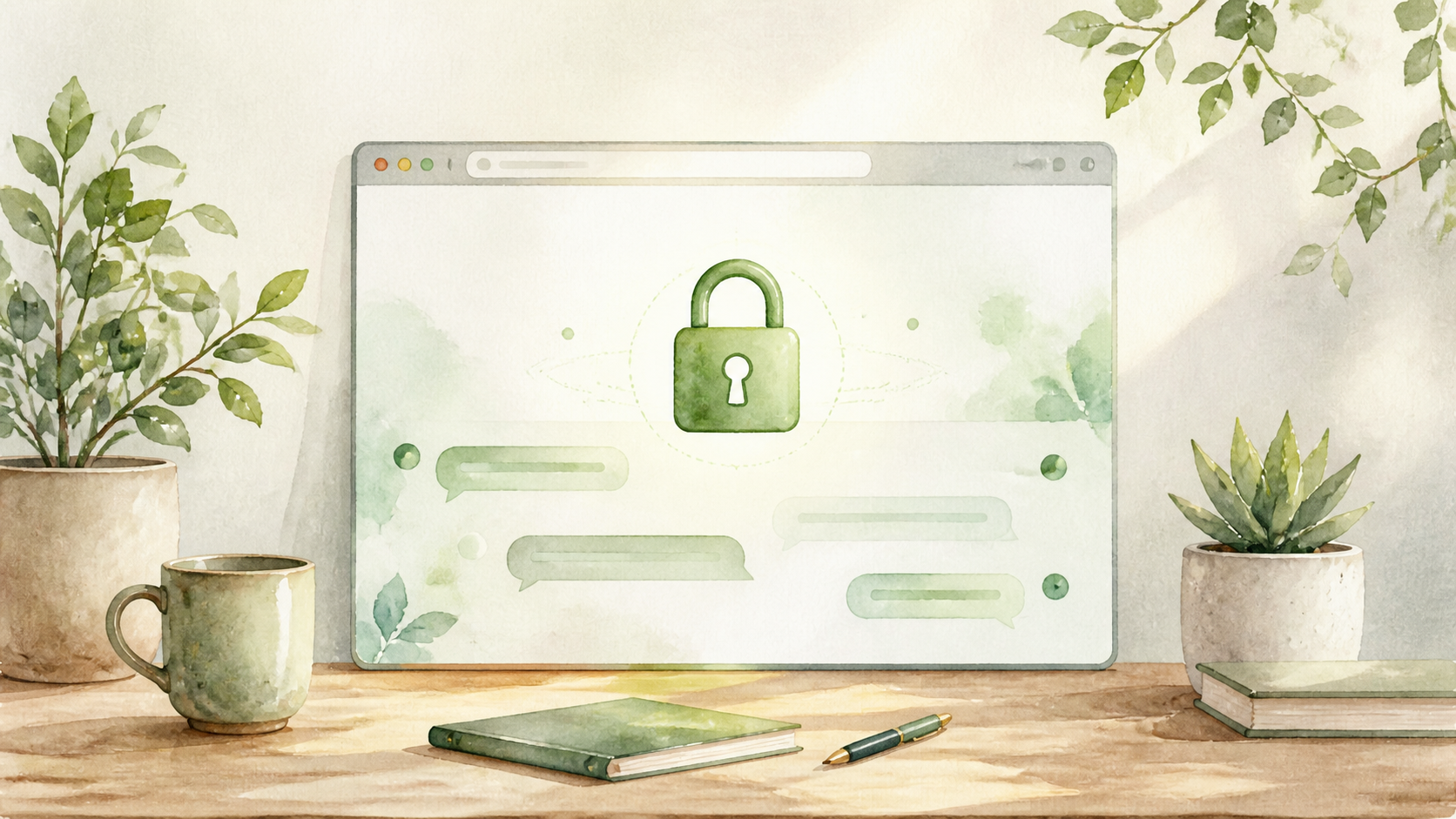
How browser based private chats work in practice
A browser chat can still feel private and secure. This guide explains how encrypted chats work without an install or phone-number signup.
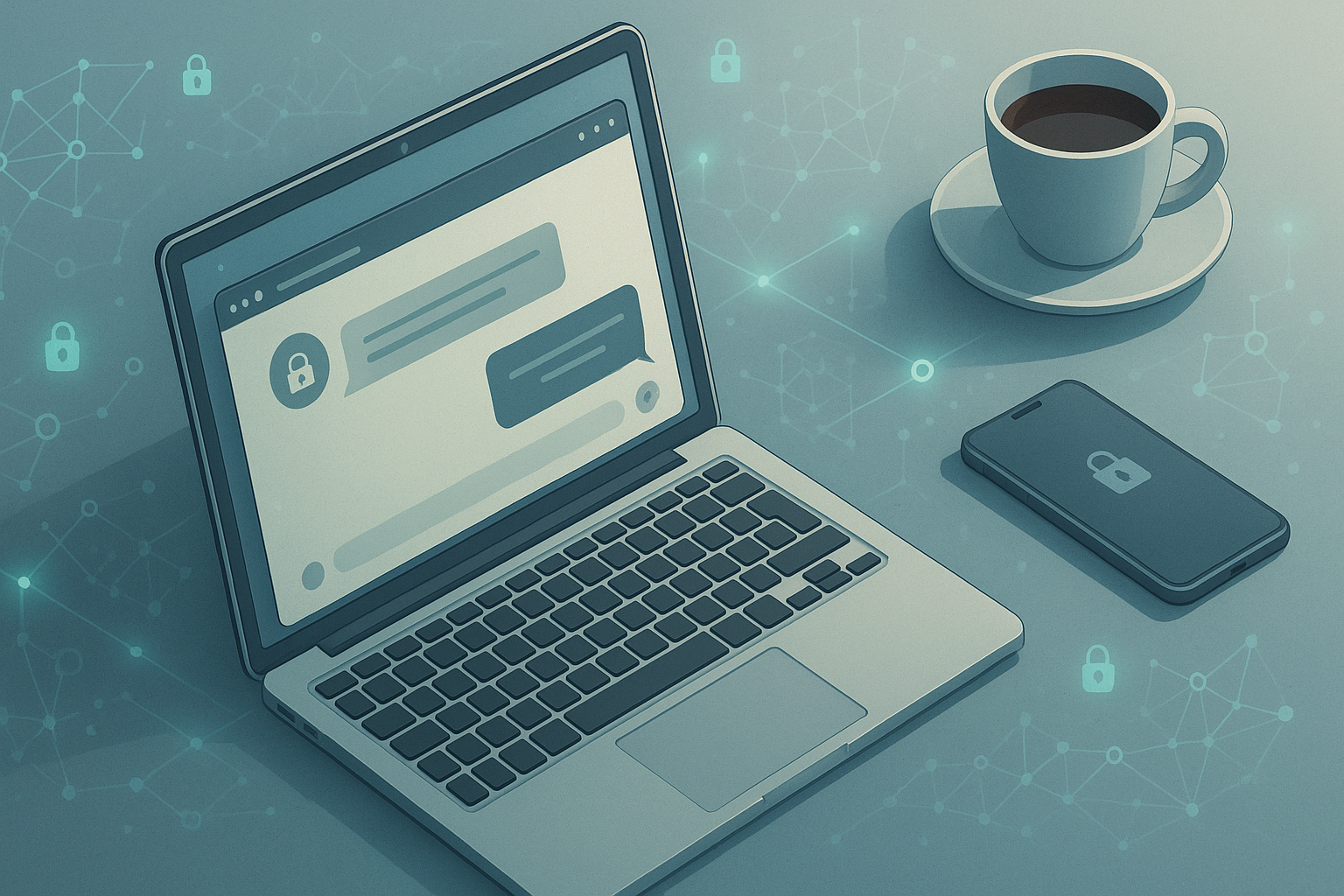
Browser based private messaging has a simple promise: open a tab, send a message, and keep the contents private. In practice, that only works when the app is designed so the browser is a delivery tool, not a weak link. The browser does not have to mean exposed messages, weak controls, or a casual attitude to privacy.
The key idea is that browser access and encrypted private chats are compatible. What matters is how the service handles encryption, session storage, device trust, and what is or is not kept on the server. If those parts are done well, private browser messaging can be both convenient and genuinely private.
This matters because many people want the ease of a web app without the downsides of a service that can read, log, or expose everything by default. The good news is that a well designed browser based private messaging app can reduce friction without weakening your privacy model.
What browser based private messaging actually means
At its simplest, browser based private messaging means you use a web interface rather than a native app. You sign in through a browser, see your conversations, and send messages from there. That is the surface level experience, but the privacy model underneath can vary a lot.
Some services store message content on their servers in readable form. Others store only encrypted data and deliver it to your browser for decryption. In the second case, the browser is acting as the place where your device handles the keys and presents the conversation, rather than as a place where the service gets to inspect the messages.
If you are evaluating a product such as PigeonChat, the important question is not simply "is it in the browser?" but "what can the server actually see?" A browser interface can be private if the app is architected to keep message content out of reach.
How encrypted private chats work in a browser
In encrypted private chats, the message is turned into unreadable ciphertext before it leaves your device. The browser can do that job, usually with keys that never need to be exposed to the provider in plain form. The server then moves encrypted packets around without understanding their contents.
When the recipient opens the chat in their browser, their device uses its own keys to decrypt the message locally. That means the browser is not where privacy goes to die. It is just the interface and, in some designs, the cryptographic workspace.
There are practical limits, of course. If a browser session is compromised, or a malicious extension can read the page, encryption cannot save you from everything. But a sound design still offers strong protection against common platform risks, including casual server-side access and accidental exposure through infrastructure.
What a good privacy design needs behind the scenes
Strong browser based private messaging depends on a few foundational choices. These are not decorative features. They are the difference between a service that feels private and one that is private in practice.
- End to end encryption so the provider cannot read message content
- Local key handling in the browser or on the user’s device
- Minimal server-side retention of message data and metadata
- Short-lived or carefully protected sessions
- Clear controls for logout, device management, and message deletion
- Protection against common web threats such as XSS and session theft
Metadata deserves special attention. Even when message content is encrypted, a service may still know who is talking to whom, when, and how often. Good private messaging design tries to reduce that exposure where possible and be honest about what remains visible.
It is also worth separating privacy from secrecy theatre. A login screen, a lock icon, or a "secure" label does not prove much. What matters is whether the service can avoid collecting data it does not need, and whether the browser is used in a way that limits exposure.
Why browser access can be more practical than you think
People often assume a browser is less secure because it is more general purpose. That can be true in some cases, but it is not the whole story. A browser can also be well maintained, automatically updated, and easier to access across devices than many native apps.
For private browser messaging, this practical convenience matters. If the experience is easier to use, people are less likely to copy conversations into insecure channels or avoid secure communication altogether. Privacy tools only help if people can realistically use them.
A browser based model can also be helpful in managed environments. People may be unable to install apps on work or shared devices, but can still use a browser session with appropriate caution. That said, shared or monitored devices are never ideal for private conversations, no matter what software is used.
Common risks to watch for
Not all private browser messaging systems are equal, and the main risks are often mundane rather than dramatic. Browser-based does not automatically mean vulnerable, but it does mean you should think carefully about the web stack around the encrypted chat.
Here are some of the most common issues:
- Leaving message content or previews in browser history, cache, or notifications
- Using a weak session model that stays logged in too long
- Allowing third-party scripts that can observe page contents
- Failing to protect against cross-site scripting or session hijacking
- Keeping unnecessary logs on the backend
- Assuming encryption alone solves device-level compromise
The browser itself is not the enemy. Poor implementation is. If you are choosing a platform, look for a straightforward explanation of how keys are handled, what gets stored, and how to close a session cleanly. If a service cannot explain those things clearly, that is useful information in itself.
How to judge whether a private browser chat is trustworthy
You do not need to be a cryptographer to make a sensible assessment. Start with the basics: does the service explain its encryption model in plain language, and does it avoid vague claims about being "super secure" without details? Good privacy products usually sound a bit boring because they are describing actual controls rather than marketing fantasy.
Then check the operational details. Can you log out remotely from other devices? Is there a visible way to manage sessions? Does the service make it clear whether messages are stored, for how long, and in what form? These are practical signs that the platform takes browser based private messaging seriously.
If you are trying a service like PigeonChat, test it with low-risk conversations first. A private chat tool should feel predictable. You should know when a message is encrypted, when a session ends, and what happens if you refresh, close the tab, or switch devices.
Frequently asked questions
Is browser based private messaging less secure than a native app?
Not necessarily. Security depends more on the design than on whether the interface lives in a browser. A browser app can be very private if it uses end to end encryption, good session controls, and careful handling of data. A native app can still be weak if it stores too much, exposes too much, or lacks proper safeguards.
Can the service provider read my encrypted private chats?
If the chat is truly end to end encrypted, the provider should not be able to read the message content. However, providers may still see some metadata unless the system is designed to minimise it. It is important to read the privacy explanation carefully rather than assuming all "private" services work the same way.
What should I avoid when using private browser messaging on a shared device?
Avoid staying signed in, and never assume a browser window alone makes the conversation safe. Shared devices can keep history, cookies, downloads, and notifications that reveal more than you expect. If you must use one, sign out fully, clear session data where appropriate, and avoid sensitive chats where possible.
The practical conclusion is straightforward: browser access and strong privacy are not opposites. When a service is built with encryption, careful session handling, and honest data practices, the browser can be a perfectly good place for private communication. The best browser based private messaging tools make privacy feel normal, usable, and unremarkable, which is often a sign they are doing the important things right.
Ready to try PigeonChat?

Writer & Editor at PigeonChat
Related Articles
What a European chat app should offer now

What an EU chat app needs beyond privacy claims
What a browser-based end to end encryption chat app needs
How PigeonChat.site fits the EU privacy app search
Why browsers are becoming the new private chat home