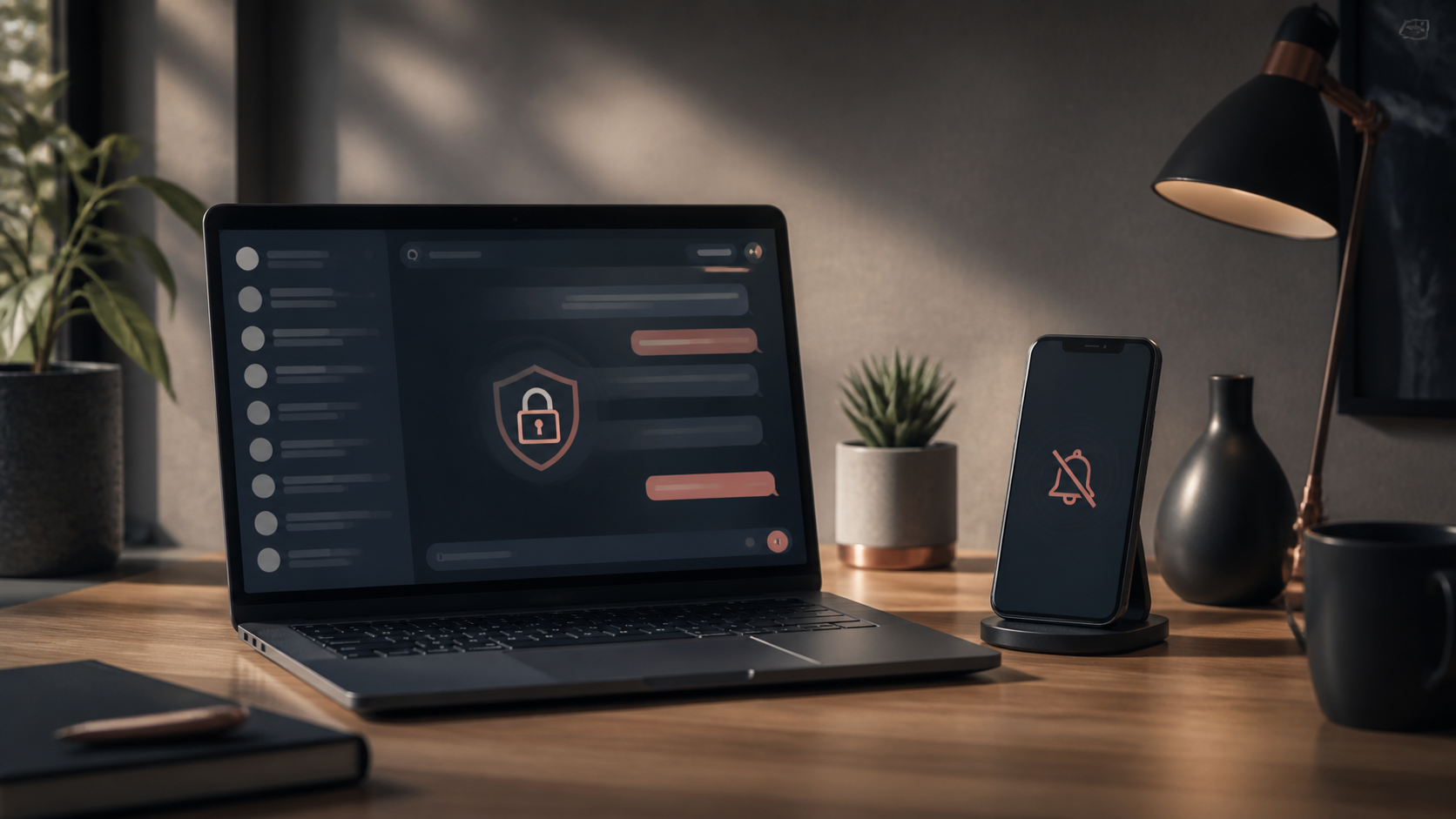
Signal alternative chat app for privacy first users
For users who like Signal’s privacy promise but want a browser-based experience, this guide explains the tradeoffs and the features to check first.
When people search for a signal alternative chat app, they often start with one question: does it use end to end encryption chat? That matters, but privacy-first users usually need more than a strong cryptographic claim. They also need an app that is easy to reach, simple to trust, and comfortable to use every day.
A Privacy first chat app should fit the way you actually communicate. If an app is awkward to install, hard to invite others into, or unreliable on the devices you use most, the privacy benefits can be undermined by poor practical experience. That is why the best way to compare a signal alternative chat is to look beyond the headline feature and ask how it behaves in real life.
In this article, we will look at the trade-offs that matter most: access, convenience, performance, and the everyday habits that shape whether people keep using a secure messenger. The goal is not to dismiss encryption. It is to place it in context, so you can choose a tool that supports private communication without getting in the way.
Why encryption alone is not the full story
Encryption is essential, but it is only one part of privacy. A message can be protected in transit and still be exposed through poor account controls, metadata handling, weak device security, or a workflow that pushes people into insecure workarounds. Privacy-first users tend to think in systems, not slogans.
For example, if an app is difficult to set up on a new phone, people may delay updates, keep old devices around longer than they should, or fall back to less secure channels for urgent conversations. A strong end to end encryption chat model cannot fully compensate for daily friction.
That is why a Privacy first chat app should be judged by the whole experience. Does it make it easy to start a conversation? Does it work smoothly on the platforms you use? Does it stay dependable enough that you do not need to look for another tool when communication matters?
Access is part of privacy
Privacy tools are only useful if the right people can actually use them. In practice, that means thinking about device support, sign-up friction, and whether your contacts can join without confusion. A secure app that nobody can be bothered to adopt is not very private in daily life, because people will keep using whatever is easiest.
Some users prefer a signal alternative chat because they want a cleaner path into private messaging. Others want fewer hoops, less account fatigue, or a simpler way to separate personal and professional conversations. In those cases, access is not a bonus feature. It is part of the privacy decision.
Good access also means considering the broader social layer. If you need to persuade one person at a time to install a new app, the network effect may work against you. That is one reason why tools like PigeonChat can be interesting to privacy-first users, even if they are not looking for a perfect one-to-one replacement for everything.
Convenience affects whether private habits stick
People often choose secure tools with good intentions, then stop using them because they are too clumsy. That can include slow onboarding, awkward contacts management, or a message flow that feels different from what people are used to. Privacy should reduce risk, not create daily irritation.
A Privacy first chat app should make the common tasks feel natural. You should be able to send messages, manage groups, and move between devices without re-learning the app every week. If the interface is predictable, people are more likely to keep conversations inside the secure channel rather than drifting back to ordinary texting or email.
This is where practical details matter. Good notification behaviour, sensible sync, and responsive performance can do as much to support privacy as a lengthy security explanation. A secure app that is pleasant to live with will usually be the one people keep using.
What to look for in a signal alternative chat
If you are comparing options, it helps to make the decision concrete. Instead of asking only whether an app has end to end encryption chat, ask how the app behaves in situations you actually face. That might include switching phones, adding a new contact, sending media, or keeping conversations separate from your main identity.
- How easy is it to get started without a complicated setup?
- Does the app work well on the devices and platforms you rely on?
- Can you invite others without creating too much friction?
- Does it feel stable and quick in everyday use?
- Are the privacy controls understandable, or do they require guesswork?
These questions are practical, not theoretical. A secure app that is too narrow in access or too awkward in use may still be a poor fit, even if it has strong technical protection. Privacy-first users tend to prefer a tool they can trust, remember, and return to without effort.
That is also why some readers compare Signal with other secure messengers rather than assuming the best-known option is always the right one. The right signal alternative chat is the one that fits your habits, your devices, and your tolerance for friction.
Daily-life performance matters more than marketing claims
Security apps are often judged at the moment of installation, but the real test comes later. Does the app launch quickly? Do messages arrive reliably? Does it remain usable when you are busy, travelling, or dealing with a weak connection? These are the conditions that determine whether private communication feels normal or burdensome.
Performance is not only about speed. It is also about predictability. A chat app that behaves consistently gives users confidence, which is important when the goal is to keep sensitive conversations in one place. In contrast, an app that feels fragile can drive people back to less private but more familiar alternatives.
For some users, that means choosing a Privacy first chat app that is intentionally simple. Fewer features can sometimes be an advantage if the app becomes easier to understand and less demanding to maintain. The best private tools often win by being dependable, not by being overloaded.
How to evaluate privacy without getting lost in jargon
It is easy to be distracted by technical language. Terms like metadata, key management, and transport security matter, but most people do not need to become specialists to make a sensible choice. Start with your threat model, then look at the app’s everyday behaviour. What are you trying to protect, and what would make the app hard to keep using?
If your main concern is keeping messages private from casual observers, then usability and access may matter as much as advanced controls. If you are a more demanding user, you may care about the app’s architecture, the clarity of its security model, and how much trust it requires in the service provider. Both perspectives are valid.
The key idea is balance. A strong end to end encryption chat system is valuable, but privacy-first users should not overlook the human side of adoption. The more naturally an app fits into your routine, the more likely your private habits will actually stick.
Frequently asked questions
Is Signal still a good choice for privacy?
Yes, for many people it is. Signal remains well known because it has a strong privacy reputation and a clear security focus. The question is not whether Signal is secure in principle, but whether it is the best fit for your needs compared with other tools, especially if you value access, convenience, or a different daily workflow.
What makes a signal alternative chat app worth considering?
It is worth considering if it solves a practical problem, such as simpler onboarding, easier device access, or a smoother experience for the people you want to message. A good alternative does not need to be better at everything. It just needs to fit your use case better while still respecting privacy.
Should I choose an app only because it uses end to end encryption?
No. End to end encryption is important, but it is only one part of the picture. You should also think about how easy the app is to use, how it handles daily communication, and whether it fits your comfort level with trust and access. A secure app that you do not enjoy using may not stay useful for long.
The best privacy tools are usually the ones that combine strong technical protection with sensible design. If you are comparing options, focus on the whole experience, not just the headline feature. That approach will help you choose a signal alternative chat that supports privacy in the real world, where convenience and reliability matter just as much as encryption.
Ready to try PigeonChat?

Writer & Editor at PigeonChat
Related Articles

How PigeonChat.site fits the Messenger and Telegram search
How PigeonChat.site differs from WhatsApp and Telegram
How PigeonChat.site compares with WhatsApp and Signal
When Signal is not enough: comparing private chat apps

Why PigeonChat.site asks you to invite your partner first