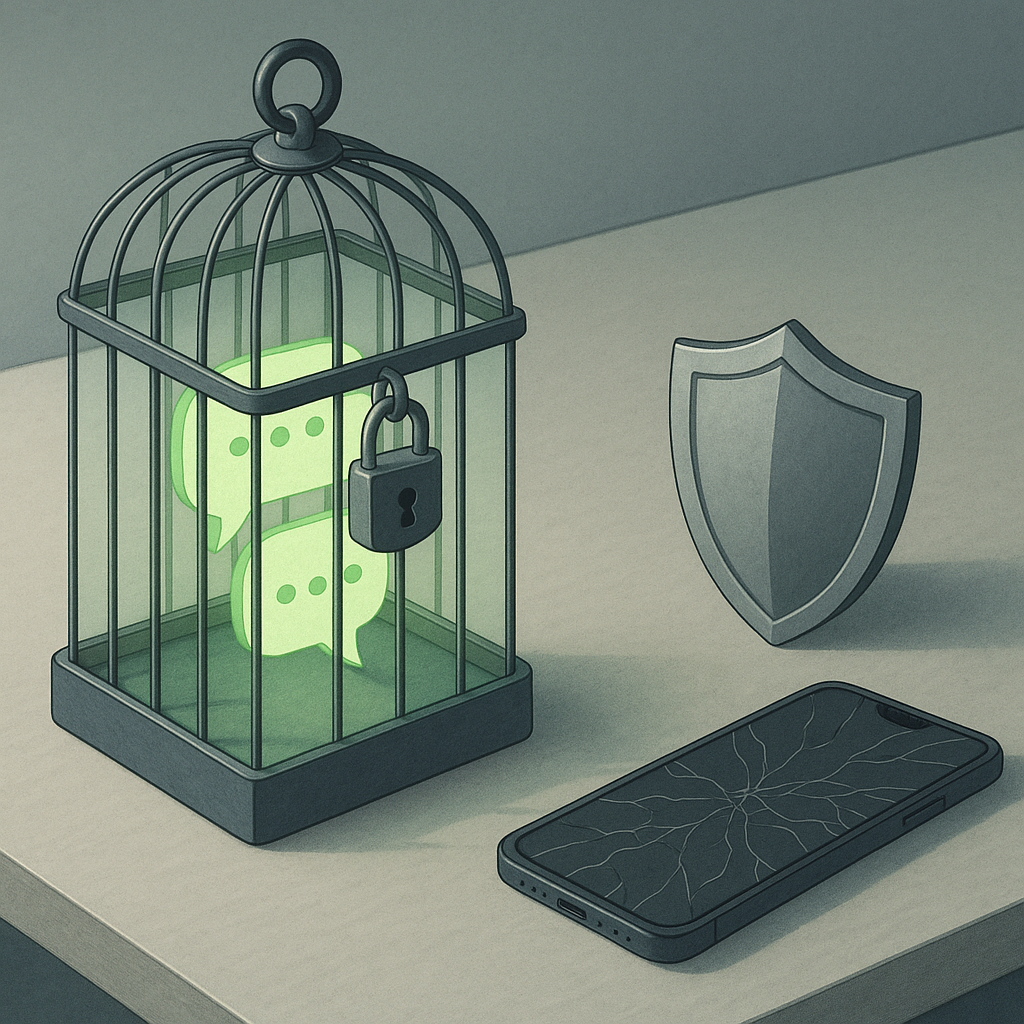
What privacy guaranteed on PigeonChat.site really means
A plain-language look at privacy guaranteed on PigeonChat.site, including encryption, account recovery, and the limits users should ask about.
When a site says privacy is guaranteed, that phrase can sound reassuring, but it only becomes meaningful when the service explains the boundaries of that promise. On PigeonChat.site, the real test is not whether privacy is mentioned, but whether you can see what is protected, what remains visible to the service, and what happens if you lose access.
That matters because people often assume a private chat app hides everything by default. In practice, different systems protect different parts of the experience. Some hide message content but still store metadata. Some offer encrypted private chats, but only while both sides are signed in. Others give you end to end encryption, yet still need recovery tools that create their own trade-offs.
If you are trying to judge the privacy guaranteed on pigeonchat.site, the right question is simple: what exactly is covered, and how does the product behave when things go wrong? That is the useful standard, whether you are considering PigeonChat or any other pigeon chat service.
What a privacy promise should clearly define
A serious privacy statement should not stop at a slogan. It should describe the message flow in plain language. For example, does the service read your message content, or is the content encrypted before it leaves your device? Does it store messages temporarily, permanently, or not at all? Are attachments handled differently from text?
It should also make clear who can see what. In many systems, the provider may still see account details, device information, timestamps, or routing data even if the message body is protected. That is not necessarily a flaw, but it is a fact users need to understand before trusting the system with sensitive conversations.
When a product is clear about these limits, privacy stops being marketing language and becomes a design decision you can evaluate. That is what users should look for on PigeonChat.site and elsewhere.
How end to end encryption changes the picture
End to end encryption is one of the strongest protections a chat service can offer. In simple terms, it means the message is locked on the sender’s device and can only be unlocked on the recipient’s device. The service in the middle can help deliver it, but it should not be able to read the content itself.
That said, end to end encryption is not the same as total invisibility. It does not automatically hide who is talking to whom, when messages are sent, or whether a message was delivered. It also does not protect you if your own device is compromised, or if you forward the content somewhere less secure after receiving it.
So if PigeonChat or any similar tool refers to encrypted private chats, it is worth asking a second question: encrypted against whom? The answer should include the provider, but also clarify what other risks remain.
What privacy guaranteed on PigeonChat.site should not be assumed to mean
The phrase privacy guaranteed on pigeonchat.site should not be read as a promise that nothing is ever collected. Most services need some operational data to keep accounts working, prevent abuse, or troubleshoot technical issues. That may include login events, connection details, or limited diagnostic information.
It should also not be taken to mean that the service can recover everything for you if you lose access. Strong privacy often reduces the provider’s ability to restore message history or unlock content on your behalf. In other words, the more control you have over the keys, the less the company may be able to help if those keys are gone.
That trade-off is often worth it, but it should be stated honestly. A privacy promise is only trustworthy when it also explains where support ends.
Recovery is part of privacy, not a separate issue
People often think of recovery as a convenience feature, but it directly affects trust. If you forget a password, lose a device, or switch phones, what happens next? Does the service offer account recovery through email, a recovery code, or a backup phrase? If so, who can use that recovery path, and how secure is it?
There is usually a balance between convenience and confidentiality. A simple recovery flow may be easier, but it can also create another place where access could be abused. A stricter flow may protect your encrypted private chats better, but it may leave you permanently locked out if you do not save the right recovery details.
Before relying on any pigeon chat platform for sensitive conversations, make sure you know the answer to one practical question: if I lose my device today, what exactly can be recovered, by whom, and using what proof?
Questions worth asking before you trust the app
Whether you are reading PigeonChat.site’s wording or reviewing any other privacy claim, it helps to ask direct questions. Clear answers are a good sign. Vague answers are usually a warning sign.
- Is message content protected by end to end encryption?
- Does the service store message content at any point?
- What metadata is collected, such as login times or device details?
- Can the provider recover access if I lose my password or device?
- Are attachments and media protected the same way as text?
- What happens to deleted messages and backups?
If the answers are easy to find and easy to understand, that is a good sign. If the policy hides behind broad promises or technical fog, treat that as a clue that the privacy guarantee may be narrower than it sounds.
How to read a privacy page without being a specialist
You do not need to be a security engineer to assess a chat app. Start with three basic checks. First, look for a plain explanation of what is encrypted. Second, look for a clear description of what data is still visible to the provider. Third, look for recovery rules that explain what happens when access is lost.
It also helps to separate the app’s claims from your own habits. Even a well-designed system cannot protect you if you reuse weak passwords, share access to your phone, or copy sensitive chats into less secure places. Privacy is strongest when the service design and your own behaviour work together.
PigeonChat is only as private as its technical design and its recovery model allow. If those parts are explained openly, users can make an informed choice instead of relying on a slogan.
Frequently asked questions
Does privacy guaranteed on pigeonchat.site mean the company cannot see anything?
Not necessarily. A privacy guarantee may cover message content while still allowing the service to see limited operational data such as account details, device information, or connection logs. The important point is to check exactly what is protected and what is not.
Is end to end encryption enough to make chats fully private?
It is one of the strongest protections for message content, but it does not solve every privacy issue. It does not automatically hide who you contacted, when you sent messages, or what happens on your own device. It also does not replace sensible recovery and account security.
What should I check about recovery before using encrypted private chats?
You should find out whether recovery uses email, backup codes, a recovery phrase, or some other method. Then check who can trigger recovery, what proof is needed, and whether recovery weakens privacy in any way. If the answer is unclear, the system may be too opaque for sensitive use.
In the end, the best privacy promise is the one that names its limits as clearly as its protections. If a chat service explains what is encrypted, what is not, and how recovery works, you can judge it properly. That is the standard to apply to PigeonChat.site, and to any other app that asks you to trust it with private conversation.
Ready to try PigeonChat?

Writer & Editor at PigeonChat
Related Articles
Why privacy claims on PigeonChat.site need details

What a European chat app should offer now

What an EU chat app needs beyond privacy claims
What a browser-based end to end encryption chat app needs

Why PigeonChat.site asks you to invite your partner first