
Signal alternative chat app for privacy first users
If Signal is too limited for your needs, this guide looks at browser chat, private groups, and encrypted messaging options people compare first.
If you are comparing a signal alternative chat app for privacy first users, the real decision is usually less about branding and more about the practical details. People who care about privacy tend to ask a small set of questions again and again: Can I use it in a browser? Does it support community spaces as well as private messages? How much control do I have over my conversations? And, importantly, does it still feel easy enough for everyday use?
Signal remains a strong benchmark for secure messaging, but many users want something that fits a different routine. Some need browser access on a work machine. Some want a chat app that supports groups, communities, or lightweight public discussion alongside encrypted private chats. Others simply want a privacy first chat app that feels less tied to a single device or a single style of communication.
This is where it helps to compare what people actually use, not just what the marketing says. If you are exploring a signal alternative chat, the most useful features are often the ones that remove friction while still protecting conversations. That is also why products such as PigeonChat are worth a look, even if you never end up adopting them. They show how privacy and usability can be balanced in different ways.
What privacy first users usually compare first
When someone looks beyond Signal, they are rarely comparing only encryption. They are usually comparing how the app fits into their day. Can they sign in quickly? Can they continue a conversation on desktop without installing yet another app? Can they move between personal chats, team chats, and community spaces without everything feeling fragmented?
For many people, the first filter is access. A chat app that only works well on one phone is inconvenient if you spend most of your day on a laptop. Browser access matters because it makes a secure messenger easier to adopt in real life, especially for people who split their time between devices.
- Device flexibility - phone, desktop, and browser support
- Conversation model - private one-to-one chats, groups, or community spaces
- Privacy defaults - what is stored, what is visible, and what is shared
- Ease of use - setup, login, and everyday navigation
- Cross-device continuity - whether a conversation feels seamless everywhere
That mix of concerns explains why some people keep Signal for close personal chats but look elsewhere for broader communication. A single app does not have to do everything, and the best encrypted private chats tools are often the ones that recognise that reality.
Browser access is a bigger deal than it sounds
Browser access is not just a convenience feature. It changes whether a chat app can become part of your normal workflow. If you can open a secure messenger in a browser, you are more likely to use it during work, while travelling, or on a shared machine where installing software is awkward.
This matters especially for privacy first users who do not want to trade security for practicality. A good browser experience should not feel like a degraded version of the app. It should preserve the same basic protections and remain simple enough that people actually keep using it.
For teams, communities, and project groups, browser access can also reduce onboarding friction. People are more willing to try a new chat app if they do not need to download and configure anything first. That is one reason browser-friendly tools are often discussed as a real signal alternative chat app, rather than just a niche extra.
Community features versus pure private messaging
Signal is excellent for private messaging, but some users want more than direct conversations. They want spaces where a group can organise, share updates, or discuss a topic without turning the app into a noisy social network. That is where community features become important.
The challenge is finding the right balance. Too much structure and the app starts to feel heavy. Too little structure and community conversations become hard to follow. Privacy first users usually want a middle ground: enough organisation to keep topics clear, but not so much that the app becomes cluttered.
This is one of the most interesting differences between a conventional messenger and a broader privacy first chat app. The latter may support both private and semi-public communication, which is useful if you want one tool for friends, small groups, and niche communities. PigeonChat is one example of a product that points in that direction.
Encryption is essential, but it is not the whole comparison
People often start with encryption, and rightly so. If a chat app does not protect messages well, the rest of the feature list barely matters. But once basic security is assumed, the decision shifts to usability, control, and trust.
Privacy first users usually ask practical questions such as: Does the app keep metadata to a minimum? Can I separate personal and community conversations? Is the interface simple enough that I will not make mistakes? These are the kinds of details that shape trust over time.
In other words, a good signal alternative chat is not necessarily the one with the longest list of technical claims. It is the one that makes secure communication feel normal. If an app promises encrypted private chats but is awkward to use, many people will quietly stop using it.
What to look for in a signal alternative chat app
If you are comparing options, it helps to think in terms of daily behaviour rather than feature badges. Ask whether the app will still suit you after the novelty wears off. A privacy-first tool should make it easier to communicate well, not merely harder for others to observe.
Here are the most useful things to test or check before you commit:
- Does it work comfortably in a browser as well as on mobile?
- Are private chats clearly separated from community or group spaces?
- Is the onboarding process simple enough for non-technical people?
- Does the app avoid unnecessary distractions and clutter?
- Can you use it for both focused conversation and broader discussion?
If a product gets those basics right, it is far more likely to be a sustainable choice. That is why privacy-conscious users often test several apps before settling on one. The best fit is usually the one that balances security with the kind of communication you actually do.
How PigeonChat fits into the conversation
PigeonChat sits in the useful category of products that prompt the right questions. Even if you are not trying to replace Signal completely, it is a reminder that secure messaging can be designed around browser use, community interaction, and simple private chat flows at the same time.
That makes it relevant to anyone searching for an e2e chat app pigeonchat.site option or simply trying to understand what a modern privacy-first messenger should offer. The value is not only in the software itself, but in the comparison it encourages. It helps you think beyond “Is it encrypted?” and ask “Will I actually use it every day?”
For some people, the answer will still be Signal. For others, a different app will fit better because it handles browser access or community features more naturally. Either way, the goal is the same: communication that feels private, reliable, and easy enough to keep using.
Frequently asked questions
Is Signal still the best choice for private messaging?
For many users, Signal remains one of the strongest choices for private messaging. But “best” depends on what you need. If browser access, community spaces, or a different workflow matter to you, a signal alternative chat app may be a better fit.
Why do people want a privacy first chat app with browser access?
Browser access makes secure chat easier to use on work computers, shared devices, and laptops where installing apps is inconvenient. Privacy first users often want convenience without giving up encrypted communication, so browser support becomes a major decision point.
Do community features weaken privacy?
Not necessarily. Community features only become a problem if they are designed poorly or push too much public sharing. A well-designed privacy first chat app can support communities while still keeping private conversations separate and protected.
In the end, choosing a signal alternative chat app for privacy first users is less about chasing the newest label and more about finding the right shape of communication. If you value browser access, community features, and encrypted private chats, compare apps by how they fit your actual habits. That is the most practical way to choose a messenger you will keep using.
Ready to try PigeonChat?

Writer & Editor at PigeonChat
Related Articles

How PigeonChat.site fits the Messenger and Telegram search

How PigeonChat.site differs from WhatsApp and Telegram

How PigeonChat.site compares with WhatsApp and Signal
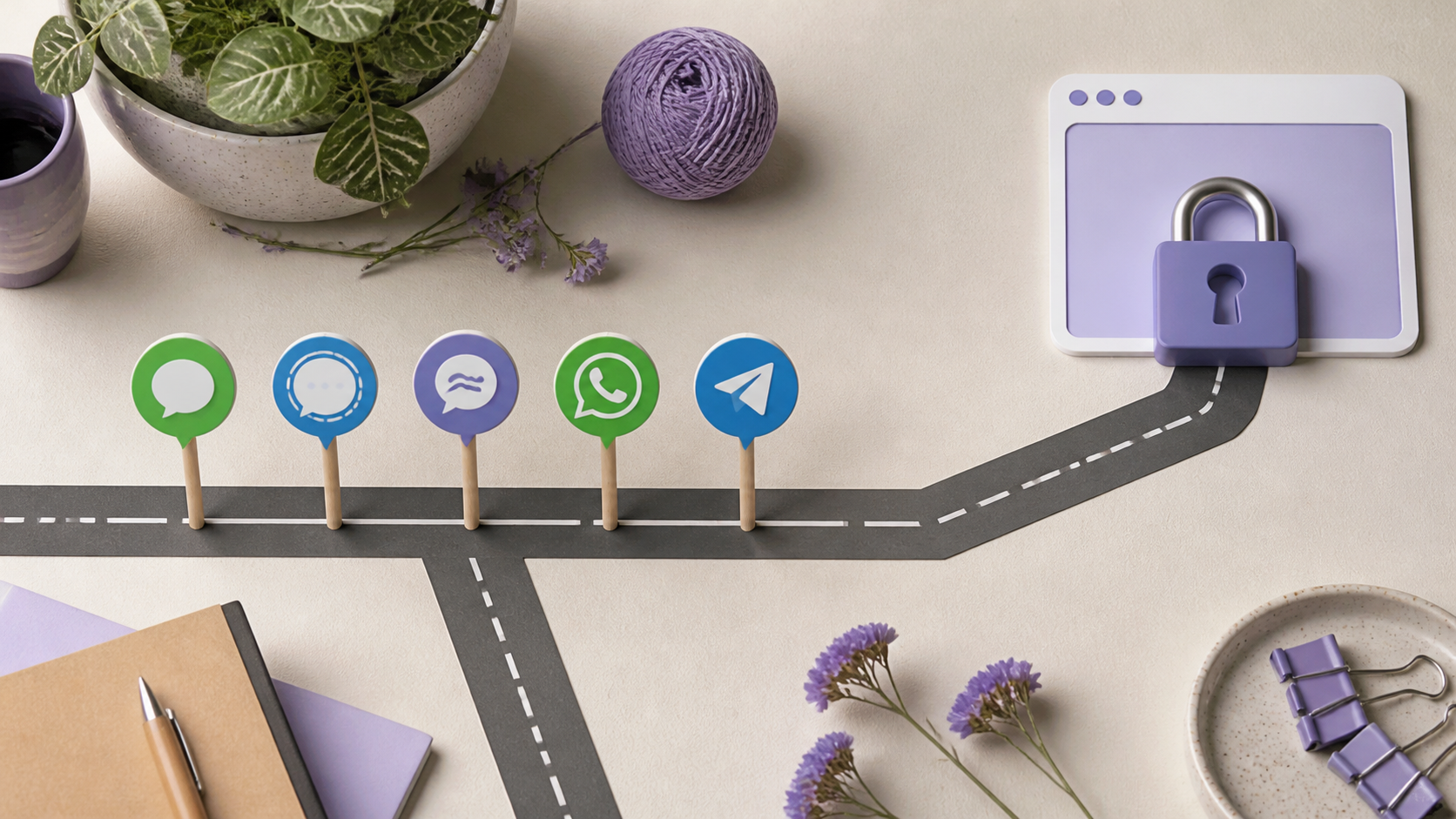
When Signal is not enough: comparing private chat apps

Why PigeonChat.site asks you to invite your partner first