
What Signal comparisons focus on in private chat
Users comparing Signal to newer chat apps usually care about privacy, simplicity, and trust. This article maps those expectations clearly.
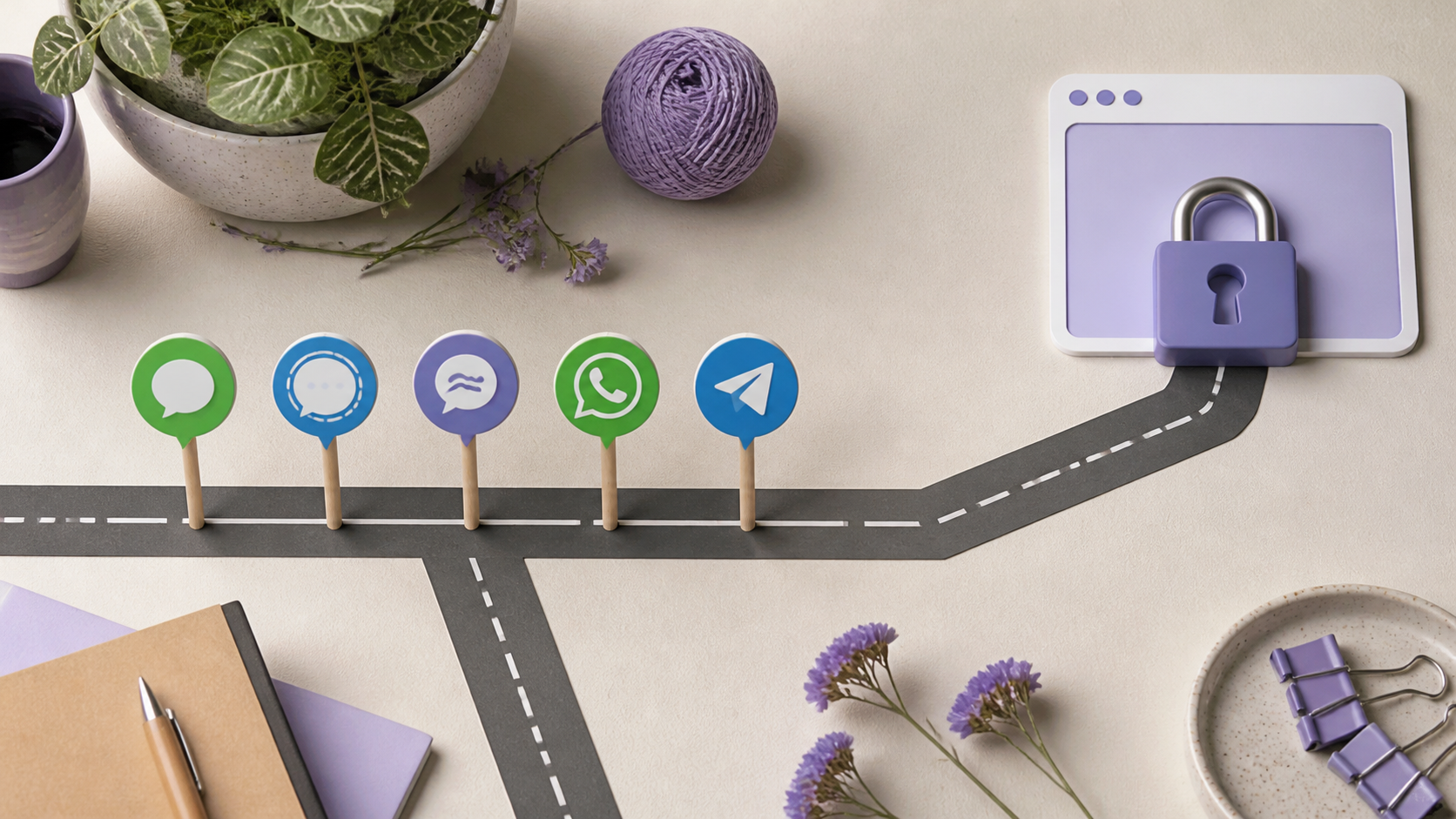
When people compare Signal with other private chat apps, they are usually not comparing every feature in a neat checklist. They are comparing expectations. One person wants strong encrypted private chats with as little fuss as possible. Another wants more control, more communities, or more platform features. That is why Signal comparisons so often circle back to privacy, trust, and simplicity rather than flashy extras.
If you are trying to choose a private chat app, it helps to separate the question into two parts. First, how much privacy protection do you actually need? Second, how much interface simplicity do you want to trade for extra features? Those two questions explain most of the debate around Signal and similar apps, including PigeonChat and other modern messaging tools.
There is no single best answer for everyone. What matters is whether an app fits the way you communicate day to day. A secure messenger can be brilliant and still feel wrong if its design gets in the way of your habits, your contacts, or your need for group coordination.
Privacy expectations are the real comparison point
Signal is often treated as a reference point because it has built a reputation around privacy first messaging. So when another app is compared with Signal, the real question is usually: does this app protect conversations in a way people can rely on? That can include encryption, metadata handling, message retention, and how much information the service itself can see.
People are rarely comparing privacy in the abstract. They are comparing how safe an app feels for personal conversations, work chats, family groups, or sensitive topics. For many users, private chat means encrypted private chats by default, not something they must switch on later.
Useful privacy comparisons often focus on a few practical questions:
- Are messages encrypted by default?
- Who can see message content, if anyone?
- What account details are required to sign up?
- How much data does the app keep about contacts and activity?
- Can users control disappearing messages or chat history?
Interface simplicity is a major part of the appeal
Signal is also known for being straightforward. That matters more than many people admit. A private chat app can have excellent security and still lose users if it feels cluttered, confusing, or overloaded with features. Simplicity reduces friction, especially when you want to message quickly without learning a new workflow.
This is where comparisons become personal. Some people want a minimalist screen, a short settings menu, and clear defaults. Others prefer custom themes, bots, channels, file libraries, or deeper collaboration tools. Neither camp is wrong, but they are solving different problems.
If you are evaluating a private chat app for everyday use, try asking whether the interface gets out of the way. Can you find a conversation quickly? Are privacy settings obvious? Are group chats manageable? An app like PigeonChat may appeal if you want a calm, simple experience rather than a platform that demands constant attention.
Features matter, but only when they match the use case
A lot of private messenger comparisons go off track because people start listing features without asking whether those features help real conversations. Extra tools are useful only if they serve the way you communicate. For example, some teams need media sharing, voice notes, or easy group admin controls. Other users want a light, private space for direct messages and small groups.
Signal comparisons often reveal a broader tension between utility and focus. A chat app can try to do everything, but then it may become heavier to use and harder to trust at a glance. That does not automatically make it worse. It just makes it better suited to a different audience.
When reviewing options, it helps to compare feature sets in context:
- Small private groups need strong defaults and low friction.
- Family chats often need easy onboarding and cross-device access.
- Work chats may need search, file sharing, and admin controls.
- Communities may need moderation tools and clear group management.
Trust is built through behaviour, not branding
Many people approach Signal because they trust its reputation, but reputation alone is not the full story. Trust in a private chat app comes from consistent behaviour over time. Users want clarity about how messages are handled, what is stored, and what happens if they change devices or restore an account.
That is why comparison articles often read like trust audits. People look for signs that an app is careful, predictable, and transparent. They want to know whether privacy is a headline feature or just a marketing phrase. If an app feels vague about its architecture or policies, the comparison usually ends there.
Practical trust signals include clear documentation, understandable settings, and features that behave in expected ways. Even people who never sign up can still benefit from learning how these signals work, because they are useful criteria for any encrypted private chats platform, not just one specific service.
Good comparisons look at everyday habits, not just specs
One reason Signal comparisons stay popular is that messaging is a daily habit. You are not buying a niche tool to use once a month. You are choosing the place where conversations live. That means little details matter: how fast a message sends, how readable the chat list is, and whether the app feels comfortable on the devices you actually use.
Another overlooked point is social adoption. A messaging app can be excellent but still inconvenient if nobody you need is there. This is why people often tolerate less ideal tools for group coordination. The best private chat app for you is often the one that balances privacy with realistic participation from friends, family, or colleagues.
Before making a choice, it can help to think in terms of habits rather than feature marketing:
- Do you mostly send short one-to-one messages?
- Do you use groups for planning or support?
- Do you need messages to disappear after a while?
- Do you want the app to feel invisible, or more like a workspace?
- Would your contacts actually use it?
What to look for if you are choosing between apps
If you are comparing Signal with another private chat app, start with your priorities. Decide whether privacy, simplicity, group features, or adoption matters most. That order will usually make the choice clearer than any feature matrix ever could.
You do not need to be a security expert to make a sensible decision. A good rule is to favour apps that are clear about encryption, easy to use, and honest about their limits. If an app is pleasant but vague, treat that as a warning sign. If it is secure but awkward, ask whether the friction is worth it for your use case.
PigeonChat sits in that same broader conversation about private communication. The point is not to chase every feature at once. It is to choose an app that respects your attention while handling conversations responsibly.
Frequently asked questions
Is Signal mainly compared on privacy or features?
Mostly privacy, then simplicity, then features. People usually start by asking whether conversations are protected properly. After that, they look at how easy the app is to use and whether it fits their messaging habits. Feature comparisons matter too, but they tend to come after the privacy question is answered.
Why do some people prefer simpler private chat apps?
Because simplicity reduces friction. A private chat app should feel easy to open, easy to understand, and easy to trust. If an app has too many menus or extras, it can distract from the actual job of messaging. For many users, a calm interface is part of the privacy experience.
What is the most sensible way to compare encrypted private chats?
Start with your real needs. Look at default encryption, data handling, account requirements, device support, and how the app behaves in daily use. Then compare the interface and features only as far as they affect your routine. That approach is more useful than chasing the longest list of tools.
In the end, Signal comparisons are rarely about proving one app is universally better. They are about matching privacy expectations with interface simplicity and everyday practicality. If you keep those two priorities in view, you will make a better choice, whether you stay with Signal, try another private chat app, or simply use the comparison to understand what matters most in encrypted private chats.
Ready to try PigeonChat?

Writer & Editor at PigeonChat
Related Articles

How PigeonChat.site fits the Messenger and Telegram search

How PigeonChat.site differs from WhatsApp and Telegram

How PigeonChat.site compares with WhatsApp and Signal
When Signal is not enough: comparing private chat apps

Why PigeonChat.site asks you to invite your partner first