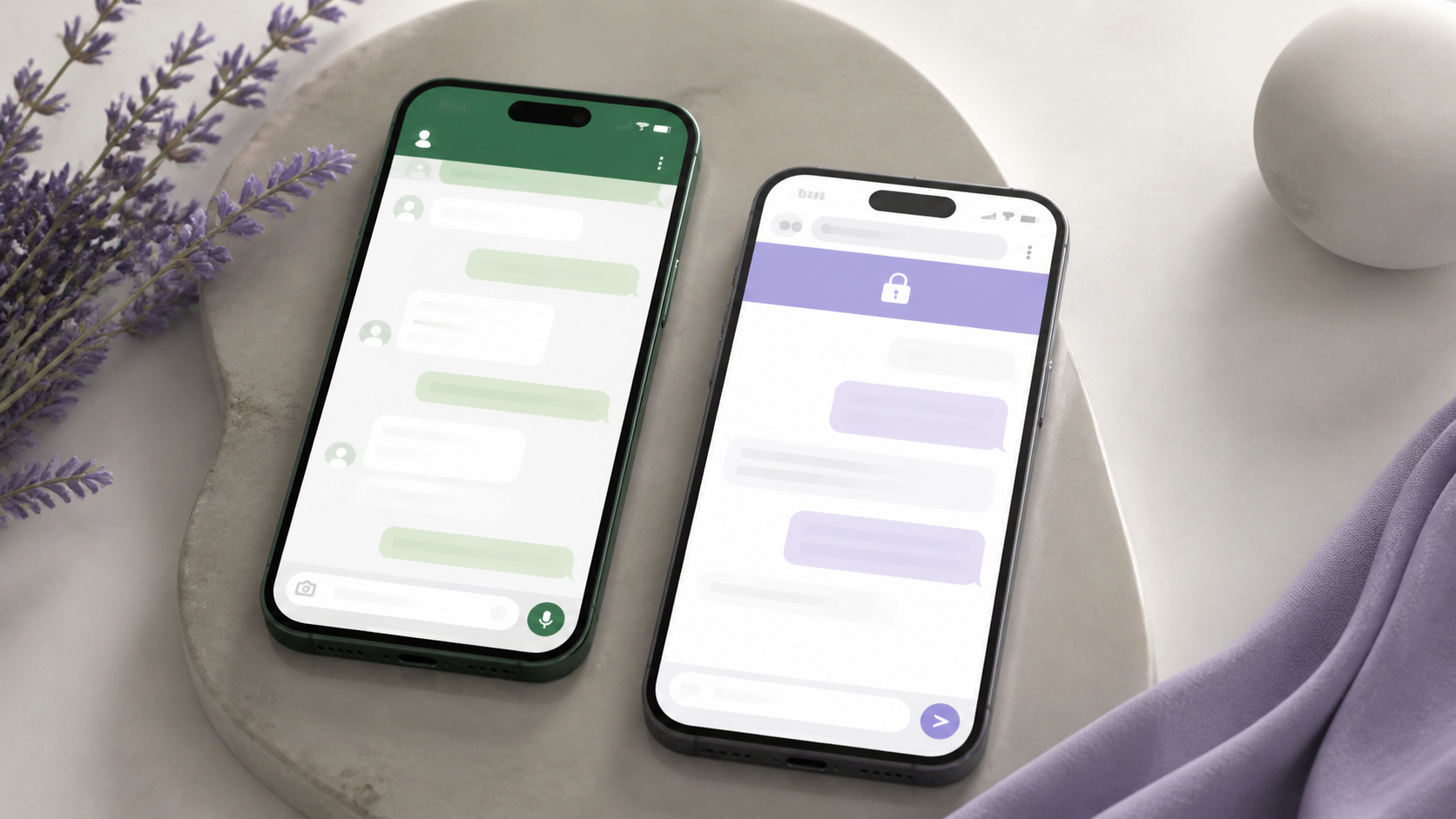
Pigeon chat versus WhatsApp for private messaging
See how Pigeon chat compares with WhatsApp on privacy, sign-up friction, and everyday use for people who want a number-free chat app.
If you are comparing Pigeon chat versus WhatsApp for private messaging, the real question is not just which app is more popular. It is which one gives you the simplest path to a private conversation without asking you to hand over more personal details than you want to share.
WhatsApp is familiar, which makes it easy to recommend. But familiarity is not the same as privacy, and it is not the same as low-friction sign-up either. For people who want a browser-based experience, a no phone number chat, or a lighter way to start a conversation, a WhatsApp alternative can be the more practical choice.
This is where browser-first tools like PigeonChat come in. They are not trying to replace every feature of WhatsApp. They are usually trying to solve a narrower problem: private messaging that is easier to begin, easier to access, and less tied to a mobile identity.
Pigeon chat versus WhatsApp: what people are really comparing
When people search for pigeon chat versus WhatsApp, they are often comparing two different habits. WhatsApp is a full messaging platform tied closely to a phone number and a mobile-first workflow. Pigeon chat usually refers to a simpler, browser-based style of private messaging that aims to get people talking quickly.
That difference matters because messaging is not only about sending texts. It is also about how much setup is required, how much of your identity is exposed, and whether the conversation can happen without installing yet another app.
In practice, the better choice depends on your priorities. If you want broad adoption and familiar group chat features, WhatsApp remains hard to avoid. If you want a cleaner entry point for private messaging, a browser-based option can be easier to live with.
Why users look for a WhatsApp alternative
There are several reasons people start looking for a WhatsApp alternative. Some want fewer interruptions and less app clutter. Some prefer not to link messaging to a personal phone number. Others simply want something they can open in a browser on any device without a lengthy sign-up process.
The appeal of a no phone number chat is straightforward. A phone number can be useful for contact discovery, but it is also a strong identifier. For private conversations, some users prefer to keep that detail out of the first step entirely.
There is also a usability angle. WhatsApp is feature-rich, but that can be more than some people need. If the goal is a quick, private exchange, a simpler tool can feel less heavy and more focused.
Private messaging and identity: where the differences show up
Private messaging is not only about encryption in the abstract. It is also about what information is required to start, who can find you, and how much of your social graph is exposed by default. For many people, the first privacy question is not technical at all. It is whether the service demands a phone number.
WhatsApp is built around phone numbers, which makes account creation and contact sync easy, but also means your messaging identity is closely linked to your mobile identity. That is convenient for many users, yet it may feel unnecessary if you are only trying to talk to one person or coordinate a one-off conversation.
A browser-based private messaging tool can reduce that initial exposure. It may not solve every privacy concern, but it can make the first step simpler and less revealing. PigeonChat is a good example of that design idea in practice.
No phone number chat and simpler sign-up
One of the clearest reasons people try a no phone number chat is to lower the barrier to entry. You should not have to decide whether a conversation is worth sharing your mobile number just to get started. For casual, temporary, or semi-private use, that extra step can feel unnecessary.
Simpler sign-up also helps when you are inviting someone else. If the other person is reluctant to install an app or link a phone number, a browser-based chat can remove the awkwardness. That can be especially helpful for first contact, one-off arrangements, or conversations where keeping personal details separate matters.
None of this means phone-number-based messaging is bad. It just means the trade-off is different. A WhatsApp alternative can be better suited to users who want less friction before the first message is sent.
Browser-based messaging: convenience without app fatigue
One reason browser-based private messaging is attracting attention is app fatigue. People do not always want another download, another account, or another notification source competing for attention. A browser-based service keeps the experience lightweight and immediate.
That can be useful on shared computers, work laptops, or temporary devices. It also helps if you move between platforms often and want something that behaves the same way everywhere. You open a page, start chatting, and move on.
For many users, the biggest benefit is not technical sophistication. It is the feeling that the service stays out of the way. PigeonChat fits that pattern by focusing on direct, practical private messaging rather than a long list of extras.
- Less setup before the first message
- No need to install a dedicated app in many cases
- Useful when you want to avoid sharing a phone number
- Works well for simple, direct private messaging
- Can feel lighter and more disposable than a full messaging stack
When WhatsApp still makes sense
It is worth being fair to WhatsApp. If the people you need to talk to are already there, network effects matter. A messaging app only works if the other person actually uses it, and WhatsApp remains deeply embedded in everyday communication for many communities.
It also offers a polished, familiar experience with media sharing, group messaging, and a stable cross-device pattern that many users trust. For ongoing personal and family chats, that convenience can outweigh other concerns.
So this is not a simple case of one tool being universally better. It is more useful to think in terms of context. For everyday social messaging, WhatsApp is often the default. For privacy-conscious, browser-first, or no phone number chat use, a simpler alternative may fit better.
How to choose the right private messaging tool
If you are weighing Pigeon chat versus WhatsApp, start with the smallest practical question: what do you need the chat to do? If the answer is “let me talk privately without much setup,” then a browser-based service is likely the better fit. If the answer is “let me message people I already know on a platform they already use,” then WhatsApp may be enough.
It can also help to think about the relationship itself. The more sensitive the conversation, the more you may care about identity exposure and sign-up friction. The more routine the chat, the more you may care about reach and convenience.
In other words, the best WhatsApp alternative is not necessarily the one with the most features. It is the one that matches the way you actually communicate.
Frequently asked questions
Is Pigeon chat a full replacement for WhatsApp?
Not usually. WhatsApp is a broad messaging platform with strong network effects and many built-in features. Pigeon chat is more useful when you want simpler private messaging, faster access, or a browser-based option without the same sign-up burden.
What does no phone number chat mean in practice?
It means you can start a conversation without tying the account to your mobile number. For many people, that makes first contact easier and feels less intrusive, especially when they only need a temporary or low-friction chat.
Is browser-based private messaging less secure?
Not necessarily. Security depends on the design of the service, how it handles data, and how you use it. Browser-based tools can still be private and sensible for everyday use, but you should always consider what information is required to sign up and how the service handles your messages.
If you want a calmer, simpler way to talk without making WhatsApp the default answer, it is worth exploring alternatives with a browser-first approach. PigeonChat is one such option, especially for people who value private messaging, easier access, and less dependence on a phone number.
Ready to try PigeonChat?

Writer & Editor at PigeonChat
Related Articles

How PigeonChat.site fits the Messenger and Telegram search

How PigeonChat.site differs from WhatsApp and Telegram

How PigeonChat.site compares with WhatsApp and Signal
When Signal is not enough: comparing private chat apps

Why PigeonChat.site asks you to invite your partner first