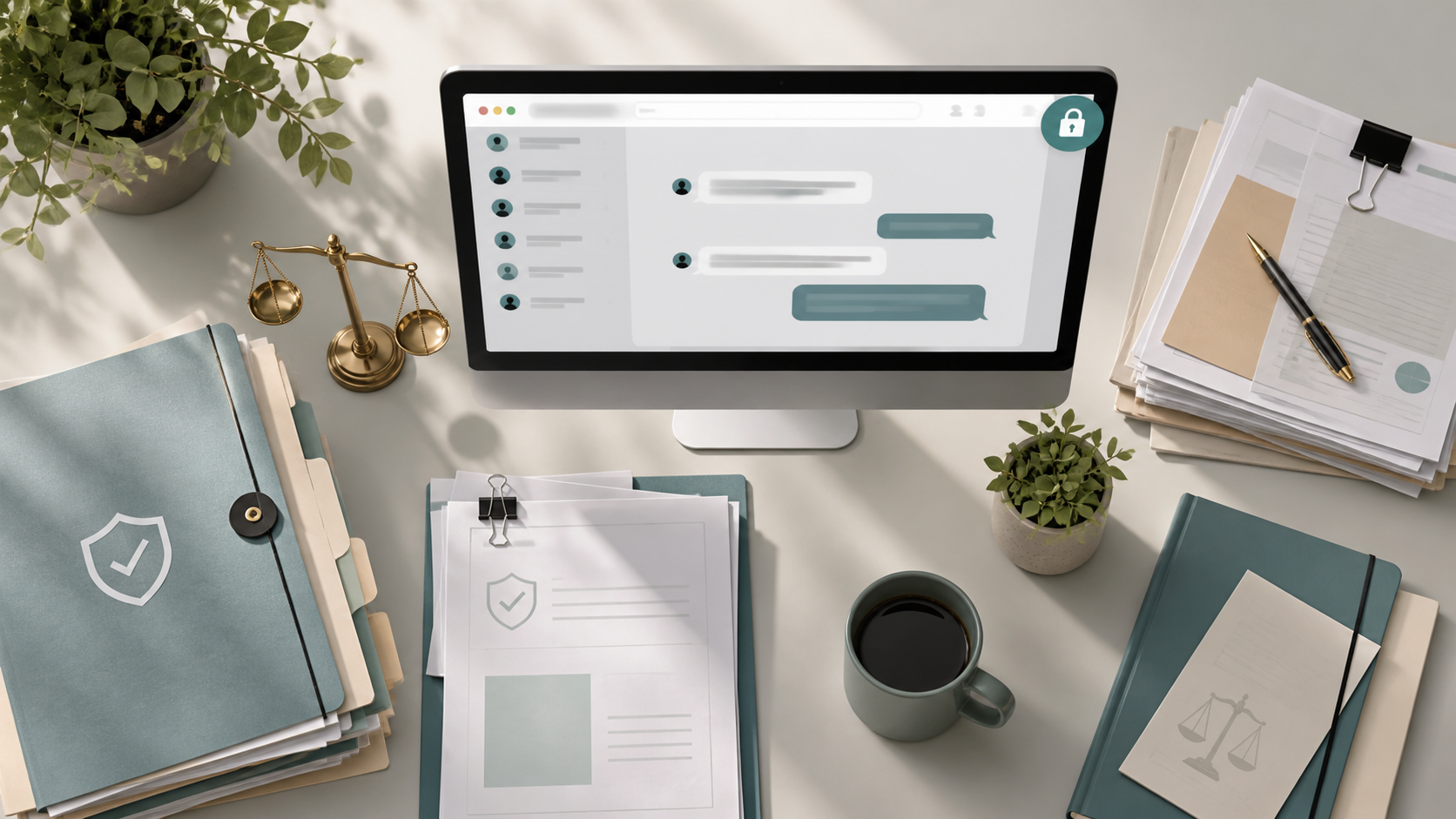
How a fully compliant EU chat app should work
Learn the features and policy signals people expect from an EU chat app, including privacy controls, transparency, and responsible AI use.
A fully compliant EU chat app is not just a place to send messages. It is a system with clear rules around governance, data handling, security, and the use of AI. For compliance-minded users, those choices matter just as much as stickers, voice notes, or group chats.
That is why the phrase fully compliant EU chat app should mean more than a marketing claim. It should point to a product that respects privacy by design, gives people control over their data, and explains plainly how any automated features work. If you are evaluating a Privacy first chat app, you are really asking whether the service can be trusted with sensitive communication over time.
This article sets out what good looks like, whether you are choosing a workplace tool, a community platform, or a personal messenger. You can think of it as a practical checklist for any PigeonChat style service, or any other European chat app pigeonchat.site users might compare it with.
What compliance should mean in a chat app
In practice, compliance starts with clarity. A compliant chat service should explain who runs it, where it is based, what laws apply, and which policies govern moderation, retention, and access. Users should not have to dig through legal jargon to understand the basics of how their conversations are handled.
For a European chat app pigeonchat.site audience, this also means a visible link between the product and the rules that shape it. That includes privacy law, consumer protection, security obligations, and any sector-specific requirements if the app is used in regulated environments. Compliance is not one feature. It is a set of decisions embedded throughout the service.
A well-run platform should also distinguish between product features and legal promises. If it says messages are protected, it should be precise about encryption, metadata use, and what can still be seen by the provider. If it says it is a fully compliant EU chat app, that claim should be backed by policies and technical design, not vague reassurance.
Data handling should be minimal and understandable
The best chat apps collect the least data they need. That usually means limiting account details, reducing tracking, and being cautious about logs, analytics, and advertising identifiers. A compliance-minded user should be able to understand what is stored, for how long, and why.
Data location also matters, but not in isolation. Hosting inside the EU can be useful, yet it does not automatically make a service compliant. What matters more is the full chain: storage, access controls, subprocessors, international transfers, and the safeguards in place when data leaves one jurisdiction and enters another.
Good practice is to separate message content from operational data wherever possible. That makes it easier to protect privacy, respond to deletion requests, and reduce the blast radius if something goes wrong. A Privacy first chat app should make these choices visible in plain language, not hide them behind a brochure-style promise.
Governance is part of the product, not an afterthought
When people hear “governance”, they often think of policy documents. But in a chat app, governance is also about who can make changes, how those changes are reviewed, and whether there is accountability when moderation or access decisions affect users.
That is especially important for teams and communities. If a service is used for work, health, education, or member communications, it should support sensible admin controls, role separation, auditability, and a clear escalation path. Users need to know who can access what, and under what conditions.
For a regulated or compliance-sensitive environment, the service should also describe its approach to record keeping, incident handling, and vendor management. A trustworthy platform does not rely on hidden processes. It documents them, tests them, and updates them when the law or the product changes.
- Clear ownership and contact points for the service
- Documented moderation and appeals processes
- Role-based access for admins and support staff
- Audit trails for important account and policy actions
- Published retention and deletion rules
Encryption and access control should be specific
Security language is often too broad to be useful. “Secure” can mean almost anything unless the app explains how messages, attachments, backups, and devices are protected. A serious service should be specific about encryption in transit, encryption at rest, and the limits of end-to-end protection if it offers that model.
Access control matters just as much as encryption. Even the strongest cryptography can be undermined by weak admin practices, poor password handling, or support workflows that reveal too much. A robust chat app should use strong authentication options, sensible session management, and careful support procedures.
Users should also look for device-level protections and account recovery rules that do not create hidden back doors. If a service says it cannot read your messages, then its recovery features, backups, and moderation tools should not quietly contradict that statement. The details should align.
AI transparency should be explicit and easy to find
The rise of AI features has changed what users need from a chat app. If a service summarises messages, drafts replies, classifies content, or flags risk, people deserve to know when AI is involved, what it can see, and how to switch it off where possible.
That is where the idea of a chat app regulated under AI act thinking becomes practical. Users do not need legal theory. They need simple answers. Is the feature optional? Is it processing message content? Is a human reviewing outputs? Is the model trained on user data? These are the questions that build trust.
A compliant service should avoid presenting automation as neutral when it is not. If AI is used for moderation or assistance, the app should explain its limits, how errors are handled, and whether decisions can be appealed. Transparency is not a nice extra. It is part of fair use.
What users should look for before signing up
You do not need to be a lawyer to assess a chat platform. A few well-placed questions can tell you a lot about how mature the service is. The strongest providers usually answer plainly, without forcing you to interpret vague terms or hunt across several pages.
Here is a practical checklist for anyone comparing tools or reviewing procurement options:
- Is the privacy notice easy to read and specific about data use?
- Are message security and encryption claims explained clearly?
- Does the service say where data is stored and processed?
- Are admin controls, retention rules, and deletion options documented?
- Does it disclose any AI features and their limits?
- Are terms, policies, and security updates kept current?
If a platform cannot answer these questions cleanly, that is a warning sign. A credible EU service should make it straightforward to verify the basics. That is true whether you are evaluating a niche tool, a mainstream messenger, or a PigeonChat alternative.
Frequently asked questions
Does a fully compliant EU chat app need to be hosted only in the EU?
Not necessarily. EU hosting can help, but compliance depends on the full picture, including transfers, subprocessors, access controls, and legal safeguards. A service can still fall short even if its servers are inside the EU.
Is end-to-end encryption enough to make a chat app compliant?
No. End-to-end encryption is valuable, but it does not cover governance, retention, moderation, backups, account recovery, or AI features. Compliance is broader than message encryption alone.
How can I tell if an app is a Privacy first chat app in practice?
Look for plain-language explanations of what data is collected, why it is needed, how long it is kept, and who can access it. If the app is clear about these points and gives you meaningful controls, that is a good sign.
In the end, a trustworthy chat service is one that respects both the message and the messenger. A genuinely fully compliant EU chat app should feel careful, transparent, and proportionate in everything it does. If you keep those standards in mind, you will choose better tools, ask sharper questions, and avoid being swayed by feature lists that say little about real responsibility.
Ready to try PigeonChat?

Writer & Editor at PigeonChat
Related Articles
Why privacy claims on PigeonChat.site need details

What privacy guaranteed on PigeonChat.site really means
What a European chat app should offer now

What an EU chat app needs beyond privacy claims

Why PigeonChat.site asks you to invite your partner first