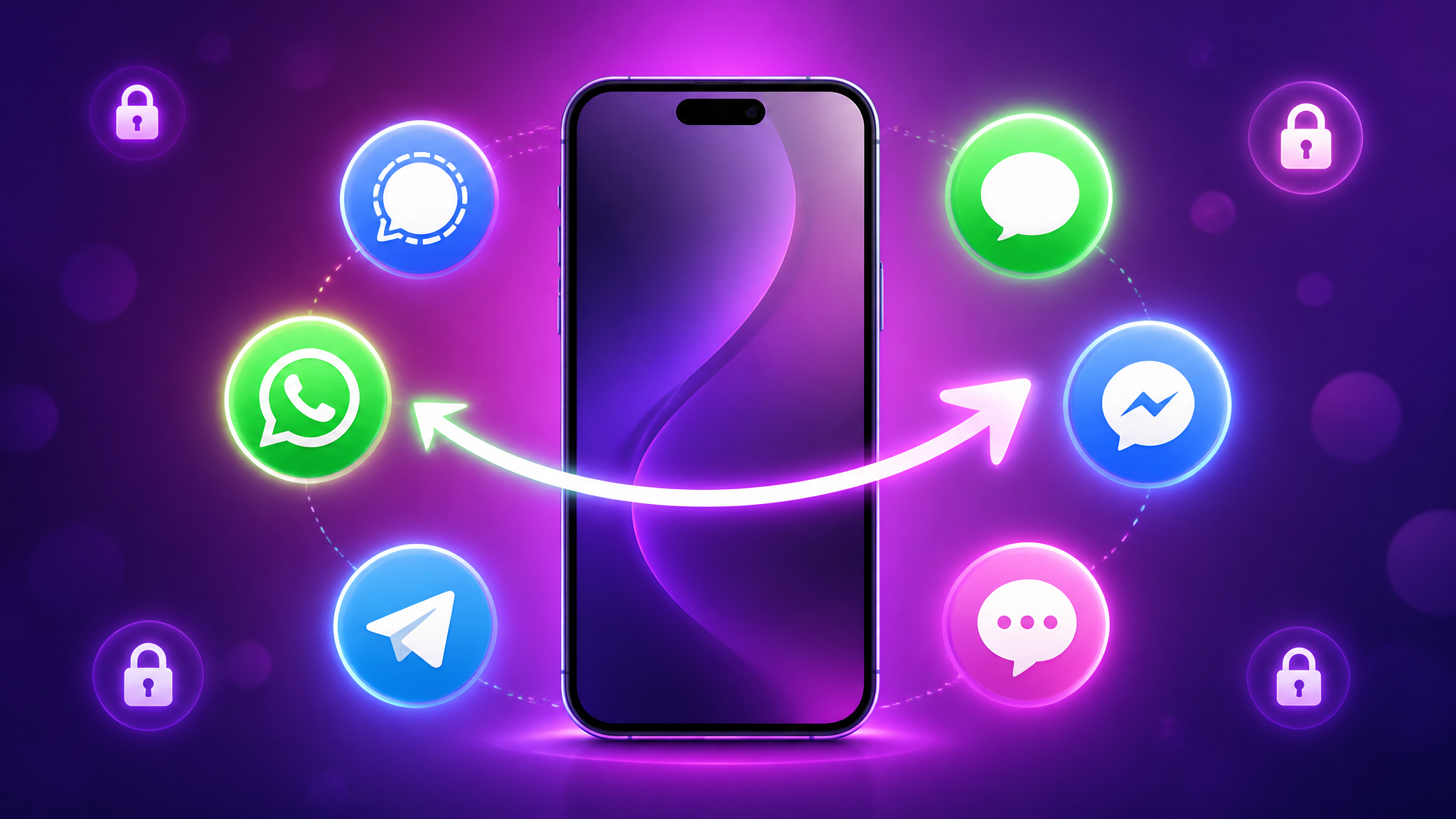
WhatsApp Alternatives in 2026: 7 Private Messengers Worth Switching To
Thinking about leaving WhatsApp? Here are seven private messaging apps worth switching to in 2026 — compared on encryption, data collection, features and ease of use.
WhatsApp is convenient, familiar, and used by billions of people — but convenience has a cost. Between metadata collection, its ties to a giant advertising business, and repeated privacy controversies, more people than ever are asking a simple question: is there a better, more private WhatsApp alternative in 2026?
The good news is that you no longer have to choose between staying in touch and protecting your privacy. This guide compares seven private messengers worth switching to, what makes each one different, and how to move your conversations without losing your social circle.
Why People Are Leaving WhatsApp in 2026
WhatsApp messages are end-to-end encrypted, and that genuinely matters. But encryption of message content is only part of the story. The bigger concern is metadata — who you talk to, how often, when, and from where. That data paints a detailed picture of your life even when nobody can read the messages themselves.
- Metadata collection: contact graphs, timestamps, and device information are still gathered.
- Ecosystem lock-in: your account is tied to a phone number and a single company.
- Trust erosion: shifting privacy policies have made users wary of what changes next.
If any of that bothers you, it is worth looking at messengers built with privacy as the default rather than an afterthought. For a deeper look at the risks, read our guide to instant messaging security risks in 2026.
What Makes a Good WhatsApp Alternative?
Before comparing apps, it helps to know what to look for. A strong private messenger should offer:
- End-to-end encryption by default — not just as an optional mode.
- Minimal data collection — the less it knows about you, the less it can leak or sell.
- Cross-platform support — so friends on any device can join.
- Modern features — group chats, voice notes, media sharing, stickers and reactions.
- Ease of use — privacy that is too hard to use gets abandoned.
Not sure what "end-to-end encrypted" really means? Our plain-language explainer on end-to-end encrypted messaging breaks it down.
7 Private WhatsApp Alternatives Worth Switching To
1. PigeonChat
PigeonChat is a playful, privacy-first messenger that pairs end-to-end encryption with the features people actually enjoy using — channels, stories, stickers, group chats and disappearing messages. It is designed for people who want privacy without giving up personality. Because it runs on the web, Android and desktop, your circle can join from any device. Explore what it offers on the features page.
2. Signal
Signal is the gold standard for security-conscious users. It is open source, collects almost no metadata, and its encryption protocol is used by others across the industry. If maximum privacy is your only priority, it is hard to beat. See how it compares in our Signal alternatives guide.
3. Threema
Threema lets you sign up without a phone number or email, which makes it appealing for anonymity. It is a paid app, which also means its business model is not built on your data.
4. Element (Matrix)
Element runs on the open Matrix protocol, so you can even self-host your own server. It is popular with communities and organisations that want full control over where their data lives.
5. Wire
Wire targets teams and businesses with end-to-end encrypted chats, calls and file sharing, plus compliance features that larger organisations need.
6. Session
Session routes messages through a decentralised network and requires no phone number at all, minimising the metadata trail even further.
7. Telegram (Secret Chats)
Telegram is feature-rich and hugely popular, but note that only its Secret Chats are end-to-end encrypted — regular cloud chats are not. Use Secret Chats for anything sensitive.
Quick Comparison
| App | E2EE by default | Phone number required | Best for |
|---|---|---|---|
| PigeonChat | Yes | No | Privacy with fun features |
| Signal | Yes | Yes | Maximum security |
| Threema | Yes | No | Anonymity |
| Element | Yes | No | Self-hosting & communities |
| Wire | Yes | Optional | Business teams |
| Session | Yes | No | Metadata minimisation |
| Telegram | No (Secret Chats only) | Yes | Large communities |
How to Switch Without Losing Your Social Circle
The biggest reason people stay on WhatsApp is that everyone else is there. You can make the move painless with a few steps:
- Pick one alternative and install it on all your devices.
- Invite your closest contacts first — a handful of active chats is enough to build momentum.
- Recreate your key group chats so daily conversations move over naturally.
- Set your status on WhatsApp pointing people to where you now chat.
- Keep WhatsApp installed briefly as a bridge, then wind it down.
Ready to try a privacy-first option? You can get PigeonChat here and set it up in minutes.
Frequently Asked Questions
Is WhatsApp not private enough on its own?
WhatsApp encrypts message content, but it still collects metadata about who you talk to and when, and it is part of a large advertising ecosystem. If you want to minimise the data trail, a privacy-first alternative is a better fit.
What is the most private WhatsApp alternative?
For pure security, Signal and Session are excellent because they collect almost no metadata. PigeonChat is a strong choice if you want end-to-end encryption plus fun, modern features like channels, stories and stickers.
Do I need a phone number to use these apps?
Several alternatives — including PigeonChat, Threema, Element and Session — let you sign up without tying your identity to a phone number, which reduces how much personal data is exposed.
Can I keep chatting with friends who stay on WhatsApp?
Yes. Most people run a new messenger alongside WhatsApp during the transition, moving their most active chats first and keeping WhatsApp as a temporary bridge until their circle has switched.
Are free messengers less secure than paid ones?
Not necessarily. What matters is the business model and encryption design, not the price. Free apps that are open source or funded by donations and subscriptions — rather than advertising — can be just as private as paid ones.
Privacy should not mean giving up the features you love. Explore how PigeonChat blends encryption with everyday fun on our features page, or read more on the PigeonChat blog.

Writer & Editor at PigeonChat
Related Articles
What makes an end to end encryption chat app secure

What a fully compliant EU chat app should include
Why people search for a WhatsApp alternative without a number
What end to end encryption chat really protects
Why chat folders matter for busy group conversations