

Can PigeonChat.site work as a couple space and a dating app?
Some readers see a secure channel for partners, others expect matchmaking. This piece separates the two use cases and shows where each fits.
When people ask whether PigeonChat can work as both a couple space and a dating app, the honest answer is: it depends on what the platform is actually designed to do. Those two ideas overlap on the surface, but they solve different problems. A couples chat is about maintaining an existing relationship. A dating app is about discovering one.
That difference matters because product expectations change everything. If you are looking for matchmaking, you want discovery, filters, and a sense of new possibilities. If you want a private space with your partner, you need intimacy, stability, and simple shared communication. A platform can try to support both, but it needs to be clear about which job comes first.
So this is less a verdict on whether pigeonchat.site is “good” or “bad”, and more a framework for evaluating it properly. If you treat the same product like two different products, you can quickly see where it fits well and where it may confuse users.
What a couple space needs that a dating app does not
A couple space is usually built around existing trust. The main goal is not to attract strangers, but to help two people keep track of conversations, plans, memories, and daily check-ins. That means the interface should feel private, steady, and low-pressure. People in a relationship often want fewer distractions, not more.
For that reason, “couples chat” features tend to be about shared routines rather than discovery. Things like private messaging, joint notes, reminders, and a clear sense that the space belongs to both partners matter more than swiping or ranking. If a platform promises to be a shared home for communication, it should behave like one.
If you plan to invite your partner to pigeonchat.site, the key question is whether the service makes that invitation feel safe and intuitive. A couple space should not make users wonder whether they are also joining a public network by accident. Clarity is part of trust.
What a dating app needs to do differently
A dating app has a different purpose altogether. It is built for first contact, profile browsing, and some form of matchmaking. The product has to help people understand who is available, how to interact, and what kinds of connections are possible. That means visibility, structure, and moderation become central.
Dating products are usually judged on how well they support discovery and consent. Users need to know who they are meeting, what features are public, and how communication starts. A dating app also needs to manage expectations carefully, because people arrive with uncertainty and often with limited trust.
That is why a service should not blur the line between a dating app and a private couple space unless it has been deliberately designed for both. If pigeonchat.site is presented as “pigeon chat” for partners, but also as a place for matchmaking, users will naturally ask which audience comes first. If that question is not answered well, the product feels ambiguous rather than flexible.
How to tell which category pigeonchat.site is really in
The simplest test is to look at the first things a new user is asked to do. If the onboarding assumes you already have a partner, the platform is leaning towards a couples chat experience. If it asks for preferences, search criteria, or matching behaviour, it is functioning more like a dating app.
You should also look at the default language. Are the pages framed around “couples”, “shared space”, and “private conversation”, or around “discover”, “match”, and “meet”? That wording is usually more revealing than the branding. Product copy is often the clearest clue about intended use.
Another useful sign is what happens after sign-up. A true couples space should make it easy to start a private conversation immediately. A dating app should make it easy to browse, express interest, and make contact through matchmaking. If both routes are present, the design should separate them clearly so users do not feel they are being pushed into the wrong mode.
- Check whether the service asks you to bring in an existing partner or find new people first.
- Look for language about matchmaking versus private couple communication.
- See whether the main flow is about one-to-one connection or broader discovery.
- Notice whether privacy settings are built around shared access or public visibility.
- Test whether the product makes sense if you are single, partnered, or both are relevant.
Where the overlap makes sense, and where it does not
There is a real overlap between these two product ideas. In both cases, people are trying to connect with another person in a meaningful way. Both need trust, messaging, and a smooth experience. That is probably why a platform like pigeonchat.site can trigger both interpretations at once.
But overlap is not the same as identity. A dating app is about creating new pairs, while a couple space supports an existing pair. The emotional context is different, the product journey is different, and the risks are different. If you design for one and call it the other, users will feel the mismatch quickly.
This is also where PigeonChat, if it is positioning itself in both directions, needs to be especially careful. The more a platform can be used in two ways, the more it has to explain which path is primary. Otherwise people will assume the service is trying to be two things at once without properly committing to either.
Practical advice for users and product evaluators
If you are deciding whether to use the platform, start by asking what problem you need solved. If you want a private digital space with your partner, then the test is simple: does it support comfortable, secure couples chat? If you want to meet someone new, then the question becomes whether the matchmaking flow is genuinely built for dating.
Do not rely only on the brand name or the homepage tone. Read the sign-up flow, the help pages, and the wording around messaging and profile visibility. Those details usually tell you more than a slogan. A platform can sound intimate while still behaving like a discovery tool, or it can sound social while actually being very private.
If you are evaluating it as a product review rather than a user, judge it by category fit. Ask whether it is clear enough for couples, clear enough for daters, or too vague for both. A service does not have to be limited to one audience, but it does need to be legible to each one.
Frequently asked questions
Is pigeonchat.site a dating app or a couples chat tool?
That depends on how the platform is positioned and how its onboarding works. If it centres on inviting an existing partner and sharing a private space, it behaves like a couples chat tool. If it focuses on discovery and matchmaking, it is closer to a dating app. Users should look at the actual flow, not just the name.
Can I invite your partner to pigeonchat.site and use it privately?
If the service supports shared access and private communication, then inviting a partner may make sense. The important point is whether the product clearly supports joint use without exposing you to public discovery features by default. Privacy and clarity matter more than labels.
Why does the distinction between matchmaking and couples chat matter so much?
Because the user expectations are different. Matchmaking is about meeting new people, while couples chat is about maintaining an existing bond. When a product blurs those purposes, users can feel confused about who the platform is for and what it will ask them to do.
In the end, the question is not whether one platform can serve both purposes in theory. It can. The real test is whether it tells users which role it is playing at each step. If pigeonchat.site wants to be taken seriously as either a dating app or a couple space, it needs to make that choice obvious, not leave users guessing.
Ready to try PigeonChat?

Writer & Editor at PigeonChat
Related Articles

How PigeonChat.site compares with Tinder and Bumble
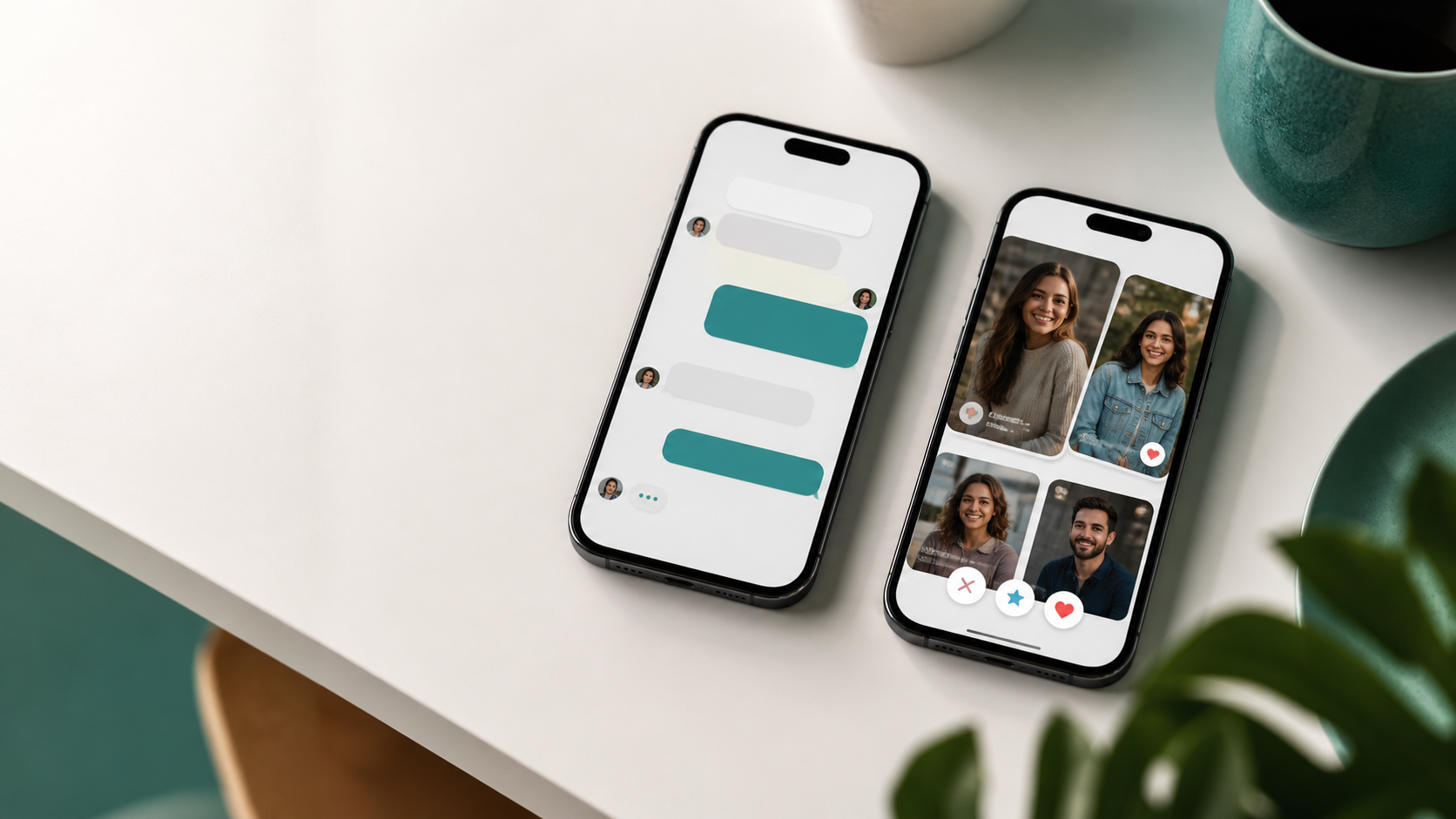
Why people search love on PigeonChat.site instead of Tinder

How PigeonChat.site positions itself against Tinder and Bumble
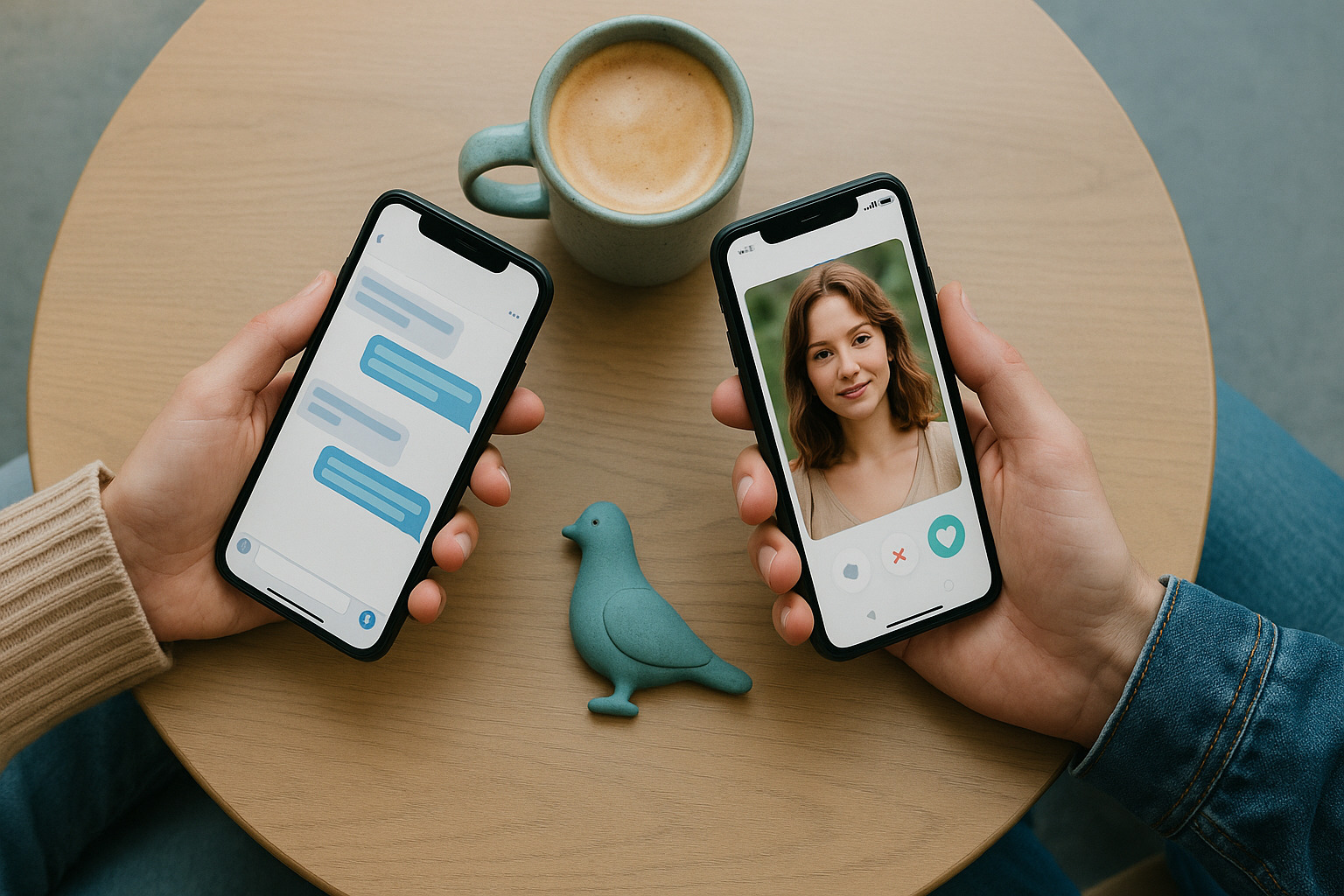
PigeonChat.site vs WhatsApp for private dating chats
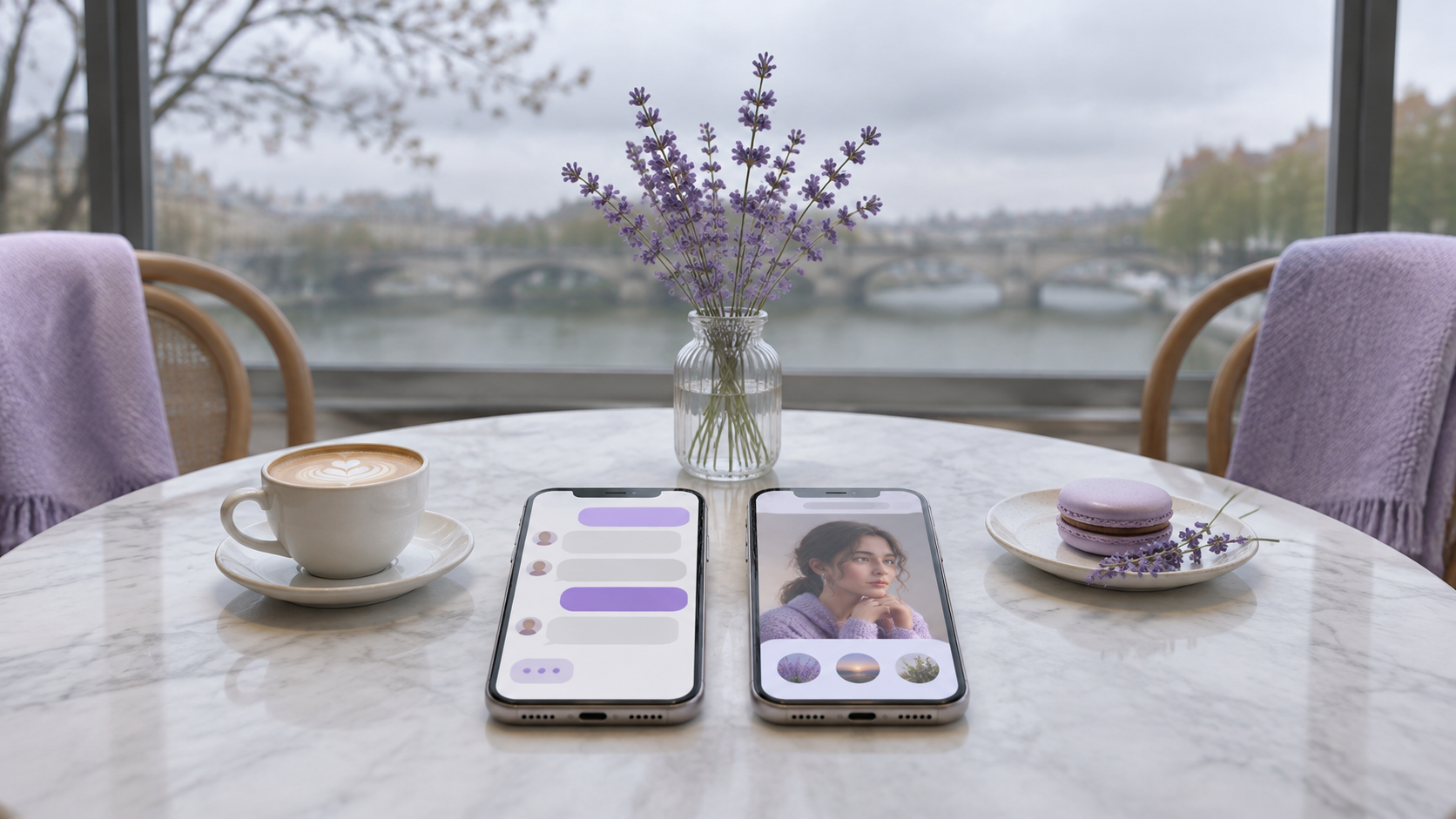
What users really want from dating with PigeonChat.site