How to Tell If Your Messages Are Really End-to-End Encrypted in 2026
'End-to-end encrypted' is on every app's marketing — but how do you actually verify it? Here's how to check whether your messages are truly private in 2026.
Almost every messaging app now advertises end-to-end encryption. It is printed on loading screens, splashed across app stores, and repeated in marketing. But a label is not proof. So how do you actually tell whether your messages are really end-to-end encrypted — or whether the claim is more marketing than mathematics?
This guide gives you practical ways to verify encryption in 2026, the red flags that suggest a weaker setup, and the questions to ask before you trust an app with anything private.
A Quick Refresher: What End-to-End Encryption Means
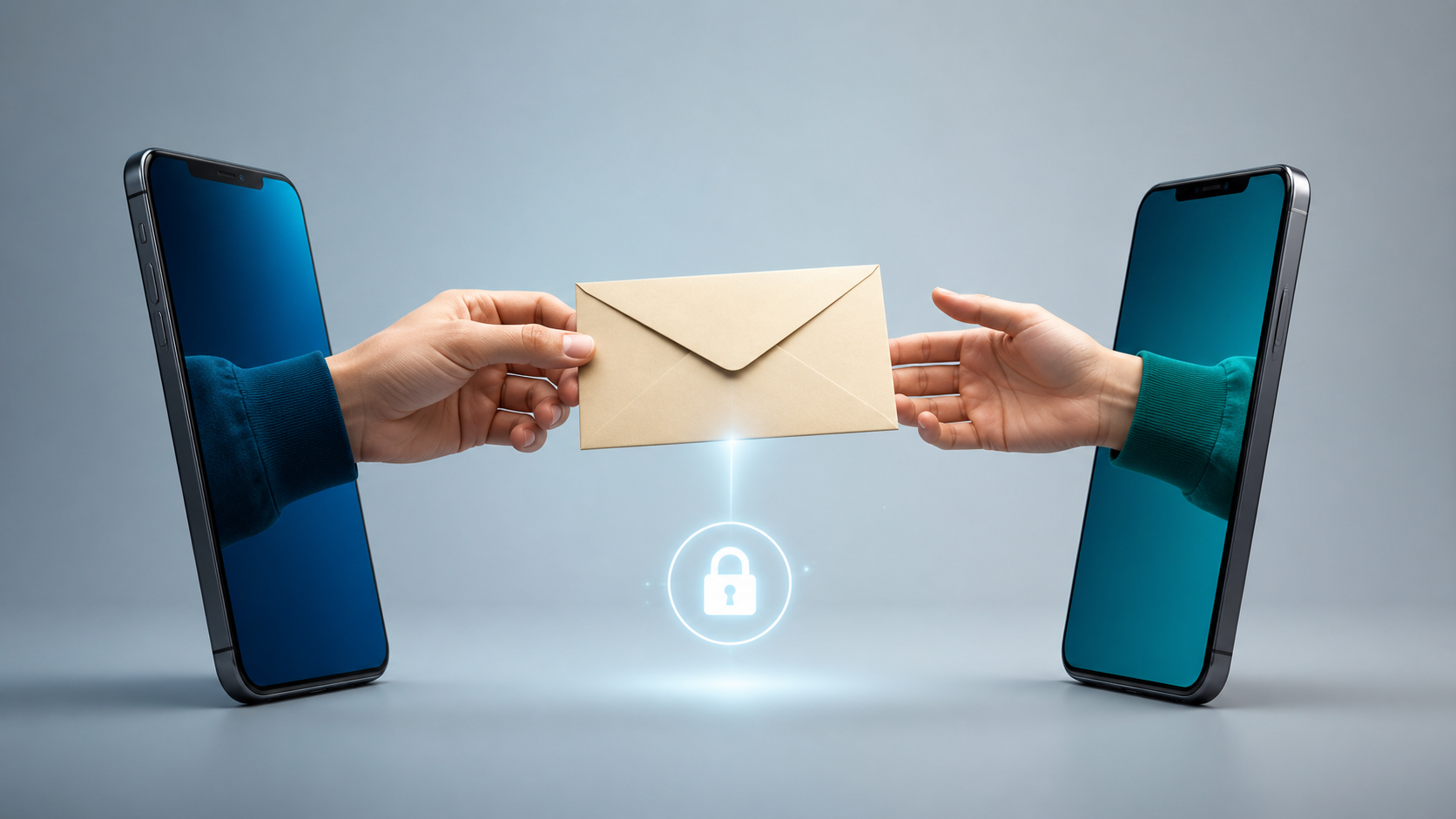
End-to-end encryption (E2EE) means a message is locked on your device and can only be unlocked on the recipient's device. Nobody in between — not the app company, not your network provider, not an attacker who breaches the server — can read it. If you want the full explanation, see our guide on what end-to-end encrypted messaging is.
The key word is only. If anyone other than you and your recipient can read the message, it is not truly end-to-end encrypted, no matter what the label says.
7 Ways to Verify Encryption Is Real
1. Look for encryption "on by default"
Genuine privacy apps encrypt every chat automatically. If encryption is an optional mode you have to switch on (as with some apps' "secret" chats), then your normal conversations are not protected. Default matters.
2. Check for safety numbers or key verification
Serious E2EE apps let you verify a safety number, security code, or QR code with your contact. This confirms no one is secretly sitting in the middle of your conversation. If an app offers no way to verify keys, treat its claims with caution.
3. See whether the code is open source
Open-source apps let independent researchers inspect exactly how encryption is implemented. You do not have to read the code yourself — the fact that experts can is what keeps the app honest.
4. Look for independent security audits
Reputable apps publish third-party audits of their encryption. A recent, public audit from a known security firm is strong evidence the encryption is sound.
5. Test message recovery
Here is a revealing test: if you lose your device and the company can fully restore your entire message history to a brand-new device without any key or passphrase from you, then they can access your messages — which means it is not truly end-to-end encrypted.
6. Read what the privacy policy admits
Privacy policies are legally binding. If the policy says the company can read, scan, or hand over message content, that is your answer. Truly E2EE providers can only ever hand over encrypted gibberish.
7. Watch how they respond to data requests
When an app can only produce metadata (not content) in response to legal requests, that is a sign the content really is encrypted end to end.
Red Flags That Encryption Is Weak or Fake
| Red flag | What it suggests |
|---|---|
| Encryption is opt-in only | Normal chats are unprotected |
| Full history restores with no key from you | The provider holds the keys |
| No safety-number verification | No protection against man-in-the-middle |
| Targeted ads based on chat content | Someone is reading your messages |
| Vague or missing privacy policy | Lack of accountability |
Encryption in Transit vs End-to-End: Don't Confuse Them
Many apps use encryption in transit (the padlock you see in your browser). That protects data between your device and the company's server — but the company can still read it there. End-to-end encryption goes further: not even the server can read it. When an app is vague, it is often hiding the fact that it only offers encryption in transit.
How PigeonChat Handles Encryption
PigeonChat applies end-to-end encryption to private conversations by default, minimises the metadata it collects, and is built so that your private messages stay between you and the people you are talking to. Combined with disappearing messages and privacy-first defaults, it is designed for people who want to verify their privacy, not just take it on faith. Learn more on the features page or try it yourself.
Frequently Asked Questions
How can I tell if a chat is end-to-end encrypted?
Look for encryption that is on by default, a way to verify safety numbers or security codes with your contact, and a privacy policy stating the provider cannot read your messages. Independent audits and open-source code are strong additional signals.
Does the padlock icon mean my messages are private?
Not always. A padlock often means encryption in transit, which protects data on its way to the server but still lets the company read it there. True end-to-end encryption means not even the server can read your messages.
Is WhatsApp end-to-end encrypted?
WhatsApp encrypts message content end to end, but it still collects significant metadata about your activity. Encryption of content and minimisation of metadata are two different things worth checking separately.
If an app can restore all my chats to a new phone, is it still encrypted?
Be careful. If your full history can be restored to a new device without you supplying a key or passphrase, the provider likely holds the keys — which means it is not genuinely end-to-end encrypted.
Why does 'encryption on by default' matter so much?
Because most people never change default settings. If encryption is optional, your everyday conversations are probably unprotected. Apps that encrypt everything automatically protect you without requiring extra steps.
Want to understand the bigger privacy picture? Read our comparison of the most secure messaging apps in 2026.

Writer & Editor at PigeonChat
Related Articles
What makes an end to end encryption chat app secure
What a fully compliant EU chat app should include
Why people search for a WhatsApp alternative without a number
What end to end encryption chat really protects
Why chat folders matter for busy group conversations