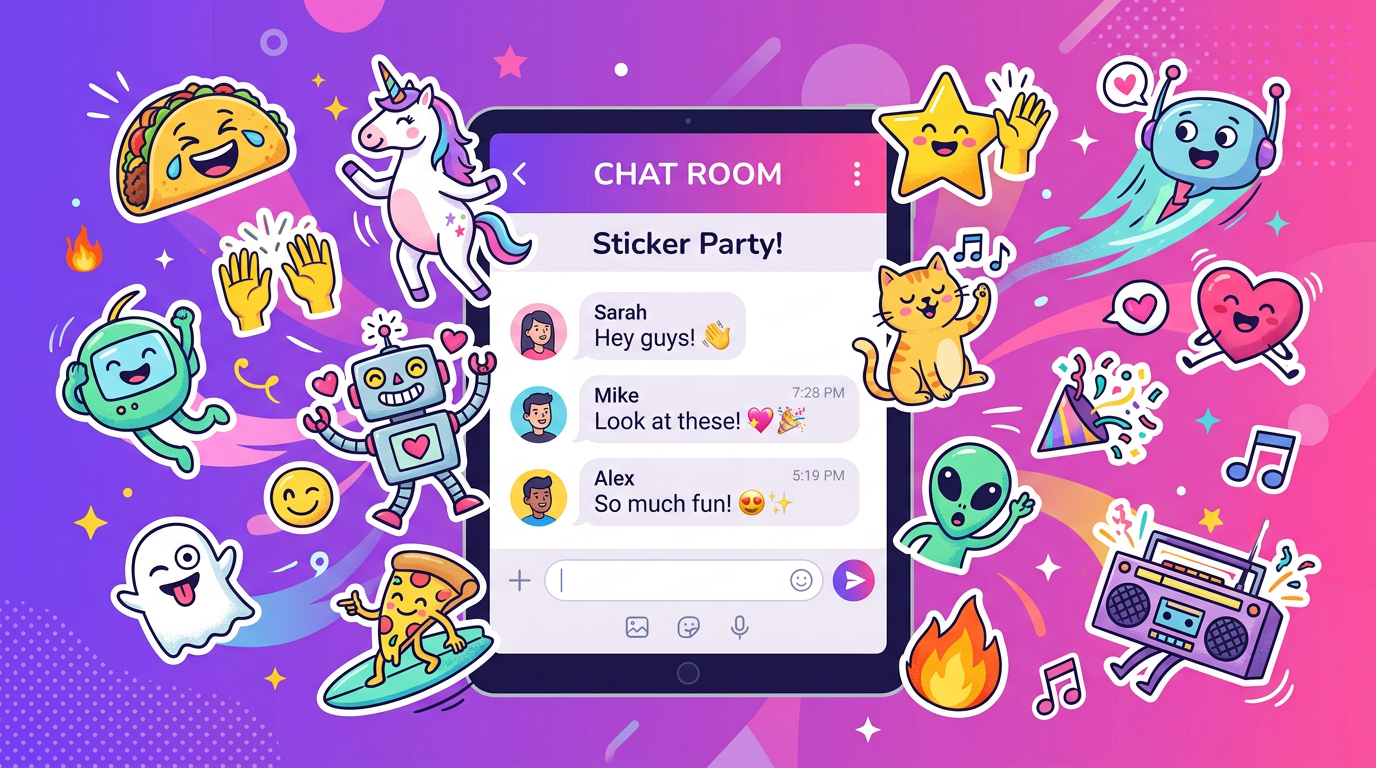
Sticker Culture in 2026: How Digital Stickers Changed the Way We Communicate
From quirky illustrations to cultural phenomena — how sticker culture evolved, why we use stickers instead of words, and what it says about modern digital communication.
A purple pigeon giving a thumbs up. A cat rolling its eyes. A dancing cactus celebrating Friday. In 2026, stickers aren't just decorative extras — they're a core part of how billions of people communicate every day.
Sticker culture has evolved from a novelty feature into a global communication phenomenon worth billions. Here's how it happened, why we're hooked, and what it reveals about the future of digital expression.
The Rise of Sticker Culture
Origins: LINE and the Asian Messaging Revolution
Stickers were popularised by the Japanese messaging app LINE in 2011. LINE introduced large, expressive illustrations that conveyed emotions far more richly than emoji. The concept was an instant hit: LINE's sticker store generated over $270 million in revenue in its first two years.
The success spread across Asia — WeChat, KakaoTalk, and Viber all built sticker ecosystems. By 2020, the global sticker market was worth over $1.5 billion.
Going Global: WhatsApp, Telegram, and Beyond
Western messaging apps caught on. WhatsApp launched stickers in 2018. Telegram built an open sticker platform where anyone could create and share sticker packs. By 2026, stickers are available on virtually every major messaging app, including PigeonChat.
Why We Use Stickers Instead of Words
Emotional Precision
Text is terrible at conveying tone. "Sure" can mean genuine agreement or passive-aggressive annoyance. But a sticker of a happy character saying "Sure!" with sparkles leaves no room for misinterpretation. Stickers carry emotional metadata that text alone can't.
Brevity and Speed
Why type "I'm laughing so hard right now, that's hilarious" when a single sticker of a character falling over laughing says it all? Stickers are faster than typing and more expressive than emoji.
Cultural Identity
Sticker packs often reflect regional cultures, inside jokes, generational humour, and community identity. Using a specific sticker pack signals belonging — "I'm part of this group, I get this reference."
Non-Verbal Communication Online
In face-to-face conversation, 93% of communication is non-verbal (body language, facial expressions, tone). Text strips all of that away. Stickers partially restore it — they're the closest thing to a facial expression in a chat window.
Sticker Culture by the Numbers (2026)
- 6.4 billion stickers are sent daily across all messaging platforms.
- The average user sends 18 stickers per day.
- Sticker packs are the #1 in-app purchase category in messaging apps globally.
- Gen Z sends 2.3x more stickers than millennials and 4.1x more than Gen X.
- The most popular sticker categories: love/affection, humour, greetings, and food.
How PigeonChat Embraces Sticker Culture
PigeonChat is built for expressive communication. Our sticker ecosystem includes:
- Custom Pigeon sticker packs — our mascot in dozens of moods and situations.
- Community sticker creation — create and share your own sticker packs.
- Animated stickers — motion stickers that bring conversations to life.
- Quick reactions — react to any message with a sticker without cluttering the chat.
- AI-suggested stickers — context-aware sticker suggestions based on the conversation.
Stickers aren't silly. They're a natural evolution of human expression adapted for the digital age. Explore PigeonChat's sticker packs and find your voice.

Writer & Editor at PigeonChat
Related Articles
Cute Stickers, Anime & Emojis: The Most Fun Messaging App in 2026
Free Cute Stickers & Anime Chat Community: Why PigeonChat Is the Fun Messaging App of 2026
Stickers vs Emojis in 2026: Which One Actually Says It Better?
What Is the Most Used Emoji in 2026–2027? The Definitive Ranking
Why chat folders matter for busy group conversations