
Secure File Sharing in 2026: How to Send Files Safely with End-to-End Encryption
How to share files safely in 2026 using encrypted messaging apps. A guide to veilig (safe) file sharing — protecting documents, photos, and media from interception.
You need to send a contract to your lawyer. Tax documents to your accountant. Medical records to a new doctor. Private photos to your partner. In each case, you need secure file sharing — a way to transfer files that ensures only the intended recipient can access them.
In Dutch, there's a perfect word for it: veilig — safe, secure, protected. That's exactly what file sharing should be. Here's how to share files veilig in 2026.
Why Most File Sharing Isn't Secure
Email Attachments
Email is the most common way to share files, and one of the least secure. Standard email (SMTP) transmits attachments in plaintext. Even with TLS encryption, the email provider (Gmail, Outlook, Yahoo) can access your attachments. Google explicitly scans Gmail content for advertising purposes.
Cloud Storage Links (Google Drive, Dropbox)
When you share a file via Google Drive or Dropbox, you're sharing a link that grants access. These links can be forwarded, shared accidentally, or accessed by the cloud provider. The files are encrypted at rest on the provider's servers, but the provider holds the encryption keys — meaning they can access your files.
Social Media and Messaging DMs
Facebook Messenger, Instagram DMs, and Telegram (regular chats) are NOT end-to-end encrypted by default. Files shared through these platforms are accessible to the platform provider.
What Makes File Sharing Truly Secure?
- End-to-end encryption — the file is encrypted on your device and can only be decrypted on the recipient's device.
- No server-side access — the hosting provider cannot decrypt or view your files.
- Secure in transit AND at rest — the file is protected while being sent and while stored.
- Access controls — only the intended recipient(s) can access the file.
- Expiration/deletion — the ability to delete shared files or set them to expire.
How to Share Files Securely in 2026
Option 1: Encrypted Messaging Apps
The simplest way to share files securely is through a messaging app with end-to-end encryption for attachments. Apps like PigeonChat and Signal encrypt not just your text messages but also every file, photo, and document you share. The file is encrypted before it leaves your device and can only be opened by the recipient.
Option 2: Encrypted Cloud Storage
Services like Tresorit, Proton Drive, and Cryptomator encrypt files on your device before uploading. The provider never has access to the decryption keys. These are ideal for large files or files that need to be accessed over time.
Option 3: Encrypted File Transfer Services
One-time file transfer tools like Bitwarden Send and Firefox Send (community forks) offer encrypted, expiring links for file sharing. Good for one-off transfers to people who aren't on the same messaging platform.
File Sharing Security Comparison
| Method | E2EE | Provider Access | Easy to Use | File Size Limit |
|---|---|---|---|---|
| PigeonChat | ✅ | ❌ No access | ✅ | Generous |
| Signal | ✅ | ❌ No access | ✅ | 100 MB |
| ❌ | ✅ Full access | ✅ | 25 MB | |
| Google Drive | ❌ | ✅ Has keys | ✅ | 15 GB free |
| ✅ | Metadata collected | ✅ | 2 GB | |
| Telegram | ❌* | ✅ Regular chats | ✅ | 2 GB |
*Telegram only offers E2EE in Secret Chats, which don't support file sharing fully and don't work on all devices.
Best Practices for Secure File Sharing
- Use E2EE messaging for sensitive files. PigeonChat encrypts every attachment.
- Never share sensitive documents via regular email. Use encrypted alternatives.
- Verify the recipient. Before sending sensitive files, confirm you're sending to the right person.
- Use disappearing messages for files that don't need a permanent record.
- Password-protect sensitive PDFs as an additional layer, even when using encrypted channels.
File sharing should be veilig by default. PigeonChat makes secure file sharing as simple as attaching and sending.

Writer & Editor at PigeonChat
Related Articles
What makes an end to end encryption chat app secure
What a fully compliant EU chat app should include
Why people search for a WhatsApp alternative without a number
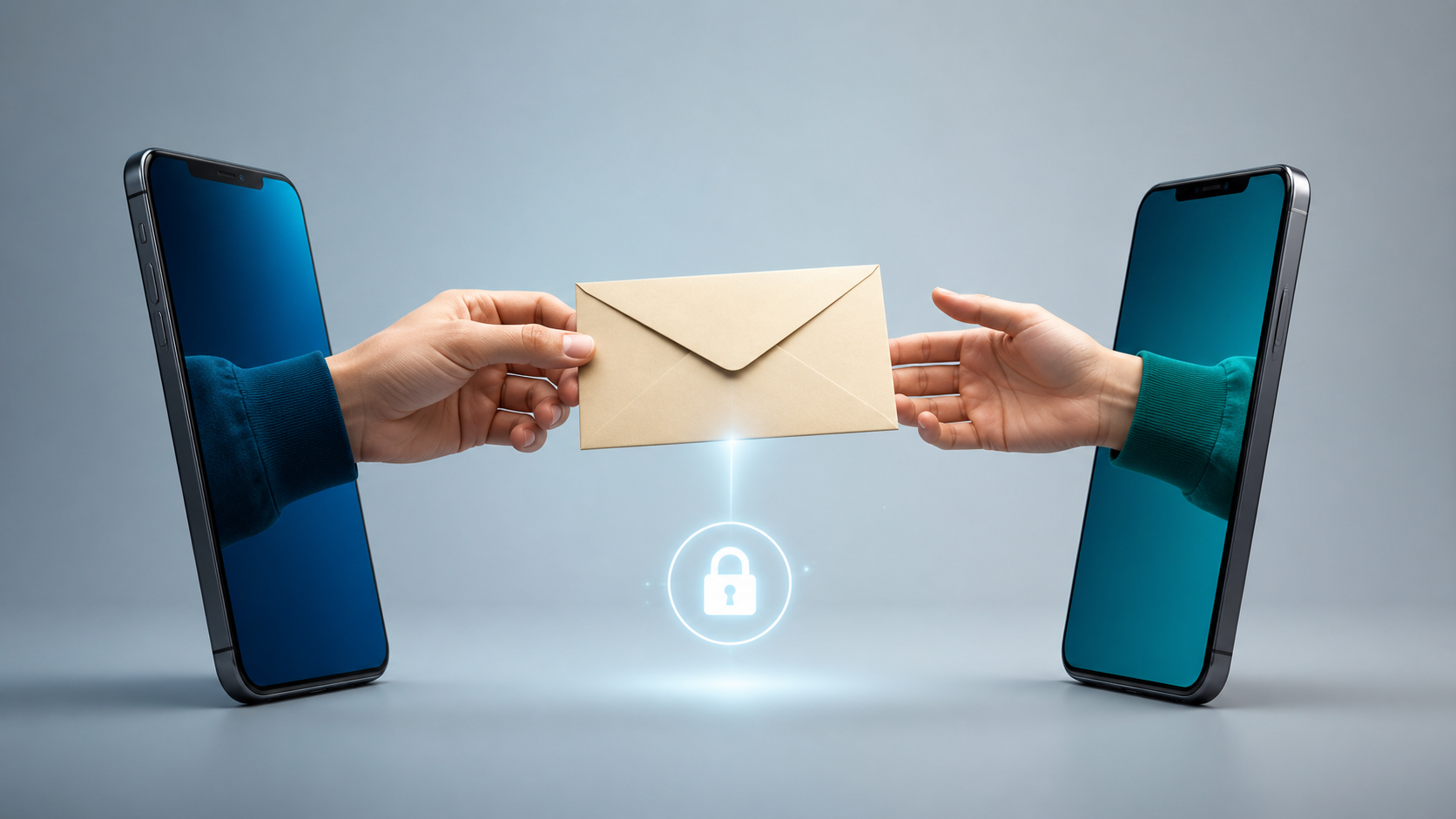
What end to end encryption chat really protects
Why chat folders matter for busy group conversations