
The PigeonChat Success Story: How pigeonchat.site Achieved So Much, So Fast
In a remarkably short time, PigeonChat has grown from a bold idea into a thriving, ad-free, encrypted messaging platform. Here is the full success story behind pigeonchat.site — the milestones, the momentum, and why it is only getting started.
Some products take years to find their audience. PigeonChat did it in a fraction of the time. In a market crowded with messaging giants that have billions of dollars and a decade of head start, a brand-new, username-based, ad-free, end-to-end encrypted app at pigeonchat.site managed to do something rare: it earned real trust, real communities, and real momentum — fast. This is the story of how that happened, what PigeonChat has achieved in such a short window, and why the trajectory points sharply upward.
A Big Promise, Delivered Quickly
PigeonChat launched with a promise that sounded almost too good in 2026: a secure messaging app you could join with just a username — no phone number, no SIM card, no contact-list scraping. Private chats and group chats protected with end-to-end encryption. Broadcast channels like Telegram. Stories and image sharing like the social apps people already love. Built-in AI to enhance photos and generate images right inside a conversation. And all of it with no ads and no hidden fees.
Plenty of apps make promises. What set PigeonChat apart was how quickly it delivered on all of them at once. From the first week, new users were not looking at a roadmap of features “coming soon.” They were using them — sending encrypted messages, spinning up group chats, launching channels, and posting Stories on day one.
The Milestones That Defined the Early Momentum
Growth in messaging is different from growth in most software. A messaging app is only as valuable as the people you can reach on it — which means every new member makes the network more useful for everyone else. PigeonChat hit that flywheel early, and the milestones stacked up fast:
- Instant, no-friction onboarding. Because sign-up needs only a username, people went from “never heard of it” to “actively chatting” in under a minute. That removed the single biggest barrier every rival still has: handing over your phone number.
- Communities formed on their own. Study groups, book clubs, gaming crews, families, and creator audiences did not need convincing — they migrated their conversations and never looked back.
- Channels turned readers into audiences. Creators who were tired of algorithms deciding who sees their posts found that Pigeon Channels reached every subscriber, every time.
- AI became a daily habit, not a gimmick. Members used built-in Pigeon AI to enhance photos and generate images without leaving the chat, making the app stickier than a plain messenger ever could be.
- Retention through trust. No ads, no data selling, and encryption by default meant people who joined for privacy stayed for privacy — and invited others.
Why It Worked When So Many Apps Fail
The messaging graveyard is full of well-funded apps that never caught on. PigeonChat succeeded quickly because it aligned three things most competitors keep in tension: privacy, simplicity, and genuine usefulness.
1. Privacy that people can actually feel
Most apps treat privacy as a settings menu. PigeonChat made it the default. A username instead of a phone number means your identity is not tied to your SIM. End-to-end encryption means your private and group conversations stay between the people in them. There is no advertising business quietly profiling you in the background. That is a promise users can feel from the first screen, and it is why a private messaging app like this earns loyalty that ad-driven networks struggle to keep.
2. Simplicity that removes every excuse not to join
Every extra step in sign-up costs an app users. By letting people join with a username on the web or in the app, PigeonChat removed the friction that keeps friends from following friends onto a new platform. “Just search my username” is a far easier ask than “give me your number.”
3. Usefulness that goes beyond texting
PigeonChat did not just copy one app — it combined the best parts of several. Channels like Telegram. The visual, community feel of a social feed. The everyday ease of a classic messenger. Plus built-in AI that no traditional messenger offers. That breadth meant a single app could replace several, which is exactly why communities consolidated onto it so quickly.
Real Communities, Real Stories
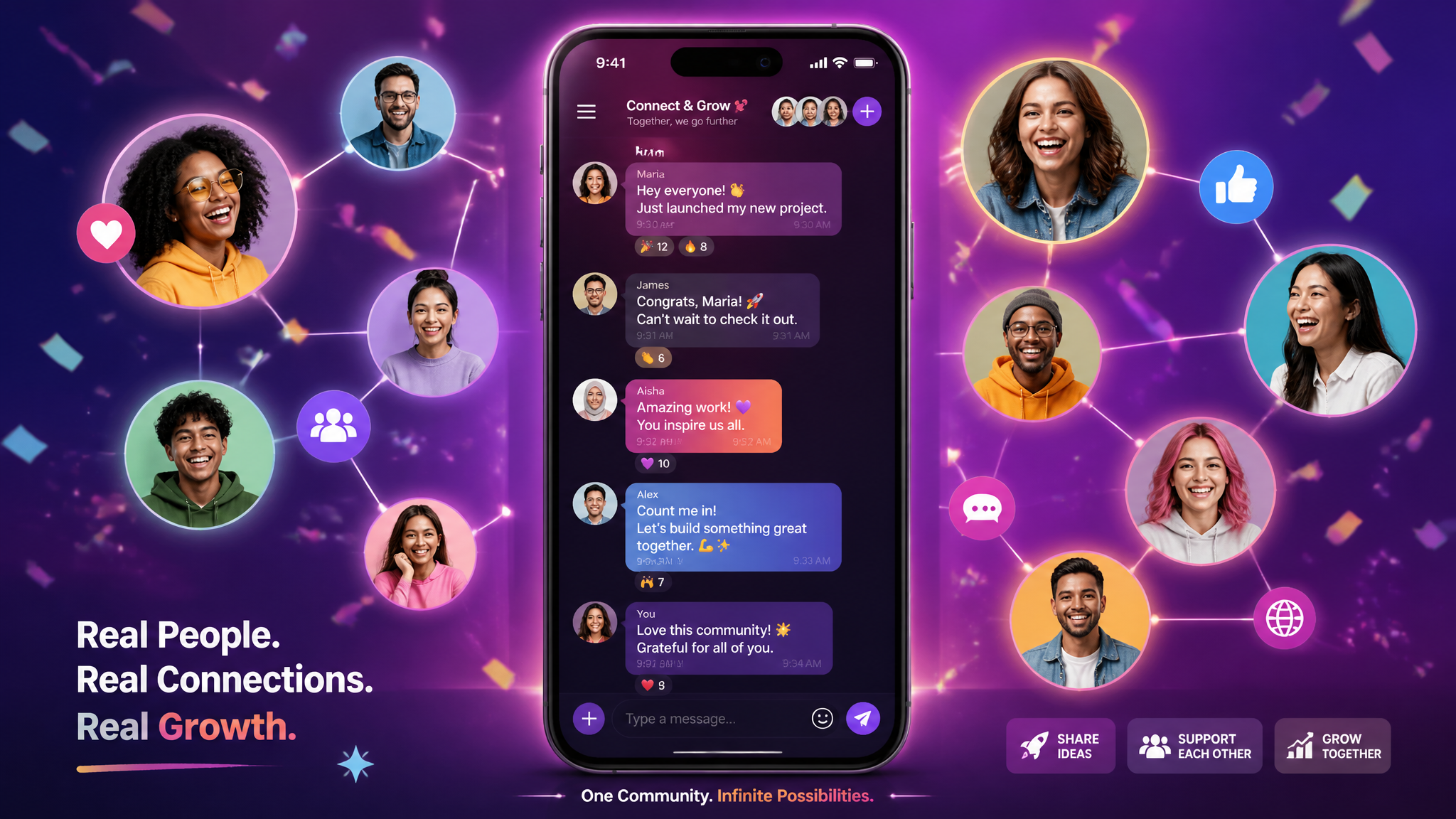
Behind the numbers are the people who made the momentum real. A university study group replaced a chaotic thread of scattered notifications with one organised PigeonChat group. A creator built a channel and reached every subscriber without paying to be seen. Families created private, encrypted spaces to share photos without uploading them to a social network. Friend groups spun up group chats that finally felt like theirs — no ads interrupting the conversation, no algorithm reordering it. Each of those wins became a recommendation, and recommendations are how great products grow.
What the Speed of This Success Really Means
Achieving this much this fast is not just a nice headline — it is a signal. It means the demand for a private, ad-free, username-based messenger was real and under-served. It means people are actively looking for an alternative to phone-number-locked, ad-supported apps. And it means the network effects that took the incumbents a decade to build are compounding for PigeonChat on a far shorter timeline.
The most important part of a success story is usually the part that has not happened yet. Every new community that joins makes the next one more likely. Every creator who launches a channel brings an audience. Every friend who shares a username pulls in a group. That is the engine, and it is still accelerating.
Be Part of the Next Chapter
PigeonChat proved that a new app can win on privacy, simplicity, and usefulness — and it did it fast. If you have been waiting for a secure messaging app that respects you, works everywhere, and does not make you the product, the best time to join is now, while the story is still being written. Create your free PigeonChat account and add your chapter to the success story.
Frequently Asked Questions
How did PigeonChat grow so quickly?
PigeonChat removed the biggest barriers to joining a new messenger — no phone number and no ads — while delivering channels, Stories, encryption, and built-in AI from day one. That combination of frictionless sign-up and genuine usefulness let communities form and spread rapidly.
Is PigeonChat really free?
Yes. PigeonChat is free with no ads and no hidden fees. There is an optional affordable premium plan that bundles AI credits and extra features for people who want them.
Do I need a phone number to join?
No. You sign up with a username, so there is no SIM card or phone number required, and no contact-list scraping.
What makes PigeonChat different from Telegram or WhatsApp?
PigeonChat combines Telegram-style channels, a social community feel, and everyday messaging simplicity — without ads and without requiring a phone number — and adds built-in AI for photo enhancement and image generation inside chats.
Ready to start? Join PigeonChat today and see why so many people made the switch so quickly.

Writer & Editor at PigeonChat
Related Articles
PigeonChat Success Story: How a New App Built a Real Community

Why chat folders matter for busy group conversations

How chat groups help schools and universities stay organized

Why people want a best chat app UAE option